
Hood County conditionally approves Comanche Circle concept plan, orders drainage, water and power checks
Get AI-powered insights, summaries, and transcripts
Subscribe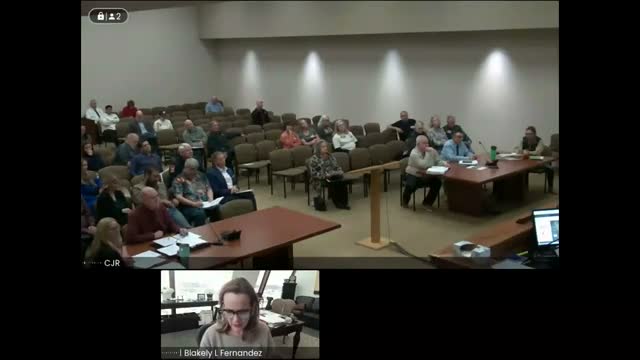
Summary
After hours of public comment and expert testimony, the Hood County Commissioners Court granted conditional approval to the Comanche Circle data-center concept plan but ordered the developer to supply a comprehensive drainage study, wastewater and water-supply certifications, power-plant details and evidence of protections for adjacent properties before any site-plan submission.
Hood County commissioners on Jan. 13, 2026, voted to conditionally approve a concept plan for the proposed Comanche Circle data-center complex but imposed a list of specific information the developer must provide before the project may move to the site-plan stage.
The court’s action followed more than four hours of public comment and technical testimony in which residents, engineers and groundwater officials urged the county to deny or pause the proposal. The vote requires the applicant to deliver, within a fixed period, a comprehensive drainage plan, certification of treated wastewater standards and sludge disposal plans, documentation of total water needs and sources (including any on-site power-generation needs), and proof that the project will not harm the watershed, adjacent properties or downstream users.
The developer’s representative, Elijah Hughes, told the court the concept plan is the first step in a regulated process and that detailed engineering — including sealed drainage and site studies, TCEQ permitting for wastewater, and Upper Trinity Groundwater Conservation District permitting for wells — will follow. Hughes said the project “will comply with their rules on well spacing and pumping limits” and that on-site systems will not operate without required state authorizations.
Opponents highlighted technical gaps in the plan as presented to the county. Local engineer Brian Glenn and architectural reviewer Kirk Kateski said the submission lacks a preliminary drainage study, topographic details sufficient for engineering design, a traffic-impact analysis and complete layouts for power-plant and water-treatment infrastructure. Doug Shaw, general manager of the Upper Trinity Groundwater Conservation District, told the court that commercial (nonexempt) well permits require public notice, spacing and allocation based on acreage and aquifer thickness, and that contested-case hearings on a permit can be lengthy.
Residents also pressed elected officials over cumulative impacts. “We don’t care if the county gets sued,” Rachel Jacobson told commissioners, arguing the county should exercise its authority under Texas Local Government Code §231 (subchapter K) to protect the watershed and slow industrial development. Other commenters warned about noise, heat effects, truck traffic during long construction phases and potential threats to tourism and property values.
County counsel and staff advised that the development regulations give the court three practical choices: approve, deny or conditionally approve a concept plan. They recommended conditional approval because the county’s regulations allow the court to require additional information and to attach conditions that must be met before the developer may submit a site-plan application — a route the court adopted to secure the technical details residents and staff said were missing.
The motion approved by the court requires the applicant to deliver a comprehensive drainage plan demonstrating how on-site wastewater and runoff will be managed without injuring downstream properties; certification of wastewater treatment standards and a disposal plan for any resulting sludge; documentation quantifying total water demand (including for any on-site power generation) and identifying available water sources or permits; and evidence that on-site power-generation facilities would meet regulatory approval criteria. The court put procedural deadlines on the submission and reserved enforcement actions if the required materials are not supplied or are inadequate.
Next steps: the developer must provide the required studies and certifications before the site-plan stage; the county will then review those documents under the standards in its development regulations. The court also set a Feb. 10 public hearing to consider Development Commission recommendations on revisions to the county’s development regulations and the possible adoption of a moratorium on specified industrial development types.
The conditional approval does not authorize ground‑breaking. It requires regulatory approvals from state agencies such as the Texas Commission on Environmental Quality for wastewater and the relevant groundwater district for well permits before system construction or operation.