Get Full Government Meeting Transcripts, Videos, & Alerts Forever!
Get email alerts on the Commission Structure And Participation topic
No spam. Unsubscribe anytime.
Commissioners warn consolidation plan and low attendance could weaken Disabilities Commission
Summary
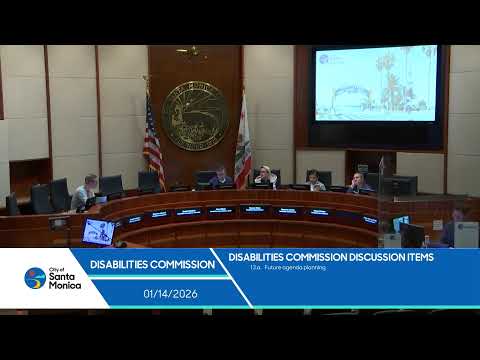
Members raised concern that City Council proposals discussed publicly could fold the Disabilities Commission into a larger Human Services Commission and shrink commissioner representation; commissioners and staff also discussed chronic quorum struggles and limits on remote participation pending implementation of a new Senate bill.
Commissioner Gordon and other members told the Disabilities Commission they are worried about council-level proposals that would consolidate several advisory bodies into a smaller Human Services Commission and reduce the number of commissioners. Gordon said recent coverage and council discussion suggested an effort to "erase" the Disabilities Commission by combining it with other commissions and cutting overall membership.
Commissioner Gordon described public reaction at a recent City Council meeting and said the proposed consolidation would reduce representation from a larger set of advisory commissioners to as few as seven. Another commissioner provided backstory, noting that several commissions were merged in prior years but that at least one council member had previously insisted the Disabilities Commission remain independent.
Commissioners flagged one practical vulnerability: difficulty achieving quorum. Several members said repeated absences and the lack of reliable virtual participation threaten the commission’s ability to function and strengthen its case to remain independent. ‘‘I quite frankly am very concerned that, you know, there are obviously quite a few people who just don't take this seriously,’’ one commissioner said, urging an email to all members stressing the importance of attendance.
City Clerk staff explained the current legal/administrative constraints on remote participation for commissioners. The clerk (identified in the transcript as the city clerk’s speaker) said, "At the current time, no. The the short answer is no," adding that commissioners can seek individual reasonable-accommodation processes through HR but broad remote participation rules are changing because "there is a senate bill that recently passed where that rule is falling away." The clerk said the city clerk’s office and staff are working on how to implement hybrid or remote participation effectively.
Why it matters: consolidation would alter how disability policy advice is channeled into city government, potentially reducing direct specialized input. Commissioners said maintaining an active, well-attended commission that consistently meets quorum strengthens arguments against consolidation.
Next steps: commissioners asked the chair to send a message to members stressing attendance, to prepare a liaison strategy for the study-session timeline, and to update the commission next meeting about the boards-and-commissions study and the city’s plan to implement remote-participation rules.