Get Full Government Meeting Transcripts, Videos, & Alerts Forever!
Get email alerts on the Ada Accessibility Implementation topic
No spam. Unsubscribe anytime.
Santa Monica ADA coordinator seeks CIP funding after federal grant denial
Summary
ADA coordinator Blake Stavros told the Disabilities Commission the city was not awarded the federal 'Safe Streets for All' grant and is preparing a CIP application for a facilities and right-of-way accessibility assessment; Stavros also outlined staff trainings, a delayed self-evaluation survey and a goal to bring city web content into compliance by April.
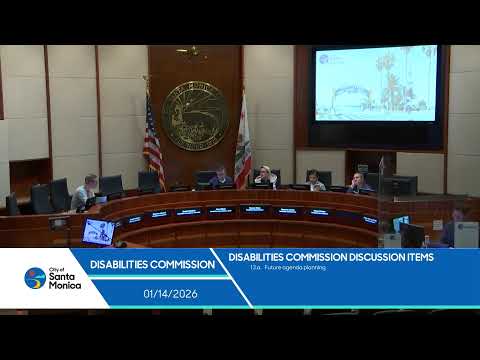
Blake Stavros, Santa Monica’s ADA coordinator, told the Disabilities Commission at its January meeting that the city was not selected for the federal "Safe Streets for All" grant it had sought with engineering and mobility staff. He said Public Works will prepare a capital improvements project (CIP) application for a facilities and public right-of-way accessibility assessment to include in the upcoming biennial CIP budget process.
That CIP application is a priority, Stavros said, but he currently does not have dedicated funding to implement the assessment and subsequent work. ‘‘We were not selected for the safe streets for all, federal grant that we had applied in conjunction with engineering and mobility over the summer,’’ he told commissioners, and said the engineering team who led the effort will seek an information meeting about the grant outcome.
Why it matters: the CIP funding decision and survey timing will determine how quickly the city can move from advocacy to direct implementation of accessibility improvements. Stavros said the city’s self-evaluation survey has taken longer than planned and will be released alongside the broader accessibility assessment to provide a complete picture of structural and nonstructural barriers.
Stavros outlined other implementation steps. He said the Aging and Disability Action Plan, which the transcript records as approved by city council on Sept. 9, is being operationalized with coordination among the senior parks planner, engineering, and Big Blue Bus. He cited projects such as work at the 19th Street Community Gardens and the automated entry door installed at the Housing and Human Services office late last year as examples of accessibility measures underway.
Stavros also described personnel-focused actions: regular accessibility trainings with Human Resources and job-specific workshops for department staff. As an example, he said he will provide direct training to aquatic center staff on handling accommodation requests and service animals after situations arose last summer where staff sought clearer guidance.
On digital accessibility, Stavros said the city is working with the Information Services Department and set a target to have web content brought into compliance by April. ‘‘Our goal is still to have the city web content brought into compliance by April,’’ he said.
Next steps: Stavros invited the commission to a follow-up meeting in April or May to review the facilities and right-of-way accessibility assessment in greater detail so commissioners can provide recommendations to city council before biennial funding decisions. Commissioners suggested leveraging the ADA Pacific Center and peer-city ADA coordinators as resource templates and urged the city to pursue low-cost, high-impact accessibility improvements in the interim.
The commission did not take formal action; Stavros will report back when he has more information on the grant feedback and on the CIP submission timeline.