Get Full Government Meeting Transcripts, Videos, & Alerts Forever!
Get email alerts on the Zoning topic
No spam. Unsubscribe anytime.
Bear River holds public hearing on three conditional-use permits for commercial livestock operations
Summary
At a Nov. 18 public hearing the Town of Bear River considered three conditional-use permit requests to operate commercial livestock businesses in residential zones. Residents raised concerns about groundwater, manure handling, flies, road impacts and the cumulative effect of multiple permits; council explained conditional permits and business licenses provide enforcement tools but no numeric cap can be set.
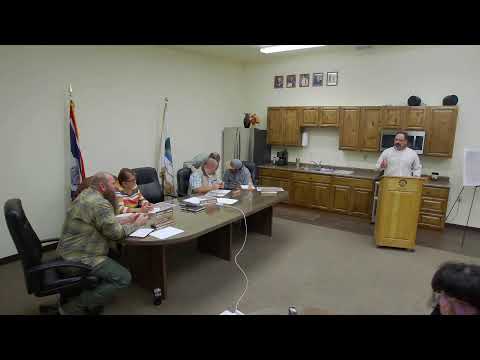
The Town of Bear River held a public hearing on three conditional-use permit applications for properties on Palomino Drive, Quarter Horse Drive and Homestretch to operate commercial livestock uses including breeding, boarding and training. The hearing drew multiple residents who raised environmental, road and neighborhood-character concerns.
Several residents, including Richard Esselstyn and Tamara Palomino, told the council they worried about groundwater contamination, burying deceased animals on-site, manure management and flies. Council members and staff explained that conditional-use permits are processed on a site-by-site basis and that the town cannot adopt a blanket numeric cap on permits for a use classified as conditionally allowable; instead, the council may consider neighborhood circumstances (road capacity, proximity to sensitive areas, number of animals) when deciding each application.
Applicants described their operations and mitigation practices. Melissa Clapp, a licensed trainer who said she leases a property on Quarter Horse Drive, said she uses rotational grazing, has six stalls and keeps herd sizes generally below a proposed 15-horse example; she described biosecurity measures at the racetrack and said she manages manure by using it as pasture fertilizer and by hauling or composting where needed. Another applicant described pasture repair and fly-control measures such as traps and biological predators.
Council staff explained enforcement options: business licenses regulate the commercial activity while conditional-use permits govern land use; code compliance officers can issue citations (up to $750 per the transcript) and unresolved citations go before a judge. Several speakers urged the town to require demonstration of manure handling and water-testing plans; one resident suggested annual groundwater checks to guard against contamination.
Council members said conditional-use permits would give the town more oversight than unpermitted activity and that DEQ and other agencies would review environmental concerns as part of the permitting process. The record provided shows discussion and public comment but no final permit decisions or roll-call votes during the meeting.
Next steps: the council indicated applications will follow the formal subdivision/conditional-use process, with staff and the council considering site-specific factors (manure plans, traffic, proximity to wetlands) and continuing public outreach.