Get AI Briefings, Transcripts & Alerts on Local & National Government Meetings — Forever.
Humane Society of Yuma tells supervisors shelter is over capacity as intake rises
Loading...
Summary
Annette Lagunas, executive director of the Humane Society of Yuma, told the Board of Supervisors the county's only full-service shelter is caring for far more animals than its kennel capacity and urged continued support for microchipping, sterilization clinics and municipal contracts to contain intake and costs.
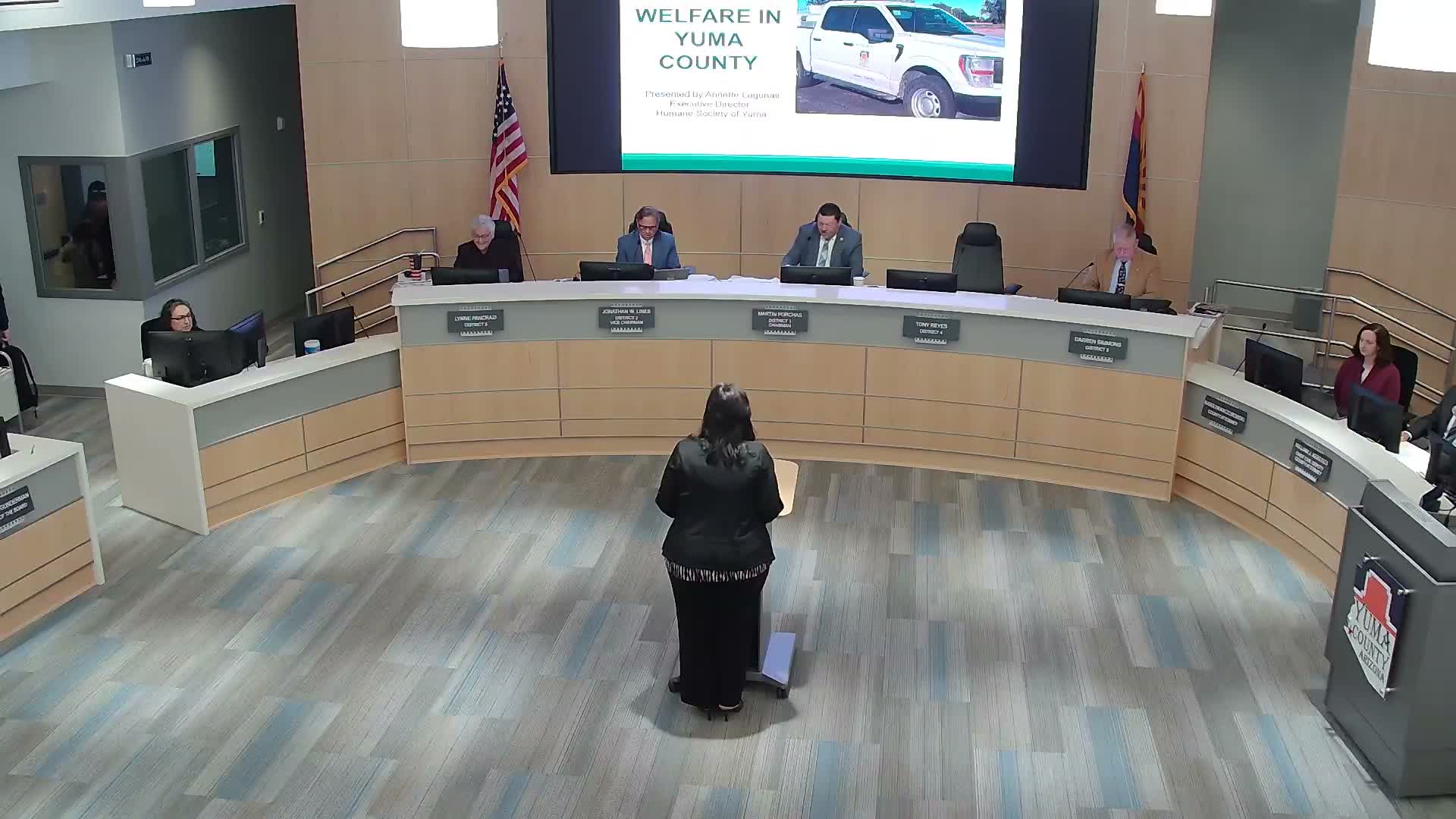
Annette Lagunas, executive director of the Humane Society of Yuma, told the Board of Supervisors on Jan. 5 that the county’s animal shelter is seeing increased intake and operating above kennel capacity. "We are the only one in Yuma County that houses animals," Lagunas said, and the facility has 238 cages but recently had about 306 animals on site.
Lagunas gave fiscal-year intake numbers and program details. She reported 7,177 animals entered the shelter in fiscal 2025 and said roughly 19% of those animals came from Yuma County. She credited county-supported microchipping clinics for reuniting many pets with owners and said grant funding — including an Arizona specialty-license-plate grant she estimated at about $70,000 — supports community-cat sterilization and low-cost vaccination and spay/neuter clinics.
Why it matters: the Humane Society delivers contracted animal-control holding, public-health vaccination and sterilization services that reduce stray rates, protect public health and shift operating costs among municipalities and nonprofit partners. Lagunas said caring for incoming animals has become more expensive and that the shelter does not make money on adoptions; adoption fees typically range from $25 to $150, with many animals adopted for about $50.
Lagunas described a mix of routine and extreme cases: most cruelty investigations are limited in number, but the shelter recently held two canine cruelty cases for 39 days and managed an intake of 26 dogs that required contacting out-of-town rescues. She told the board the shelter follows national Association of Shelter Veterinarian guidelines and works with county animal-control officers and the state to coordinate care and enforcement.
During questions, Lagunas estimated the shelter sees roughly 50 to 75 cruelty-related animals annually and said there are about six veterinary offices in Yuma (some with multiple veterinarians) but that the profession is strained nationally. She also described a state program that offers up to $100,000 toward a veterinarian’s tuition in exchange for service in municipal or nonprofit shelters, as a recruitment strategy.
Next steps: the presentation did not include a formal action item. Lagunas said she will continue coordinating with the county health department to bill and track county-funded spay/neuter services.