Get Full Government Meeting Transcripts, Videos, & Alerts Forever!
Get email alerts on the Rural Services Study topic
No spam. Unsubscribe anytime.
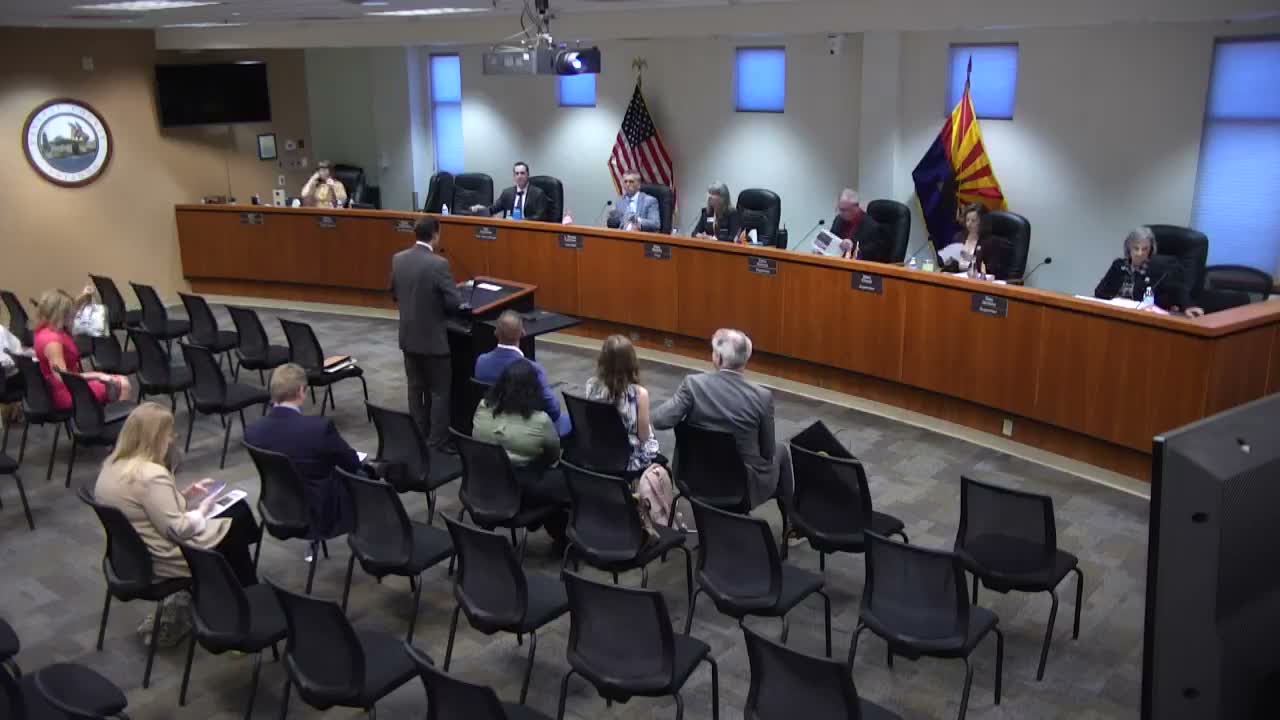
Gensler presents draft rural services study to Yavapai County, recommends leveraging libraries and sheriff substations
Summary
Gensler presented a 79-page draft rural services study to the Yavapai County Board of Supervisors, reporting more than 1,000 community survey responses and recommending that libraries and sheriff substations be used as distributed county service hubs with targeted new facilities in remote communities.
Gensler presented a draft final report on Yavapai County's rural services study at a county work study, summarizing engagement results and offering facility and service-delivery recommendations. The firm said the project included about 20 site visits, tours of libraries and five sheriff substations, multiple public engagements and "approximately over 1,000 responses" to an online and paper community survey.
The consultant outlined a three-part typology of rural communities—central hubs, transitional communities and outlying "service deserts"—and identified eight service themes: civic and gathering spaces; social and basic services; community safety and legal services; housing and homelessness support; digital access and literacy; physical and mental health; and youth and teen services. "Libraries and sheriff substations can really be and continue to be the front door for county services within your rural communities," a Gensler representative told the board, arguing the distributed footprint of those facilities is a cost-effective base for co-locating services where appropriate.
Gensler recommended evaluating each existing facility's life cycle to decide whether to renovate or build new and offered co-location guidance that keeps sensitive services (mental health, homelessness support, legal services) physically separate from more public community programming. The consultant presented a priority matrix (low/medium/high) and identified certain communities—Seligman, Paulden, Cornville and Peoples Valley among them—as targeted for deployment of specific service types or new facilities.
The report includes community-level analysis and an appendix Gensler said would be roughly 500 pages of supporting data and survey responses. Gensler asked supervisors to submit clerical edits and said it expects to issue the final report in about a month. The board requested updated, complete copies of the final draft.
Next steps noted at the meeting included county review of the draft, submission of edits to the consultant, and delivery of updated report copies to supervisors prior to final issuance.