Get Full Government Meeting Transcripts, Videos, & Alerts Forever!
Get email alerts on the Facility Policy topic
No spam. Unsubscribe anytime.
After heated debate, Yavapai supervisors direct staff to add family/ADA single‑occupant restrooms in county buildings
Summary
Following a contentious discussion and public comment, the Board directed staff to construct and renovate single‑occupant family/ADA restrooms in county facilities where feasible and to include them in future building designs. The motion passed unanimously.
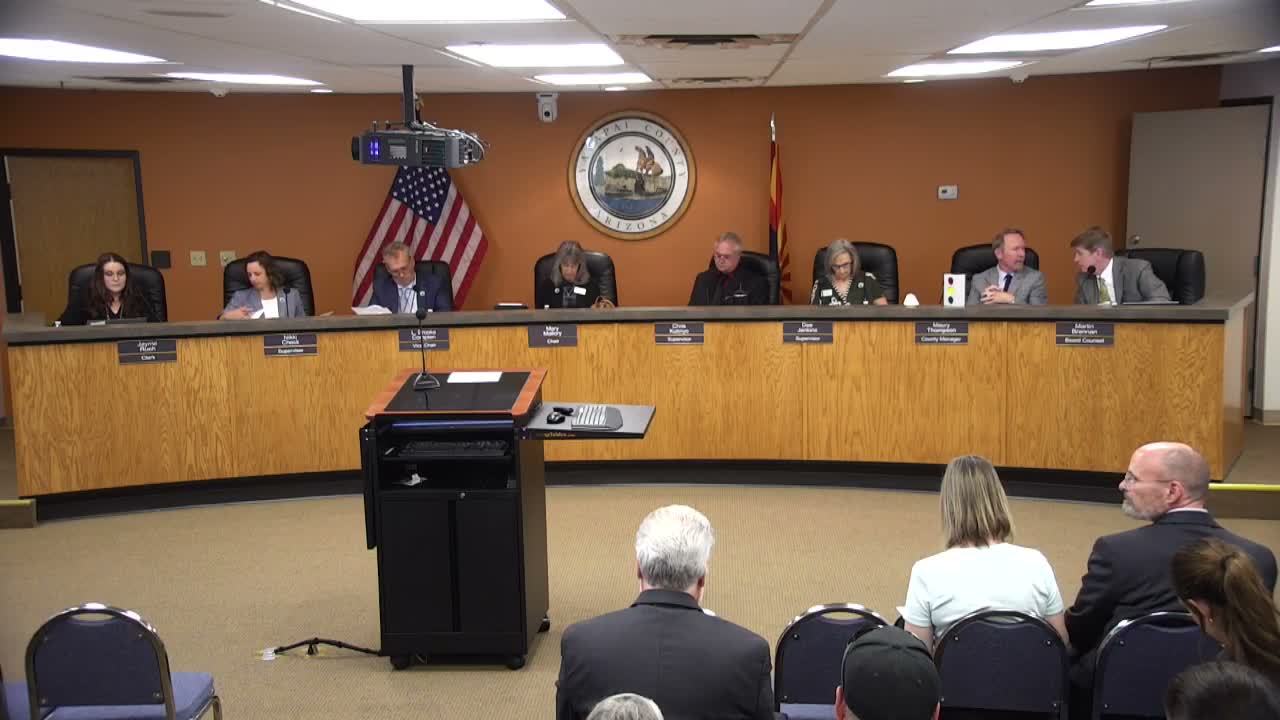
The Yavapai County Board of Supervisors voted Sept. 17 to direct staff to construct and renovate single‑occupant, family and ADA‑accessible restrooms in county buildings "where it is at all possible," after a lengthy debate over privacy, safety and legal uncertainty.
Supervisor Check, who co‑sponsored the agenda item, framed the discussion as necessary for county leadership on a divisive public issue. Vice Chair Compton, one of the item’s co‑sponsors, urged staff to work with the County Attorney’s Office to present options. "I would like to encourage my fellow supervisors to speak on the topic," Compton said during the discussion, adding that legal guidance is mixed following recent court decisions.
Board counsel Martin Brennan clarified that a policy could be structured to apply to county buildings and employees, while an ordinance would be needed to reach the public at large. Several supervisors said staff already is installing single‑occupant family/ADA restrooms (Development Services building and the Cottonwood facility), and directed staff to continue that work for existing facilities and to incorporate such restrooms into new construction.
The motion — "direct staff to construct and renovate family and [single‑occupant] restrooms where possible, now and in the future" — was moved by Supervisor Check and seconded; the board voted unanimously to adopt the direction.
Public comment during the meeting illustrated community division. Several speakers urged a strict single‑sex approach to public restrooms citing safety and privacy concerns; others urged inclusivity and warned against government overreach and discrimination. County counsel and staff noted that the board’s action was limited to directing county staff on facilities and that further policy or ordinance work would be brought back if the board desired.
Why it matters: The directive changes the county’s approach to facility design and modifications, committing to family/ADA single‑occupant restrooms as retrofits or in new construction. Supervisors who requested broader policy work said they will consider whether a separate HR or building policy is needed.
What’s next: Staff will continue current retrofits, plan future installations as buildings are renovated or newly built, and will work with county counsel on any additional policy options the board requests.