Get Full Government Meeting Transcripts, Videos, & Alerts Forever!
Get email alerts on the Criminal Justice topic
No spam. Unsubscribe anytime.
County attorney and program graduate press board to bridge funding gap for community diversion program
Summary
Board discussed a contingency funding request of up to $126,000 for Community Care/Community Cares Partners after a state appropriation lapsed; County Attorney Dennis McGrane framed the program as diversionary, saving incarceration costs, while a program graduate described a claimed 97% success rate and urged continued county support.
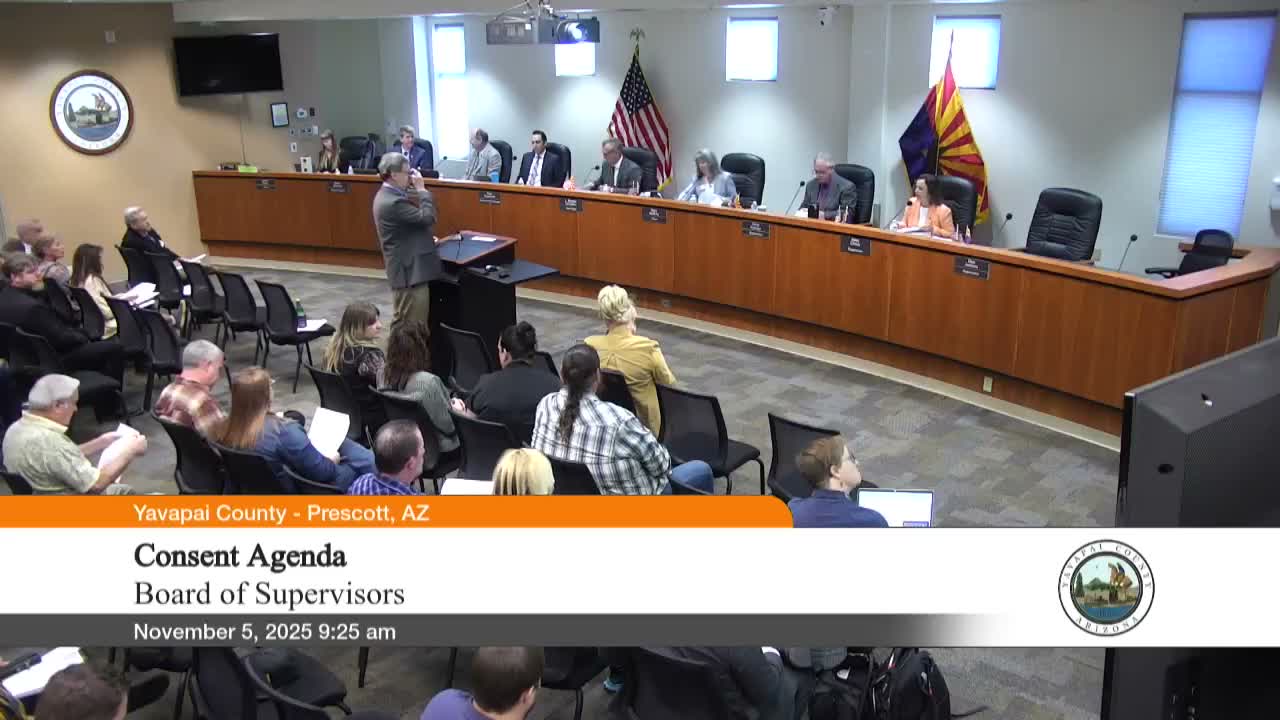
At the board meeting on Nov. 5, Yavapai County's county attorney and a program participant addressed a pulled consent item about continuing a county contract with Community Care Partners (a diversion program) after a state appropriation lapsed.
County Attorney Dennis McGrane said the diversion program—initially funded through state appropriations and sheriff seed money—serves people with low‑level offenses by combining accountability, monitoring and services that address social determinants such as housing and employment. McGrane told supervisors the county was caught off‑guard when the state appropriation was not renewed and asked the board to authorize contingency funding of up to $126,000 to carry the contract through the current fiscal year while staff pursue new grants and other funding sources.
"The program holds participants accountable, reduces recidivism through rehabilitation...and it does save taxpayer dollars," McGrane said, adding the program focuses on low‑level offenders and relies on sliding‑scale participant fees and outside grant funding.
Jessica Cox, a program specialist with MATForce and participant in the Yavapai Reentry Project, spoke about her personal experience: she described long periods of incarceration prior to participating and said the diversion program "saved my life." Cox estimated the cost to house someone in incarceration at roughly $27,000 per year and said the local reentry project had low recidivism — she cited a claimed 97 percent success rate for the Yavapai Reentry Project and said Community Cares had only six rearrests among roughly 400 participants cited in the presentation materials. Cox urged the board to continue supporting the program and to press the legislature for renewed funding.
Supervisors asked about prospects for reapplying for state funding, whether the county should plan to budget the positions permanently if grants do not return, and who owns long‑term responsibility for the service. McGrane said staff would pursue grant opportunities but cautioned the next appropriations cycle is months away. Supervisor Check emphasized the need to scrutinize whether positions funded by “soft money” should be converted to permanent, competitively posted positions if county funds are used to sustain them.
The board subsequently approved the previously pulled consent item (Contract/consent item 11) unanimously after the discussion and testimony.
What happens next: County staff indicated they will seek new grants and return to the board with follow‑up options and potential budget implications if state funding is not restored.