Get Full Government Meeting Transcripts, Videos, & Alerts Forever!
Get email alerts on the Restroom Policy topic
No spam. Unsubscribe anytime.
Heated public comments on restroom access prompt Yavapai County supervisors to hold executive session
Summary
A lengthy public‑comment period on restroom access in county buildings split speakers between calls for female‑only multi‑stall restrooms and advocates for trans‑inclusive access. The board entered executive session to discuss legal and policy options and returned with no action.
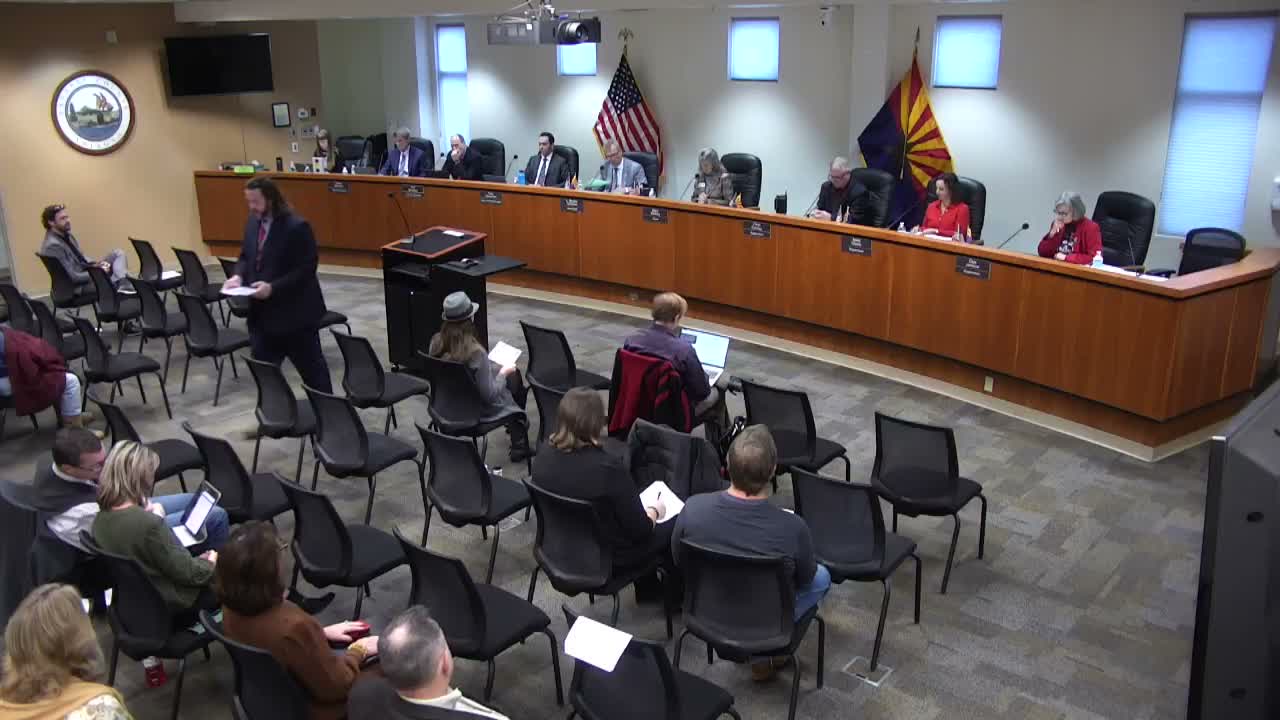
During the Dec. 3 Yavapai County Board of Supervisors meeting, an extended public‑comment period on county restroom policy produced sharply divided testimony and prompted the board to convene an executive session.
Speakers who identified themselves as local residents urged the supervisors to adopt an ordinance or policy restricting multi‑stall women’s restrooms to biological females. King Davis, a speaker from the public, asked the board to “take a moral stand to protect the vulnerable,” and several others cited high‑profile incidents elsewhere as justification for county action.
Other commenters urged the board to protect the rights and safety of transgender residents. Allison Nash told the board that under the Civil Rights Act of 1964 and the Equal Protection Clause of the Fourteenth Amendment, “you have the right ... to use the restroom that aligns with your gender identity,” and cited research presented to the board that found no link between trans‑inclusive bathroom policies and increased bathroom crimes.
Board members listened to more than a dozen three‑minute remarks that ranged from calls for immediate local ordinances to proposals for expanded family/unisex restrooms and stronger staff communication. Chair Mallory acknowledged the intensity of the comments and said the board had conducted prior work on the issue and had added family restrooms to county facilities. After public comment, the board voted to convene an executive session to consider next steps; when the body reconvened it announced no formal action had been taken.
Why it matters: The public comment exposed community tensions over safety and civil‑rights concerns and underscored the board’s limited local authority to change state or federal law. The exchange also highlighted calls from members of the public for greater clarity from county management and requests for more family/unisex restroom options.
What’s next: The board did not adopt a policy at the Dec. 3 meeting and gave no immediate direction; officials said the subject will remain under review and citizens may continue to provide input.