Get Full Government Meeting Transcripts, Videos, & Alerts Forever!
Get email alerts on the Adus Infrastructure topic
No spam. Unsubscribe anytime.
County officials warn state ADU rules could spur density without sewer or water upgrades
Summary
Supervisors and commissioners debated state ADU requirements and expressed concern that recent Arizona legislation will enable higher densities—ADUs, tiny homes and multiple dwellings per acre—without adequate wastewater, water or road infrastructure, prompting calls to align a zoning rewrite with comprehensive-plan updates.
Commissioners and supervisors spent a large portion of the study session debating the local effects of new state ADU law and related statutes that, as presenters noted, limit certain local controls.
——"My take on this new ARS ... it blew open wildcatting in Yavapai County," said Commissioner Ray Pice, arguing the state rule could permit multiple dwellings on small parcels without adequate services. Several board members echoed the concern that increasing ADU allowances without concurrent wastewater or community sewer solutions would shift costs and service calls to county government and residents.
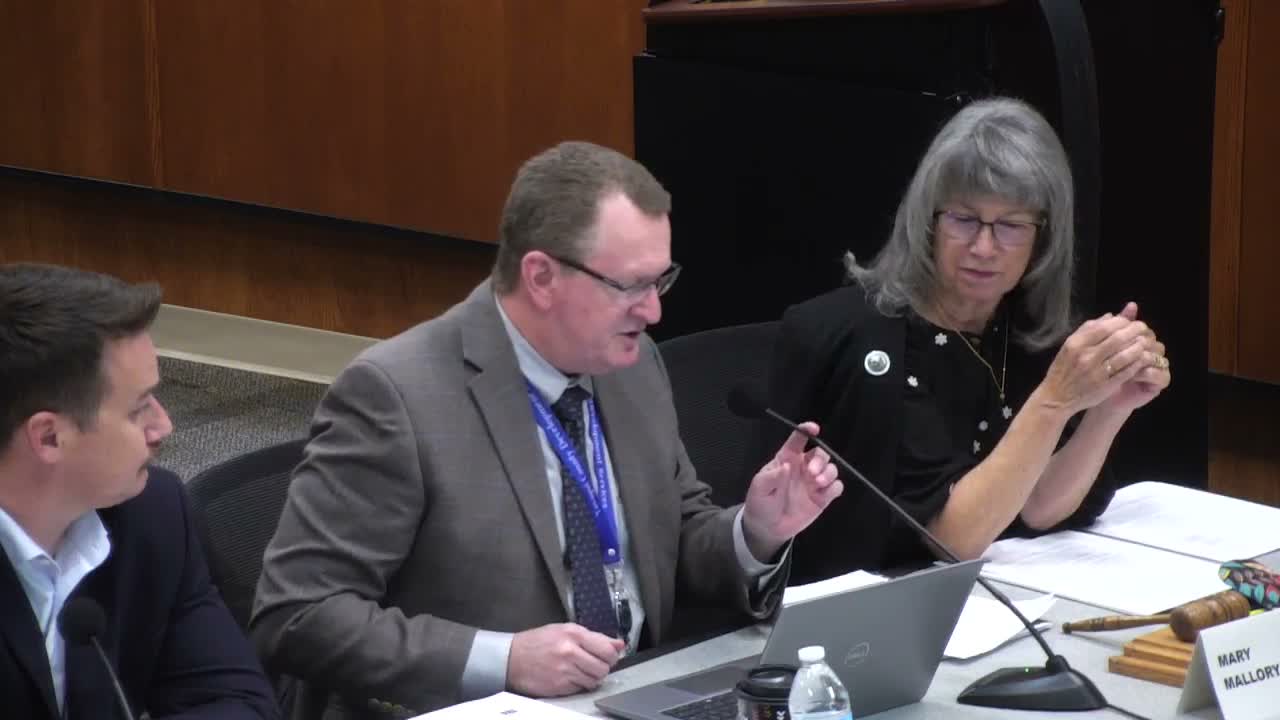
Supervisor comments focused on practical constraints: many unincorporated areas are on septic or wells and cannot support increased density without new wastewater infrastructure or recharge requirements. Jeremy Dye, Development Services director, explained ADU provisions will require appropriately sized wastewater systems per statute and noted a statutory allowance for 1 detached ADU and 1 attached ADU effectively can triple unit capacity on a parcel.
Multiple speakers urged the zoning rewrite to clearly map where higher densities are appropriate — for example, near municipal sewer or in planned areas — and to couple density allowances with infrastructure mandates or required development agreements. Commissioners also discussed tools such as PADs (planned area developments), mandatory community wastewater systems for clustered projects and thresholds to keep truly rural portions of the county protected from blanket density increases.
No policy was adopted; the board expects staff to bring an ADU item to the next Board meeting and to incorporate infrastructure constraints into the zoning rewrite.