Get Full Government Meeting Transcripts, Videos, & Alerts Forever!
Get email alerts on the Housing Needs topic
No spam. Unsubscribe anytime.
Yavapai consultants present stark housing needs assessment as code rewrite begins
Summary
Consultants told the Board of Supervisors and Planning & Zoning Commission that Yavapai County will need roughly 21,500 new housing units countywide by 2040 (about 6,700 in unincorporated areas), and urged zoning updates and incentives — from ADU rules to clustering and community land trusts — to close affordability gaps.
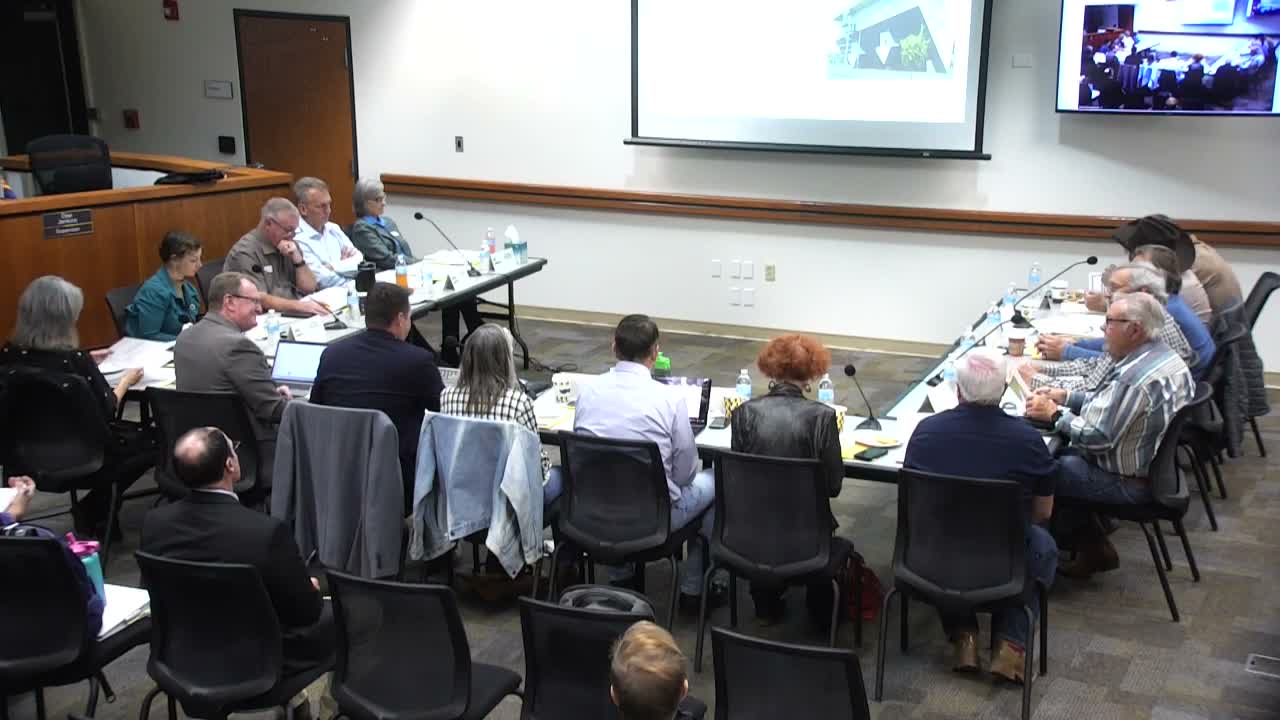
Roger Eastman, lead consultant with Logan Simpson, and Danny Court of Elliot D. Pollock & Company presented a housing needs assessment and a plan to update Yavapai County's 1968 zoning ordinance.
——"This presentation has often been described as bleak, but I prefer the term eye opening," Court said, framing findings that include a countywide demand for about 21,500 housing units by 2040 and nearly 6,700 units in unincorporated areas. Court explained federal affordability benchmarks tied to area median income (AMI), noting households at 30% AMI are generally eligible for deep rental subsidies while those in the 60–120% AMI band typically represent the county's workforce.
Consultants tied the shortage to both price and supply. Court said single-family home prices that averaged about $300,000 in 2016 have climbed above $700,000 in many markets, raising the required household income to roughly $160,000 to afford a median home without subsidy. He also warned that high interest rates and limited public subsidy mean most of the county's needs must be met by private-market solutions, including modest increases in density, accessory dwelling units (ADUs), duplexes, small-lot subdivisions and manufactured homes where infrastructure permits.
Jeremy Dye, Yavapai County's director of Development Services, described an existing county initiative, "Home of My Own," that provides six predesigned single-family plans to speed permitting and reduce design costs. Dye said the program has produced several hundred permits and expanded by intergovernmental agreement to Prescott, Prescott Valley and Clarkdale.
Several supervisors and commissioners pressed consultants on outreach scope and geographic equity. Commissioner Sandy Griffiths noted relatively few developer interviews and asked how the team would engage construction-sector stakeholders during the ordinance-writing phase; Eastman and staff said public outreach will continue and that review sessions are planned during the subregulations drafting.
Court urged a multi-pronged approach: direct subsidies (when available), community land trusts to lower land costs, targeted fee waivers and expedited processing for affordable projects, and objective code standards that allow routine uses to be reviewed administratively. He said clustering subdivisions and concentrating density where municipal sewer exists will be necessary in many areas.
The board took no vote; consultants will continue drafting subdivision regulations and the zoning code for further public review and additional work sessions.