Get Full Government Meeting Transcripts, Videos, & Alerts Forever!
Get email alerts on the Vehicle Surplus Policy topic
No spam. Unsubscribe anytime.
Yavapai supervisors direct staff to refine vehicle surplus policy, cap transfers to nonprofits
Summary
Board directed staff to draft a vehicle surplus policy within the HR policy that limits transfers to eligible entities, sets notice timelines tied to auctions, caps vehicles to 10 per fiscal year, and restricts one vehicle per entity and two vehicles per supervisor district per year; the policy will be considered in next fiscal budget cycle.
The Board of Supervisors directed staff Dec. 17 to continue drafting a county policy governing the sale or transfer of surplus county vehicles to political subdivisions and eligible nonprofits.
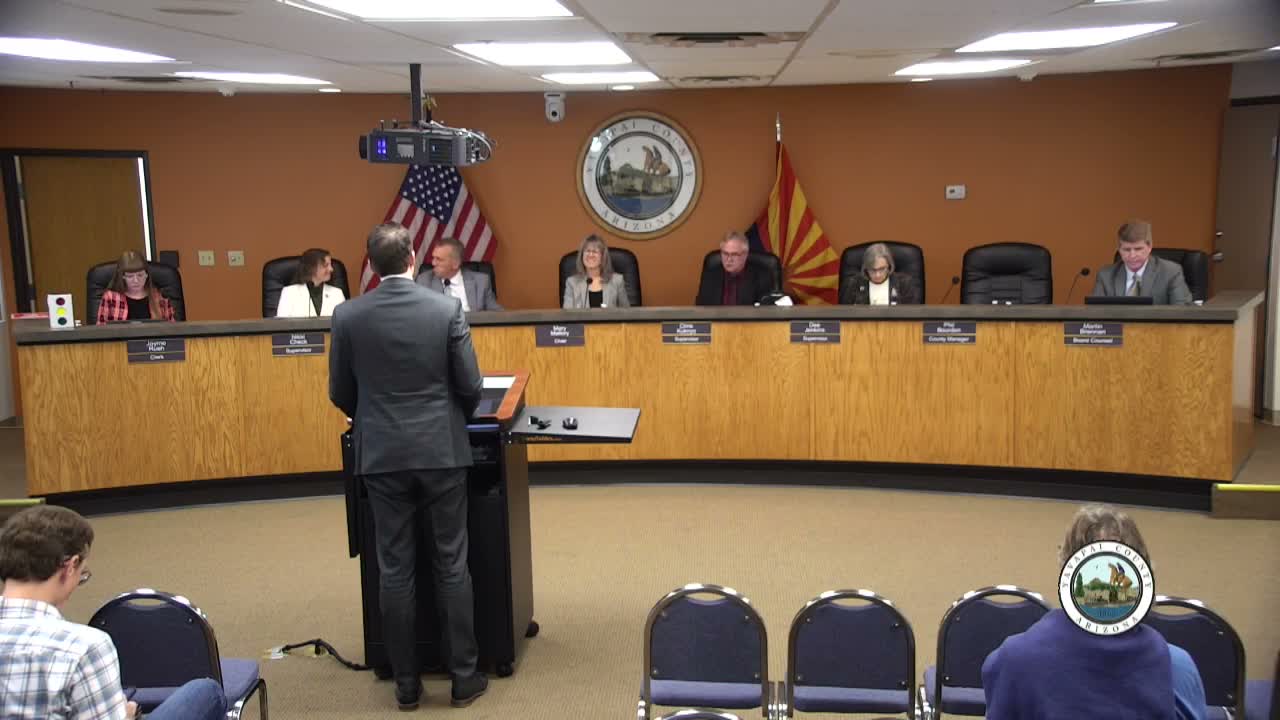
Assistant County Manager Tyler Goodman presented proposed language to add a vehicle‑use section to the county Human Resources policy. Key elements recommended include identifying up to 10 surplus vehicles eligible for transfer in a fiscal year; requiring the fleet director to provide a list of eligible vehicles at least 60 days before a scheduled auction; giving eligible entities until 30 days prior to the auction to request vehicles; awarding vehicles on a first‑come, first‑served basis; limiting each eligible entity to one vehicle per fiscal year; and limiting transfers to no more than two vehicles per supervisor district per fiscal year.
“We thought it best to keep all the vehicle related policies together,” Goodman said, noting the language draws from existing state statutes and board direction. Supervisors discussed effective dates and agreed the policy should be considered as part of the fiscal year 2027 budget process, with staff recommending implementation on July 1 of the applicable fiscal year.
Supervisors also asked staff to define application processes for nonprofit recipients and to include criteria for demonstrating need. The board voted unanimously to direct staff to revise the draft policy and bring it forward during budget sessions with the goal of making it effective for the next fiscal year.