
San Juan County adopts revised rural economic blueprint to guide local priorities
Get AI-powered insights, summaries, and transcripts
Sign Up Free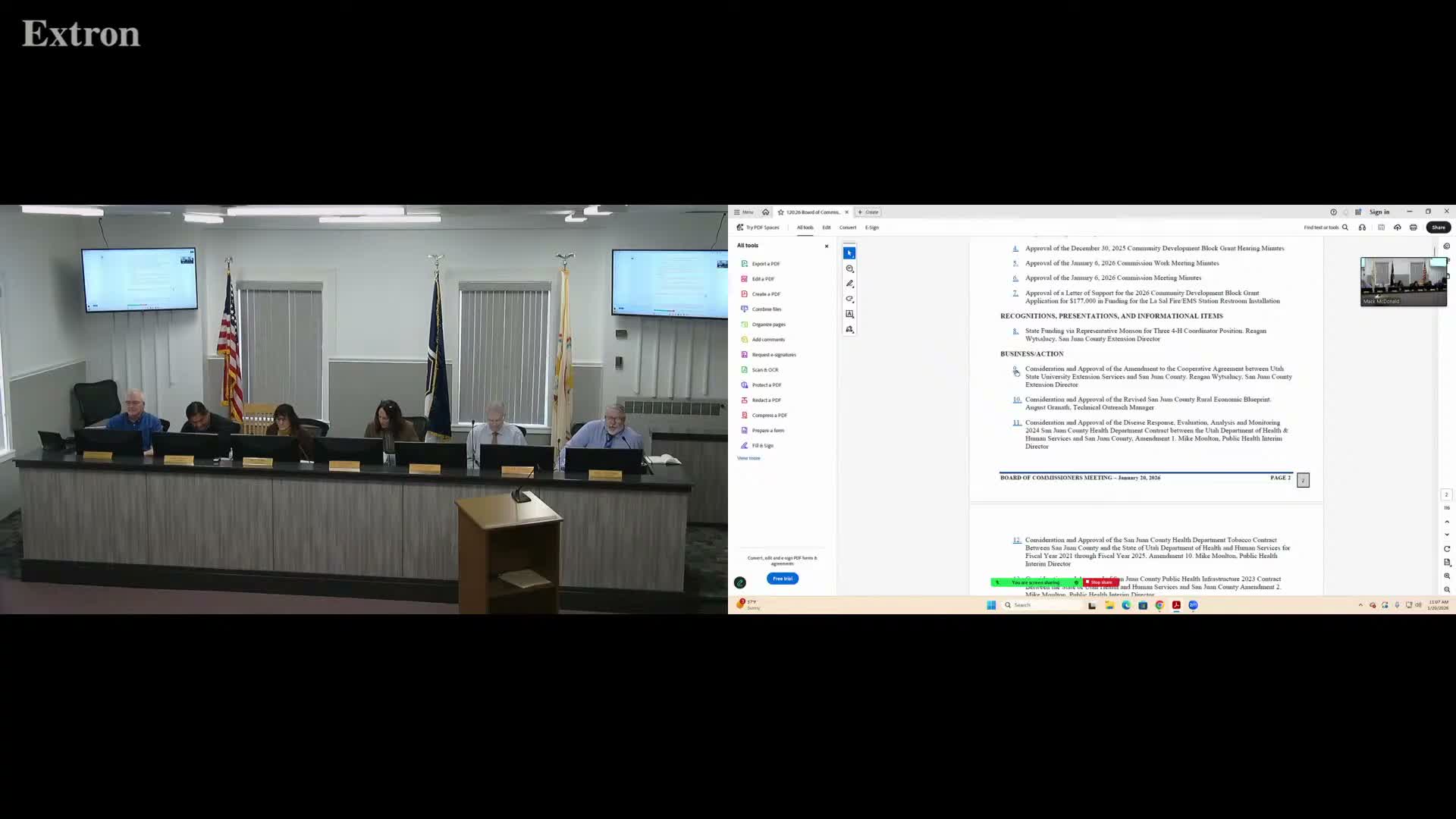
Summary
San Juan County commissioners voted unanimously to adopt a revised rural economic blueprint intended to set local priorities and feed regional planning; staff and the Area Organization of Governments (AOG) will coordinate implementation and grant alignment.
San Juan County commissioners on Jan. 20 adopted a revised county rural economic blueprint intended to guide local priorities and align them with regional planning.
August, the presenter, told the board that he had incorporated feedback from a prior work session and emailed notes on how the document had been revised. "What's before you today is the consideration of adoption of this blueprint, by the county," August said.
Commissioners asked how the blueprint would relate to the AOG's comprehensive economic development strategy (SEDS). August said the AOG prepares SEDS documents on a five-year cycle to comply with federal Economic Development Administration processes and advised the county that it could either lead implementation locally and elevate priorities to the regional SEDS or collaborate closely with AOG economic planners. Talia added that state guidance, AOG sets, and the county document are designed to be complementary for grant and funding purposes.
A commissioner moved to approve the blueprint and another seconded the motion. The board approved the adoption by voice vote.
County officials said the blueprint will be used to prioritize projects for the coming year and to position local priorities for inclusion in future regional planning and grant applications. Commissioners noted the document is intended to be a practical implementation tool rather than a prescriptive process, leaving details of execution and budgeting to subsequent county actions and the annual budgeting process.
The commission did not take further formal budget action on implementation at the meeting; commissioners and staff said any compensation for added county workload would be handled separately as a budgetary item.