Get Full Government Meeting Transcripts, Videos, & Alerts Forever!
Get email alerts on the Waterfront Overlay topic
No spam. Unsubscribe anytime.
Wheeler planners weigh waterfront overlay, propose 50% renovation trigger and small design relaxations
Summary
At the Nov. 13 planning commission meeting, members discussed a draft waterfront overlay that would apply mainly to new buildings and substantial renovations west of Highway 101, considered raising the renovation trigger to 50%, and agreed to seek legal review on public-access dedication and trail connections.
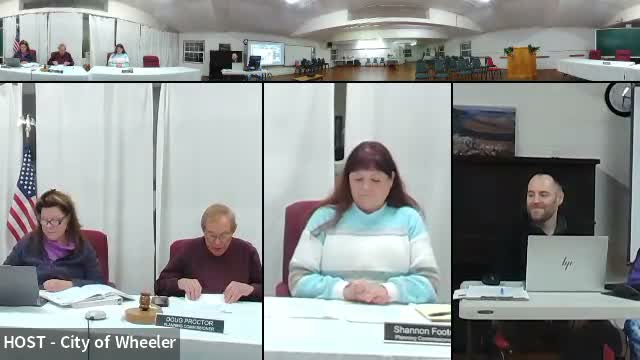
WHEELER, Ore. — The Wheeler Planning Commission spent most of its Nov. 13 meeting refining a draft waterfront overlay that would reshape design rules for development near the river and coast, focusing on when the rules would apply and how they would affect existing businesses and industrial uses.
Chair Ben Proctor opened the item by saying the City Council wanted the overlay applied only to new construction or to buildings undergoing substantial renovation, and noted a suggested revision "Renovation basically meant to change from 2% to 50%." The change would reduce the number of routine repairs that trigger the special design standards commissioners have been drafting.
Why it matters: the overlay seeks to preserve a cohesive waterfront character while allowing the town’s working and commercial uses to remain viable. Commissioners warned that a strict craftsman-style requirement could be impractical for industrial or storage uses on the waterfront and could force costly rebuilds if an owner makes large repairs or sells a property.
Commissioners debated an east–west split along Highway 101. Under the draft they discussed, the overlay would more broadly apply to new buildings west of Highway 101, while existing structures east of the highway would generally remain under their current zoning unless fully rebuilt. Proctor summarized the intent: new or substantially rebuilt properties on the west side would be subject to the waterfront design rules; east-side existing buildings would not be forced to convert their existing character.
City Council members had also asked the commission to increase the allowance for visible-surface-area repair changes from 10% to 15% so property owners can undertake modest repairs without triggering the full design-review process.
Design details under discussion included window proportions, low-pitched roofs and porch treatments, and the acceptable use of natural-appearance siding. Commissioners debated whether to require true cedar-style roofs or permit alternative materials with a cedar look. Benchmarks discussed included a 20-foot separation rule between buildings and two-foot open eaves as a typical design dimension.
Public access and trails: commissioners discussed legal limits on requiring public dedication of private land for a waterfront path connecting to the Santa Maria/Salmonberry trail system. One speaker cautioned the city "might run afoul of the Nolan Dolan case law" if it tried to force dedication without appropriate legal authority, and commissioners agreed to seek a formal legal review before mandating any dedications.
Environmental review and coding timeline: the commission also noted a new draft line requiring environmental assessments and mitigation from developers if the city has not completed that work, and discussed incorporating the overlay into the city’s forthcoming development code rather than adopting a standalone ordinance. Staff outlined next steps — a rewrite by the planner (John), legal review, notice to state reviewers, two public hearings and eventual city council action; commissioners observed the full process could take several months.
Next steps: commissioners asked staff to refine language for industrial uses, adjust percentages as directed by council, consult legal counsel on public-access dedication, and return with revised text and supporting materials. No ordinance or final vote on the overlay was taken at the meeting.