Get Full Government Meeting Transcripts, Videos, & Alerts Forever!
Get email alerts on the Homelessness topic
No spam. Unsubscribe anytime.
Residents press Astoria council on homelessness, warming shelter, library access
Summary
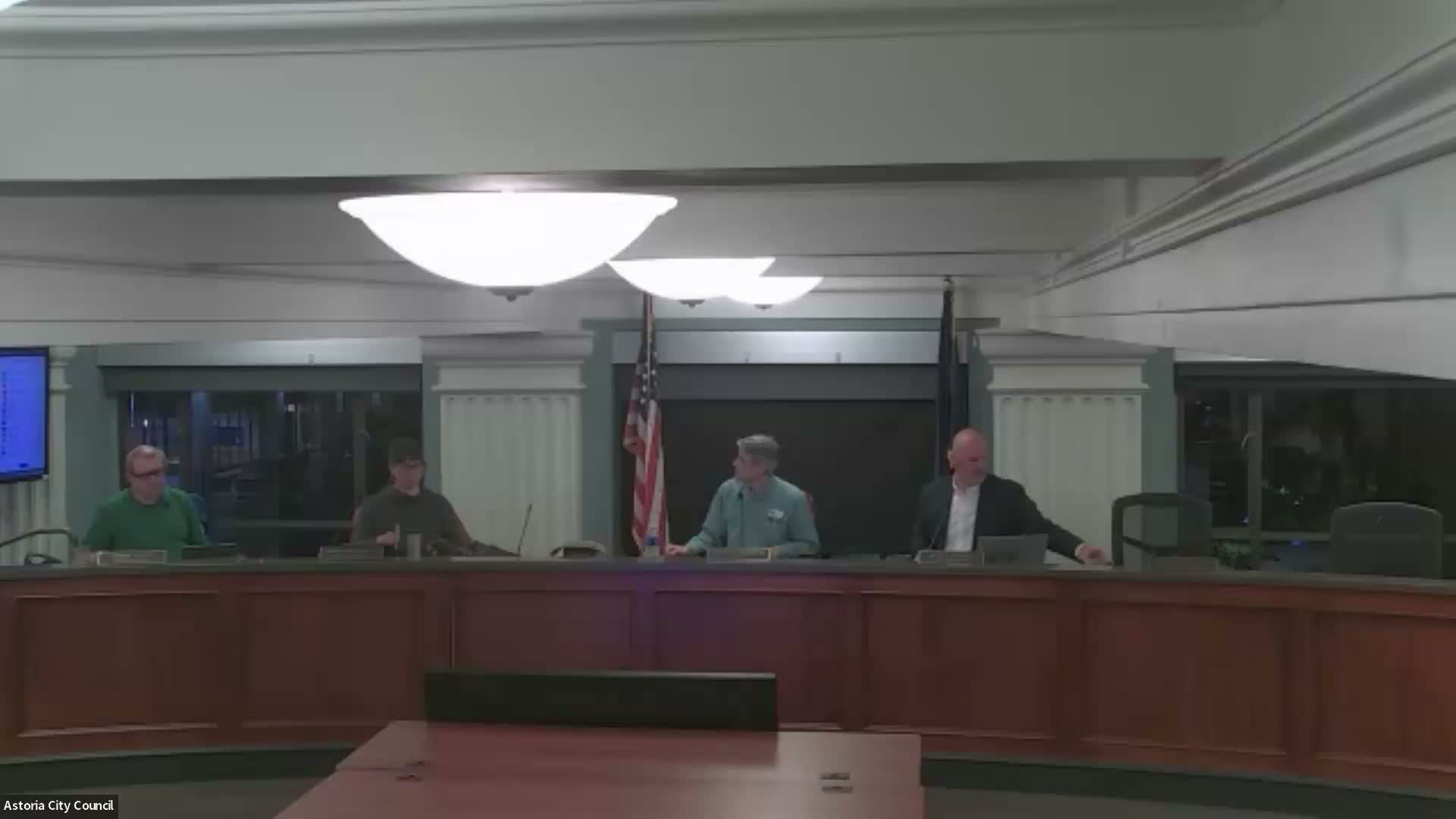
During public comment Nov. 3 residents told the Astoria City Council the city’s response to downtown camping is insufficient, asked about an emergency warming shelter this winter, raised concerns about a $6 library card fee tied to residency and urged policy changes and better coordination with service providers.
A stream of public commenters at the Astoria City Council meeting on Nov. 3 urged more action on homelessness and shelter capacity, pressed the council on downtown camping enforcement and questioned whether city policies were excluding people without stable addresses from basic services.
Business owner Steve Fick told the council he has repeatedly alerted police to encampment problems near his property and described safety threats and ongoing trash and drug‑related incidents. “We’re not doing a very good job right now,” Fick said, and urged the council to “try things” and not be afraid of failure when testing different programs. He said citations alone have not addressed the problem.
A caller identified as Don raised two linked concerns: he criticized federal spending priorities in light of local need and said the library’s requirement for proof of residence creates a $6 barrier for some people. “I just I just don't see the point of that,” Don said, asking the council to address whether the library fee or residency requirement unfairly affects people who are unhoused.
Other speakers added policy‑level concerns. Carissa asked whether the city has a plan or funding for an emergency warming shelter for the coming winter. Philip Arish described how a city sewer‑hookup code requiring a separate ADU sewer connection (a 20‑foot trench) can make accessory dwelling units financially infeasible and thus hinders small‑scale housing production. Mary Anne urged support for mental‑health diversion programs and praised local whistleblowers in a county investigation, linking criminalization and overloaded dockets to insufficient mental‑health infrastructure.
On new business, a councilor reiterated concerns about enforcement of camping violations in the downtown area and asked when service providers and staff could return to advise the council on tools for police and outreach workers. Manager Spence said providers could be invited to a near‑term meeting; the council discussed scheduling that follow‑up at either the Nov. 17 meeting or a December work session.
No new ordinance or enforcement policy was approved at the Nov. 3 meeting; councilors asked staff to coordinate with providers and return with options and information for future discussion.