Get Full Government Meeting Transcripts, Videos, & Alerts Forever!
Get email alerts on the Advisory Body Training topic
No spam. Unsubscribe anytime.
City attorney trains Bend Landmarks Commission on ethics, ex‑parte rules and impending growth‑plan update
Summary
City Attorney Ian Lighthizer briefed commissioners on the council–manager form of government, advisory‑body authority (including the Landmarks Commission’s quasi‑judicial role), public‑official ethics, ex‑parte contact rules, public‑record obligations, and the upcoming 4–5 year growth‑plan update tied to the comprehensive plan.
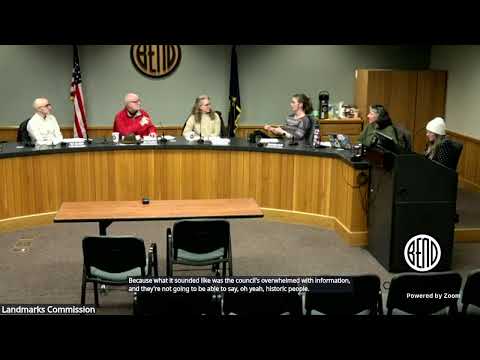
Ian Lighthizer, the City of Bend attorney, led a training session at the Jan. 20 meeting of the Bend Landmarks Commission covering how advisory bodies fit into city government, ethical obligations, ex‑parte rules for quasi‑judicial hearings and expectations for public‑record retention.
Lighthizer explained that Bend operates under a council–manager form of government: the city council provides political leadership and policy direction while an appointed city manager carries out administrative duties. He emphasized that advisory bodies are generally created by municipal code to make recommendations to council, but noted that the Landmarks Commission (like the Planning Commission) has quasi‑judicial authority to decide certain applications affecting historic resources.
On ethics, Lighthizer reviewed the core Oregon rule against using public position for private financial benefit, offering everyday examples and urging disclosure where potential conflicts exist. He described two types of conflicts — actual and potential — and encouraged commissioners to put conflicts on the record and consult staff or the city attorney when unsure.
Using Department of Land Conservation and Development (DLCD) materials, he defined ex‑parte contacts and advised commissioners to avoid private conversations about pending applications; if an out‑of‑hearing contact occurs, commissioners should declare it during the hearing so the record is transparent.
Lighthizer also discussed the comprehensive plan and an upcoming growth‑plan update: the city operates on roughly a 20‑year planning horizon and will begin a multi‑year process to update the plan, with substantial public engagement and opportunities for advisory bodies to help shape council goals during the post‑election goal‑setting period.
Finally, he reminded commissioners that materials created in the course of their duties are likely public records subject to retention requirements and recommended using city email to avoid personal‑account disclosure issues. He noted training and orientation opportunities for new members and encouraged commissioners to work with staff to identify where their expertise can inform council decisions during the growth‑plan process.
The session concluded with logistics and next steps for commission involvement in code updates and outreach.