Get Full Government Meeting Transcripts, Videos, & Alerts Forever!
Get email alerts on the Budget Realignment topic
No spam. Unsubscribe anytime.
Grand Forks board continues budget realignment; public and teachers urge protecting music programs
Summary
At a Jan. 20 public meeting the Grand Forks School Board continued its budget realignment discussion (no action taken) and heard multiple public commenters and teachers urging the board not to eliminate fourth‑grade orchestra or disproportionately cut music positions; administrators reiterated funding constraints and said alternatives and further study are being explored.
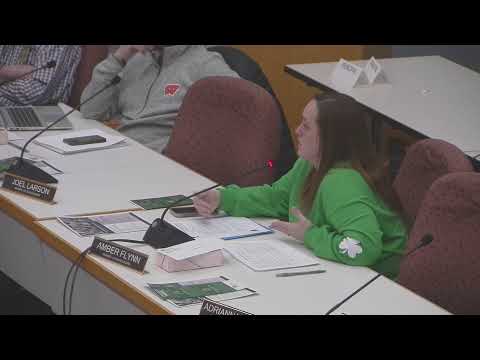
The Grand Forks Public Schools Board of Education on Tuesday continued a multi‑week budget realignment discussion and fielded more than a dozen public comments — many from students, teachers and parents — urging the board to preserve elementary and middle school music programs.
Board members and administrators reviewed recommendations developed at a Jan. 16 retreat and reminded the public that the board would take no action on the realignment at this meeting; the process remains open and the board said it expects to conclude work at its Feb. 9 meeting. District materials and the 52 concepts under consideration are posted on the district website.
Administrators described the kinds of positions under review: enrichment teachers, interventionists, instructional coaches, a proposed nursing position, the newly created Grand Forks Virtual High School Academy, and a student transportation coordinator. Brandon Baumbach, who led the retreat recap, said initial estimates for extracurricular/CODA contract savings had been overstated in a handout and that a number shown as about $48,000 should be closer to $38,000 because of recent contract adjustments.
Public commenters said music cuts would have cascading effects on enrollment and student opportunity. Eli Stevenson, a college sophomore who attended Grand Forks Central High School, told the board, “Music is something that is so helpful to students, not only emotionally, but academically as well…we can't rely on something that's constantly facing cuts.” Several music teachers described how eliminating fourth‑grade orchestra would pit beginning orchestra against beginning band and reduce the pipeline of students into older ensembles.
Erin Cummings, an orchestra teacher who serves multiple elementary schools, said a cut to fourth‑grade orchestra would likely force her to cover more buildings and would reduce middle‑school lesson time because she would spend more time traveling. “If fourth‑grade orchestra is cut, my position will be expected to teach at more buildings — potentially being spread too thin,” she said.
Music program leaders and parents also raised process concerns about stakeholder engagement; several speakers and board members noted the retreat timing (a weekday morning) limited attendance by working parents and teachers.
Administrators stressed fiscal and legal constraints. District staff noted that some interventionists were funded in earlier years with COVID relief dollars or with Title I allocations and that federal Title I rules prohibit supplanting (using federal funds to replace general‑fund positions). As a result, replacing a general‑fund interventionist with Title I money in another school can create compliance risks. Baumbach and others also cited declining enrollment and reductions in federal grants as drivers of the district’s revenue shortfall.
Superintendent Dr. Brenner acknowledged the gravity of the choices but said administrators are exploring alternatives. He described a range of existing programs and pathways intended to maintain student supports even if some positions are changed. “We have those opportunities for our students,” he said, noting some services (mentoring centers, flex time, community high school options) were established with earlier one‑time funds and may not be available in the same form going forward.
Board members asked for more detail on scheduling, travel time for shared orchestra teachers, contractual implications for teachers (such as 6/5‑time or supplemental contracts), and the likelihood of unintended fiscal consequences if a change merely shifts costs. Several requested that administrators engage directly with impacted teachers and principals before final recommendations are set.
The board did not vote on any budget‑realignment proposals at the meeting. Members encouraged continued public input and said they will revisit the concepts and any refreshed savings language — including options that preserve positions through revised contractor arrangements or philanthropy — before a final vote.
What happens next: the district reiterated that the budget realignment package will again be on the board agenda Feb. 9, when the board may be asked to take formal action.