Get Full Government Meeting Transcripts, Videos, & Alerts Forever!
Get email alerts on the Homelessness Response topic
No spam. Unsubscribe anytime.
Denver Council approves Urban Alchemy shelter contract and ambassador program after hours-long debate on oversight and district impacts
Summary
After extended debate, Denver City Council approved two agreements with Urban Alchemy: a $30 million non‑congregate shelter contract for the Aspen site and a $3 million community ambassador contract to expand peer‑led street engagement. Council members pressed the administration on provider vetting, monitoring, and communication with District 8.
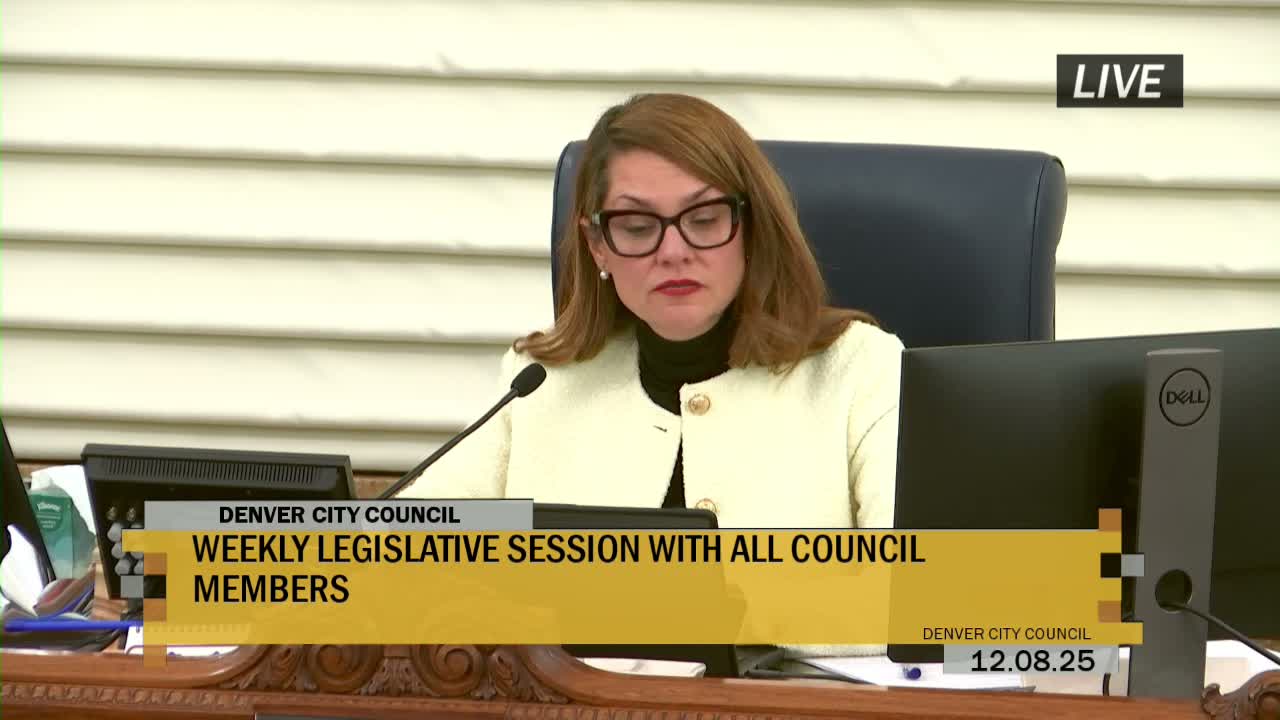
Denver City Council approved two contracts with Urban Alchemy on Dec. 8, 2025 after hours of questions from council members about the nonprofit’s track record, oversight mechanisms and the administration’s outreach to affected council offices. The measures included a $30 million agreement to operate the Aspen non‑congregate shelter and a roughly $3 million contract to fund community ambassadors and street engagement work across high‑call corridors.
Councilmember Lewis (District 8) led objections to the shelter contract, saying she repeatedly learned about proposed shelter activations in her district by email rather than through direct consultation and accusing the administration of “continu[ing] to concentrate poverty in District 8.” Lewis told colleagues she could not in good conscience approve the agreement without clearer answers about how past incidents elsewhere would be prevented locally.
Deputy Director Jeff Kositzky of HOST defended the procurement and monitoring approach. He told council, “If this were to get voted down tonight…we would have no operator for the site,” noting the Salvation Army agreement expires Dec. 31 and the city needs a new provider in place for the transition. Kositzky described standard contract oversight—monthly reports, program monitoring, unannounced visits and termination language—and said HOST would use performance‑based contracting so payment is tied to results.
Urban Alchemy practitioners urged council to weigh the immediate shelter needs against provider concerns. Ian Clark Johnson, a practitioner with Urban Alchemy, said accountability is “number 1 for us,” described hiring and training already under way in Denver, and said the organization had fired bad actors in the past and implemented improved payroll and data‑quality checks.
Several council members voiced competing priorities. Councilmember Sawyer said she would vote yes to avoid returning people to the street this winter, calling the choice a “Sophie’s Choice” between imperfect options. Councilmember Parody and others pushed for clearer, written exit and escalation plans and for regular briefings to council offices. Cole Chandler, the mayor’s senior adviser on homelessness, and Kositzky both said HOST and the mayor’s office would require stronger, regular communication, and committed to quarterly briefings with the council and community stakeholders if the contracts passed.
The council also debated a related community ambassador contract that would fund peer‑led outreach teams to respond to 311 calls and escalate to behavioral‑health or housing teams as needed. Supporters said the model diverts non‑emergency calls away from police and increases proactive engagement; critics said the role’s mix of outreach, public‑space stewardship and cleaning risked being used to move people along when shelter or housing capacity is limited. The administration said the new city software and dispatch model will route calls to the most appropriate service team and that STAR (the support team assisted response unit) and DPD remain available for crises.
The shelter resolution (Council Resolution 18‑83) passed on a recorded roll call (9 ayes). The community ambassador resolution (Council Resolution 18‑81) also passed (9 ayes). Several council members recorded no votes or voiced continued concerns; a number of follow‑up items were requested publicly: regular performance reports, a written exit/contingency plan, monthly monitoring details, and quarterly briefings with district offices.