Get Full Government Meeting Transcripts, Videos, & Alerts Forever!
Get email alerts on the City Goals Q3 topic
No spam. Unsubscribe anytime.
Denver mayor says city is meeting most Q3 goals but warns voucher cuts threaten housing exits
Summary
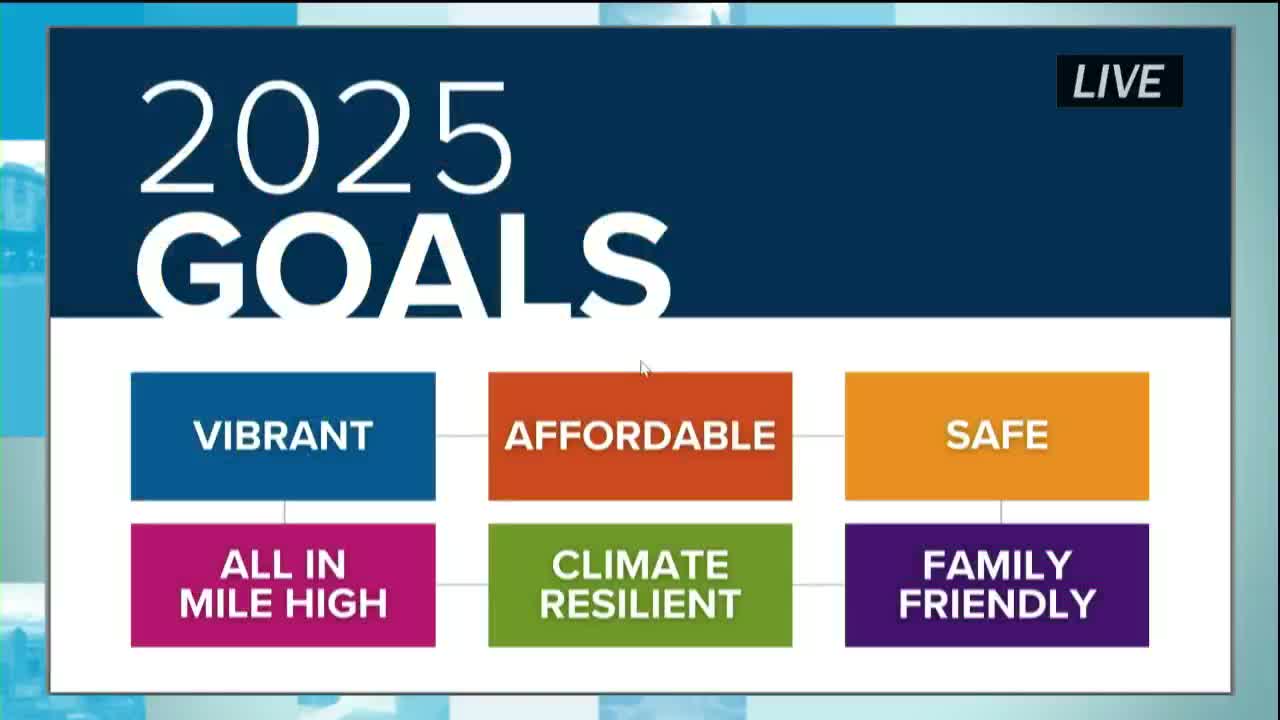
At a joint mayor and City Council meeting, the mayor reported progress across six 2025 citywide goals — downtown revitalization, public safety, affordability, climate resilience and youth programs — while warning that federal and state voucher cuts and a HUD shutdown have stalled roughly 500 housing exits to permanent housing.
The mayor of Denver reported substantial progress across the city's six 2025 goals during a joint weekly meeting with City Council, but cautioned that federal and state funding setbacks threaten the city's ability to move people from transitional shelters into permanent housing.
The mayor told council members that downtown revitalization efforts tied to the Vibrant comprehensive plan have produced a Vibrant bond measure on the ballot and that 16th Street is fully reopened. "We have already, this year to date, 61 new business starts in downtown this year," the mayor said, noting this year's pace is roughly three times the 2023 annual average.
On public safety, the mayor said the city set a goal to reduce shootings by 15% and that the city was "significantly exceeding that goal," reporting that "year to date, homicides are down almost 50%" and nonfatal shootings are down 22%. These figures were presented by the mayor as part of a broader update on community safety work tied to PNI sites and expanded neighborhood interventions.
On housing and homelessness, the mayor said the city had created 1,700 affordable units so far toward a 3,000‑unit target for the year and highlighted partnerships — including office‑to‑residential conversions that could add about 236 units — and a middle‑income project with the Denver Housing Authority that uses property tax abatements. "We have already passed that goal," the mayor said of the target to move 2,000 people experiencing homelessness into transitional housing and shelter.
But the mayor warned that a combination of federal voucher reductions, state budget cuts and a temporary HUD shutdown have stalled many exits to permanent housing. He provided counts: roughly 100 federal vouchers lost, about 80 state vouchers lost, and 273 units that HUD has not processed while the federal government was closed — a total the mayor described as "almost 500" stalled housing exits. "So that's the one that we're worried about due to those cuts," the mayor said, urging further council discussion on realistic goals for 2026.
Council members pressed for more localized data and program detail. Councilor Tammy Torres asked, "Can we get neighborhood data around the same statistics?" saying neighborhood breakdowns would help outreach teams and neighborhood organizations explain local conditions. The mayor agreed to provide neighborhood‑level safety data and said housing counts for "affordable units" include new construction, preserved units, deed‑restricted units and units made affordable through rental subsidies; he clarified affordable units are income‑restricted so occupants pay no more than 30% of income for rent.
On the affordable‑housing pilot and tax abatements, Councilwoman L.V. Dress asked about expected costs and abatement length. The mayor or staff said specific numbers would be delivered to council, and estimated the tax abatement period at about 10–12 years while deed‑restriction covenants on units typically run about 30 years.
The mayor also reported progress on climate and family‑friendly goals: approximately 1,500 heat pumps/solar/EV charger installations completed, 2,800 contracted, an 81% pace toward the 4,500‑tree planting target, and youth programming that has already placed about 3,600 young people into jobs this year — exceeding the 2,500‑job target.
The mayor framed the Q3 report as preliminary data through September and said October numbers were not yet included. He closed by thanking city employees and department teams for delivering results despite budget constraints and federal uncertainties.
The council followed the update with questions about program dosage for after‑school services and data integration with Denver Public Schools; the mayor said staff will work on shared data to track frequency and outcomes.
Next steps: staff will provide neighborhood‑level safety statistics and more detailed fiscal and program data on the affordable‑housing pilot and tax‑abatement terms for council review, and the mayor warned the city will revisit realistic housing exit goals for 2026 in light of federal and state funding trends.