Get Full Government Meeting Transcripts, Videos, & Alerts Forever!
Get email alerts on the Budget topic
No spam. Unsubscribe anytime.
Denver council opens required hearing on mayor's proposed 2026 budget as residents urge restorations for shelters, youth programs and elections
Summary
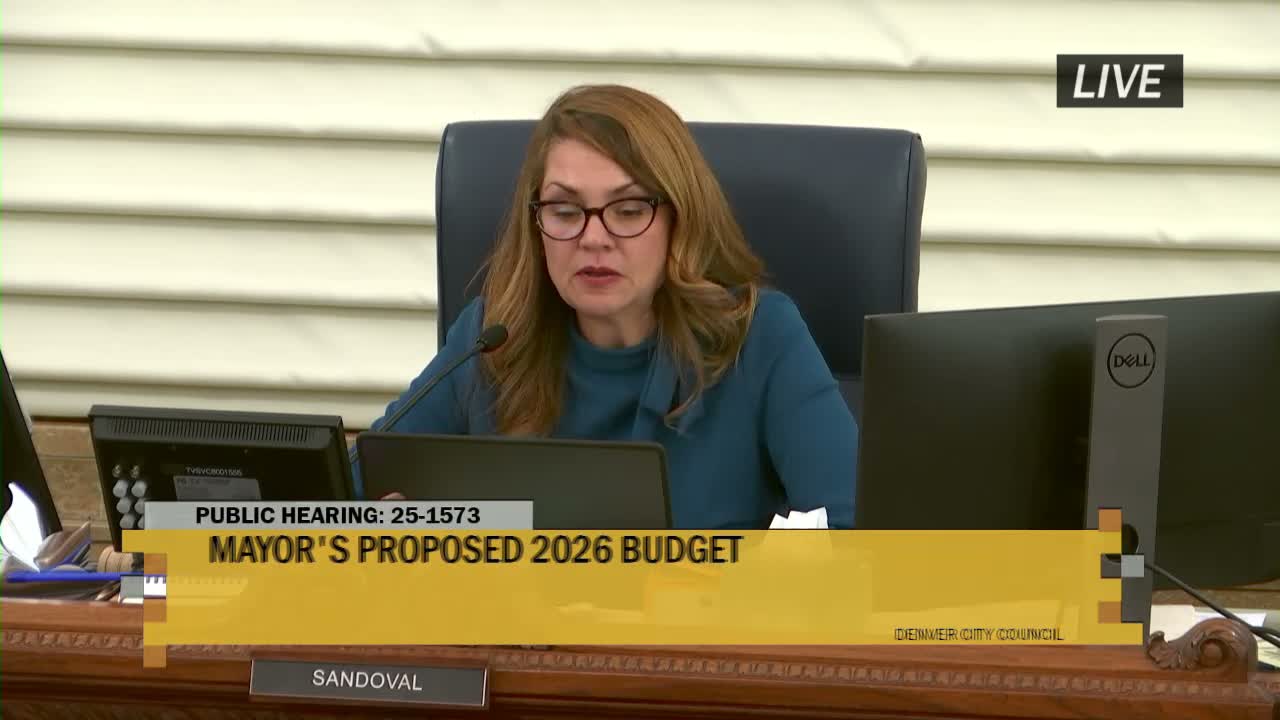
Denver's City Council held a required public hearing Oct. 27 on Mayor Mike Johnston's proposed 2026 budget, which seeks roughly $200 million in reductions and would cut nearly 1,000 FTEs from the general fund; public testimony focused on restoring funding for family shelter, the Office of Children's Affairs and the Clerk & Recorder's election operations.
Denver City Council held a required public hearing Oct. 27 on Mayor Mike Johnston's proposed 2026 budget, a proposal that officials say would require roughly $200 million in reductions and eliminate nearly 1,000 full‑time equivalents in the general fund.
In a staff presentation, Justin Sykes, director of the city's Budget and Management Office, said the proposed budget would keep the city's total spending request at about $4.4 billion while preserving core public services. The mayor's plan does not raise taxes, Sykes said, and includes targeted increases for a small number of priorities while projecting a general‑fund reserve of about $183 million — roughly 11 percent of projected 2026 expenditures.
Why it matters: Council members and dozens of residents said the mayor's cuts risk immediate harm. Testimony and council questions focused on whether reductions to the Office of Children's Affairs (OCA), family shelter funding, and the Clerk and Recorder's election budget would produce long‑term damage to public safety, democratic participation and services for children.
Residents and nonprofit leaders pressed the council to restore several funding lines. Multiple speakers urged the council to add roughly $9 million to expand family shelter capacity after describing multi‑week waitlists and families sleeping in vehicles. Youth‑serving organizations and teachers warned that proposed cuts to OCA out‑of‑school‑time and youth violence prevention grants would eliminate programs that provide meals, mentoring and mental‑health supports. Voting groups, election judges and civic organizations argued that cuts to the Clerk and Recorder could close dozens of voting centers and ballot drop boxes in the 2026 election cycle.
Council questions and staff responses: Over the course of the hearing, council members asked administration staff detailed questions about spending flexibility, special revenue funds and contingency. Staff said some capital and special‑revenue dollars cannot legally be shifted to operating needs; they also said state reimbursements for elections are recorded when received, which often falls in the fiscal year after a November election. The administration acknowledged a hiring freeze and said agency vacancies and other measures are being used to manage near‑term expenditures.
Noted numbers and details from the hearing: - The administration said it identified roughly $200 million in budget reductions needed for 2026 and projects a general fund of about $1.6 billion. - The proposal would reduce roughly 957 general‑fund FTEs and about 6.5% citywide, the presentation said. - The proposed capital budget totals roughly $277 million; many capital funds are legally restricted to capital use.
What residents said: Public commenters included nonprofit directors, parents, youth and election workers. Speakers described immediate needs — from families living in cars and shelters at capacity to community groups that rely on OCA grants to run free programs. Several speakers urged the council to restore the Clerk and Recorder's full request to avoid losing polling centers, ballot drop boxes and mobile voting units.
Next steps: Council members will have an opportunity to offer budget amendments at the Nov. 3 meeting. The council plans to vote on the final budget Nov. 10. Council leaders and administration staff committed to provide written answers to outstanding questions about particular contracts, grants and revenue timing ahead of the amendment deadline.
The hearing closed after more than three hours of public testimony and extensive council questioning; no final vote on the budget occurred Oct. 27.