Get Full Government Meeting Transcripts, Videos, & Alerts Forever!
Get email alerts on the Deliberative Democracy topic
No spam. Unsubscribe anytime.
Denver committee hears briefing on civic assemblies as a tool for shared decision‑making
Summary
Councilmembers heard an informational briefing on civic assemblies — randomly selected, demographically representative citizen panels — as a potential mechanism for making deliberative recommendations on issues such as housing. Presenters described selection mechanics, professional facilitation, a proposed living‑wage stipend and cautioned about scope and implementation details.
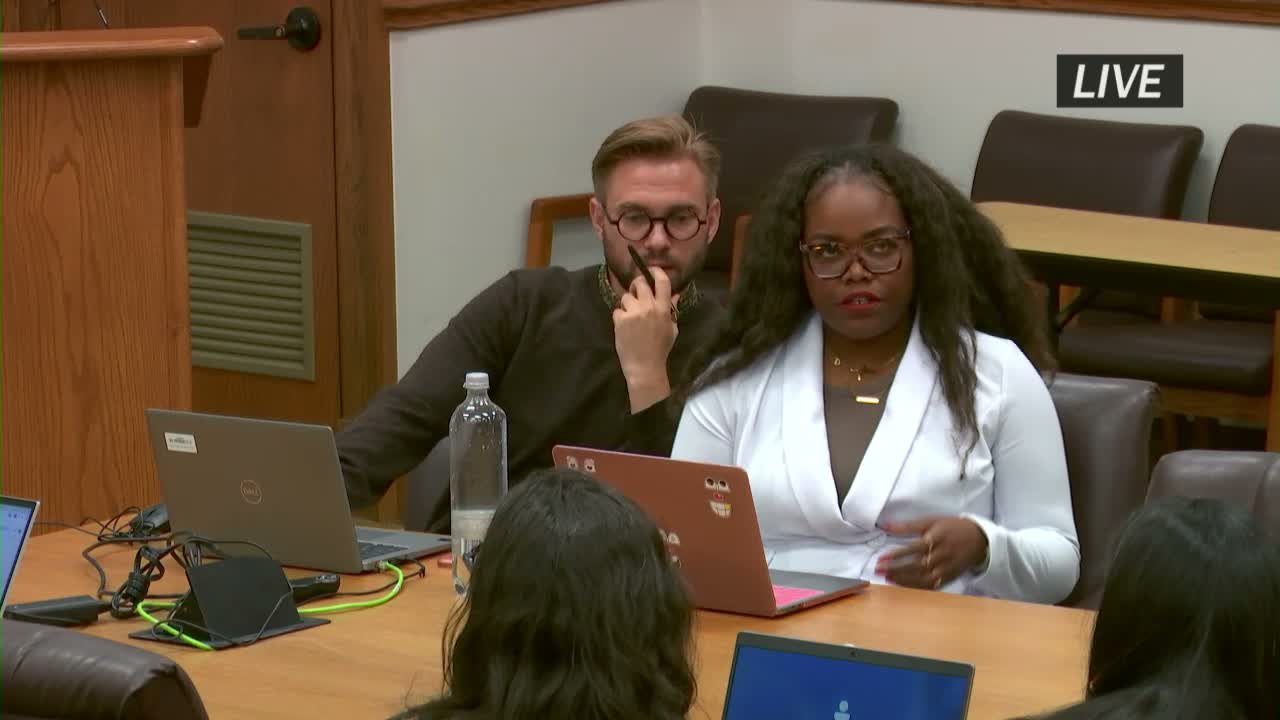
Council President Amanda Sandoval opened the Budget & Policy Committee meeting where Councilwoman Chantal Lewis presented an informational briefing on civic assemblies, a deliberative process that assembles a demographically representative group of residents to learn about an issue and produce recommendations. "This is not an advisory body," Lewis said, stressing that assemblies should be treated as an equal power by decision makers.
The presenters — including Rishon Bliss of the National Coalition for Dialogue and Deliberation and representatives from Healthy Democracy, the Civic Canopy and the National Civic League — laid out mechanics: invitations sent by lottery to households create an opt‑in pool that is then stratified to match city demographics; delegates receive professional facilitation, stipends, multi‑day deliberations and access to an independent information committee that curates expert testimony.
Why it matters: proponents said assemblies can bridge polarizing debates and produce high‑acceptance recommendations when well scoped and paired with commitments from governing bodies. Bliss cited cost and time estimates in the proposal and noted an explicit compensation model: "the living wage proposition is that we give them $35.29 an hour, for over 50 hours of work," he said. Presenters also cited a 2020 OECD review and international examples (Ireland, Oregon, Fort Collins) to show assemblies often win substantial public backing for their recommendations.
Councilmembers pressed presenters on practicality. Several members asked how assemblies would avoid relying on the "same 12 people" who habitually dominate public engagement, how outreach and recruitment would reach mistrusting or hard‑to‑reach communities, and whether assemblies would replace or augment existing advisory boards. Presenters emphasized multi‑stage outreach (including mailed invitations), paid participation to reduce barriers and the use of alternates when selected delegates are unavailable.
Scope and implementation remain open questions. Ramin Sarabi of American Public Trust advised that topics must be tractable within the time allotment (presenters estimated roughly 50 hours of deliberation as a typical scale) and that assemblies need clear paths to implementation (resolutions, ordinances or ballot measures) so recommendations do not erode public trust.
Next steps: Councilmembers asked for the mayor's office proposal to be circulated and requested follow‑up briefings and comparative reports from other municipalities. Lewis and presenters agreed to share the proposal and to provide additional information for committee members to review before any formal ordinance or charter action.
The briefing closed with committee members agreeing to return the item for a deeper review once the committee has the written proposal and comparative analyses.