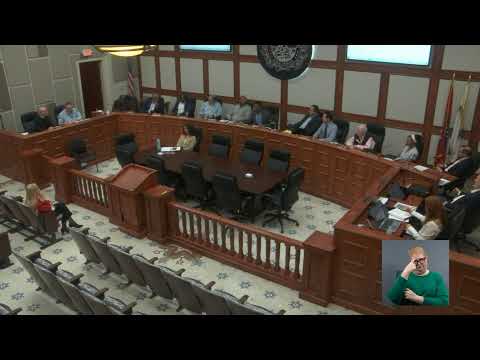
Little Rock planners reject 90‑lot Eagle Place preliminary plat after Potter’s‑clay warnings
Loading...
Summary
The Little Rock Planning Commission voted 4–5 with one abstention on Jan. 8 to deny approval of the Eagle Place preliminary plat at 13700 Alexander Road after neighbors and commissioners raised long‑standing soil and road concerns tied to expansive 'Potter's/Porter's' clay.
The Little Rock Planning Commission on Jan. 8 declined to approve the Eagle Place preliminary plat, a proposal to subdivide 28.84 acres at 13700 Alexander Road into 90 single‑family lots, after residents and engineers raised repeated concerns about expansive clay soils and deteriorating roads.
Neighbors, including Reggie Kraus, told the commission the area sits on Potter's (Porter's) clay and that past development in adjacent blocks has produced recurring foundation and road failures. "All the houses that were built over the years have had a lot of problems with movement," Kraus said, urging the commission to require disclosure or remediation. Another speaker, Sherry Gilbert, said building 90 starter homes on unstable soil “sets future families up for failure” and warned of future liability for homeowners and taxpayers.
Staff had recommended approval of the preliminary plat subject to the standard comments and conditions in the staff report. Commissioners, however, debated whether the known soil conditions were sufficient cause to add stronger, site‑specific permit conditions. Commissioner Jeremiah Russell moved to approve the plat only if the applicant provided three conditions: a licensed geotechnical soils analysis for each residential lot, a licensed structural engineer's foundation design for every house, and submission of those documents to planning staff at permit time for review. The city attorney and staff indicated the commission could add such conditions because evidence of the soil issue had been presented to the body.
The applicant's representative said material testing contractors are available and that the developer would comply with standard Little Rock street and construction standards; the applicant agreed that foundation design would follow geotechnical recommendations. Nevertheless the motion failed on a roll call vote: Brown (No), Bernard (No), Hodges (Yes), McDonald (Yes), Person (Abstain), Russell (Yes), Samad (No), Eves (Yes), Baxter (No), Vickers (No). Because the motion failed, the plat was not approved at this hearing.
Why it matters: speakers and staff described a pattern of structural and pavement damage in the area tied to expansive clay; commissioners said requiring per‑lot soils testing and engineered foundations would be a reasonable way to protect public safety and future owners, but the body did not reach the supermajority needed to adopt the proposed conditions. The applicant may revise and refile or address the variances and conditions raised at the hearing.
Next steps: the commission did not approve the preliminary plat at this meeting. Staff and the applicant may confer about the technical recommendations discussed and may bring a revised application at a future meeting.