Get Full Government Meeting Transcripts, Videos, & Alerts Forever!
Get email alerts on the Public Works Rates topic
No spam. Unsubscribe anytime.
Board hears rate study proposing $10.39 first‑year increase to solid‑waste collection; decision deferred
Summary
Public Works presented a five‑year rate study proposing a $10.39 monthly first‑year residential collection fee (about 35% in year one) to fund routing software, vehicle replacement and a new landfill cell; the board deferred final action for two weeks to receive additional financial details and neighborhood impact analysis.
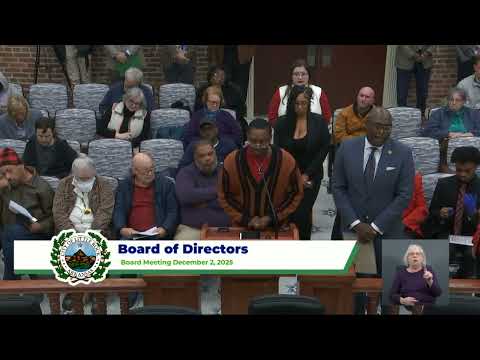
Public Works told the board on Dec. 2 that a rate study recommends an initial $10.39 monthly increase in residential collection fees—described by staff as roughly a 35% rise in year one—followed by $2/month increases in years two through five to fund a vehicle replacement plan, routing software and construction of a new landfill cell.
Manish (Public Works) said the department serves about 60,000 residential customers directly and that capital needs—an aging fleet and a landfill cell that must be replaced within a few years—drive the recommendation. "Our proposal is to increase the first year by $10.39. So that's a 35% increase," he said.
Residents and neighborhood leaders urged caution. Kathy Wells, president of the Coalition of Little Rock Neighborhoods, asked the board to consider reserves and alternatives rather than imposing an immediate $10.39 monthly hike on households; other commenters said added pressure on low and moderate income households could push people toward delinquency.
Directors debated alternatives including staggering increases, debt financing, and scaling back services such as bulky-item pickups. Public Works explained front‑loading the increase reduces total cost over five years (staff showed financing scenarios) and said not acting would threaten future landfill capacity and the ability to purchase new trucks.
After discussion the board voted to defer the ordinance for two weeks, asking Public Works to provide additional comparative figures (including impacts combined with recent water and wastewater increases) and to quantify projected delinquencies and potential mitigation strategies.
Next steps: Public Works will return with requested analyses and cost/benefit comparisons in two weeks; the board signaled urgency but asked staff to supply clearer, resident-facing impact estimates before a final vote.