Get AI Briefings, Transcripts & Alerts on Local & National Government Meetings — Forever.
Nampa, School District Open Talks on Land Swap for Soccer Complex; Council Signals Support With Conditions
Loading...
Summary
City staff and the Nampa School District discussed a conceptual land swap that would trade city park acreage (Rodeo/Stampede parks) for about 43 acres owned by the district near Airport and Robinson. Council members asked for deed restrictions, impact‑fee clarity and phased development; no formal action was taken.
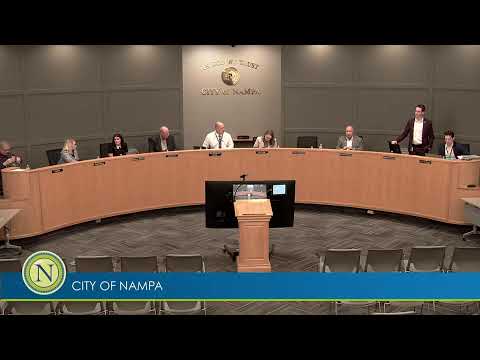
Nampa city staff and representatives of the Nampa School District laid out a conceptual proposal to swap portions of city‑owned parkland — including Rodeo Park and Stampede Park — in exchange for roughly 43 acres the district owns near Airport Road and Robinson Road, with the aim of creating a destination soccer complex and additional community park amenities.
Cody Swander, director of Nampa Parks & Recreation, told council the 43‑acre parcel would "provide needed acreage for a future soccer‑type facility for the city of Nampa," noting the site fits the city’s master‑plan priorities for East and North Nampa. "We have 13 fields basically roughly placed on here," Swander said of a conceptual layout prepared for discussion.
Courtney Stoffer, assistant superintendent of operations for the Nampa School District, explained the district’s impetus: "Nampa High School has not had any of their own fields for quite a long time," she said, adding the district’s trustees authorized exploratory discussions. District staff emphasized this is an exploratory request; they asked council for initial feedback before investing in formal studies or costs.
Council members repeatedly raised conditions they would expect if talks advance: deed restrictions or easements preserving continued recreational use for American Legion and Babe Ruth groups; clear accounting of how park impact fees could be applied to purchase versus development; and a phased approach so initial amenities (playgrounds, parking) could open while larger phases are funded. Councilmember Griffin said he would "like to see the deed restriction similar to what Councilman Bills had stated" to protect existing community benefits.
Staff noted several technical points to be resolved: parcel subdivisions and utility access, whether impact‑fee rules (and consultant Tishler | Baez) permit using impact fee revenue for development rather than acquisition, and precise acreage and topography for field construction. The city emphasized this was purely a discussion item — no public hearing; formal actions would follow the usual public‑hearing and notice procedures.
What happens next: Council took the discussion as a 'temperature check' and encouraged staff and the school district to refine terms, deed language and funding scenarios. Any future formal action would be routed through public hearing processes.