Get Full Government Meeting Transcripts, Videos, & Alerts Forever!
Get email alerts on the Streets Potholes topic
No spam. Unsubscribe anytime.
Residents press Texarkana board on worsening potholes as city cites staffing and equipment limits
Summary
Multiple residents described heavily damaged neighborhood streets and frequent potholes; city staff said crews are working overtime but lack equipment and personnel and the city is pursuing a contractor to supplement patching next week.
Residents pressed the Texarkana Board of Directors on Monday to do more about widespread potholes and deteriorating neighborhood streets, saying damaged pavement is creating safety hazards and driving emergency vehicles and school buses into risky conditions.
Several speakers, including Karen (who lives on Old Blackman Ferry Road) and Jennifer and Edward Bede (Sanderson area), described deep potholes that leave streets effectively impassable and reported tractor‑trailer traffic routing through residential streets. Assistant Mayor Lane Harris and other board members thanked speakers and asked staff for follow‑up.
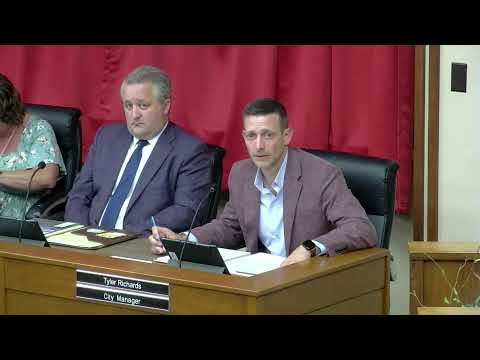
City staff and directors said the streets crews have been working overtime but face limits of both personnel and equipment. Tyler (city staff) told the board the city currently operates only a few asphalt crews and would need an initial capital investment of about $500,000 to stand up an additional asphalt crew and roughly $210,000 per year to sustain it. He said the city is still awaiting availability from a private pothole contractor who is expected in town next week to augment patching work; staff will coordinate how to deploy that contractor most efficiently across wards.
Directors acknowledged the need to balance pothole response with other maintenance demands — vegetation control, creek cleanups and emergency response — and said staff will develop a clearer, uniform response for residents who bring photographs and requests to the board. The board also discussed signage and no‑truck restrictions for neighborhood streets where tractor‑trailers are using local routes.
The board did not adopt a new policy at the meeting; staff agreed to provide a follow‑up update listing which streets or wards will be prioritized for the contractor and the timeline for additional work.
Ending: The board asked staff to compile a written response to public commenters with anticipated next steps and timelines for the contractor work and for long‑term road‑resurfacing planning.