Get Full Government Meeting Transcripts, Videos, & Alerts Forever!
Get email alerts on the Truck Stop Ordinance topic
No spam. Unsubscribe anytime.
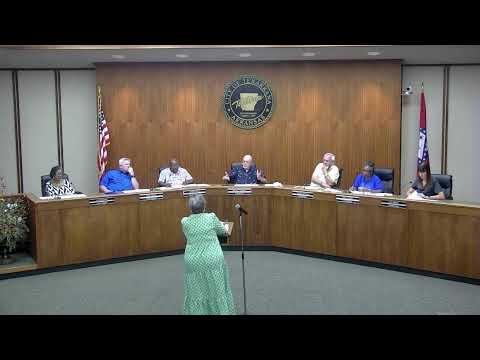
Commission reviews draft truck-stop ordinance, debates minimum lot size and grandfathering
Summary
Texarkana planners reviewed a draft ordinance to define and regulate truck stops and to create a new 'mixed use highway' zoning category; commissioners debated minimum lot area, whether to label existing facilities as nonconforming, and recommended outreach to existing operators before finalizing the ordinance.
Texarkana planning staff presented a draft ordinance to define ‘‘truck stop’’ and create a new ‘‘mixed use highway’’ zoning category where truck stops would be permitted. Planner Jamie told the commission she added a definition of minor vehicle repair and a clause addressing inoperable vehicles remaining more than two days.
Commissioners focused on the proposed minimum lot area. The draft initially listed 20,000 square feet as the minimum; several commissioners argued that true truck-stop operations typically require multiple acres for overnight parking, truck maneuvering, fueling, and support facilities. Commissioners cited local examples — Flying J and the Roadrunner convenience store — and suggested a practical minimum larger than 20,000 square feet. One proposal that gained informal support in discussion was setting the minimum near 80,000 square feet (about 1.8 acres) to reduce the chance that small convenience stores would qualify as truck stops under the ordinance.
Members also debated treatment of existing facilities. Several commissioners warned that labeling current truck-stop-like businesses as "nonconforming" could lock them in and prevent reasonable future expansions. Discussion covered tools to address change: grandfathering existing operations, relying on the Board of Adjustments for modifications, or rezoning properties at annexation to bring new facilities into compliance. Planner Jamie and commissioners agreed the truck-stop rules as drafted would apply only to the proposed mixed-use-highway zone; if existing facilities remain in other zones (for example C-3), the ordinance would not automatically make them nonconforming unless the city rezoned them.
Commissioners suggested language changes to administrative requirements — for example, to require driveway permits from the "appropriate authority" (to cover both city streets and state highways) rather than naming only the state DOT. Several members recommended staff contact existing operators (Flying J was specifically mentioned) for feedback and return a revised draft; commissioners also favored separating the land-use/zoning changes (a mixed-use-highway ordinance) from the technical truck-stop standards into two coordinated ordinances.
No formal vote was taken on the ordinance at this meeting; staff will revise language, seek input from affected operators, and return to the commission with a final draft.