Get Full Government Meeting Transcripts, Videos, & Alerts Forever!
Get email alerts on the Municipal Budget topic
No spam. Unsubscribe anytime.
Texarkana board adopts TWU fiscal 2025–26 budget after presentation on AMI, leaks and compost plan
Summary
The Texarkana Board of Directors voted unanimously to approve the Texarkana Water Utilities (TWU) fiscal year 2025–26 budget after staff presented projects including AMI rollout, satellite leak detection results, a proposal to contract grinding for compost operations, staffing changes and rising insurance costs.
The Texarkana Board of Directors voted to adopt Texarkana Water Utilities’ fiscal year 2025–26 budget after a presentation from TWU staff that outlined capital projects, operational changes and revenue assumptions.
TWU presenters Gary Smith and Trisha Briggs summarized accomplishments and proposed expenditures, noting a January 2025 debt issuance of just over $21 million and work on an advanced metering infrastructure (AMI) system that is about 25% complete. "We are here to give you a brief overview of our proposed revenues and expenditures for fiscal year 2026," a TWU presenter said during the presentation.
Why it matters: the budget funds near-term projects and operations for the utility system, including leak detection and meter replacement that affect water loss, customer billing and future rates. TWU reported satellite leak-detection work identified 248 points of interest, 139 of which were field-investigated and 62 confirmed as actual leaks. TWU estimated those leaks account for roughly 127,000,000 gallons per year and said correcting them could save about $165,000 annually.
Key details: the FY26 proposal assumes a roughly 4% water and sewer rate increase (the fourth consecutive year of increases), and it proposes a new tip-in fee for the compost site estimated at about $650,000 in revenue. Staff also outlined a plan to contract grinding of green waste rather than operate in-house grinders; the proposal is to charge commercial customers (not residential) and to advertise for one-year grinding contracts. TWU presented a conservative annual revenue estimate for grinding of about $652,000 against expenses the presentation listed at roughly $562,000, with a net estimate the presenters characterized as modest and conservative.
Staff proposed a 2% across-the-board salary increase for TWU employees and targeted compensation adjustments, totaling just over $53,000 with the Arkansas portion about $21,000. The largest single budget pressure identified was group health insurance, estimated at about $650,000 for the year.
Presenters also raised a regulatory risk: current testing for per- and polyfluoroalkyl substances (PFAS, often called "forever chemicals") could lead to future limits that would affect biosolids. "If [PFAS] is regulated, it'll shut down the compost operation completely because you can't put that sludge in the compost," a TWU presenter warned, adding that disposal alternatives could cost the utility in the range of hundreds of thousands annually.
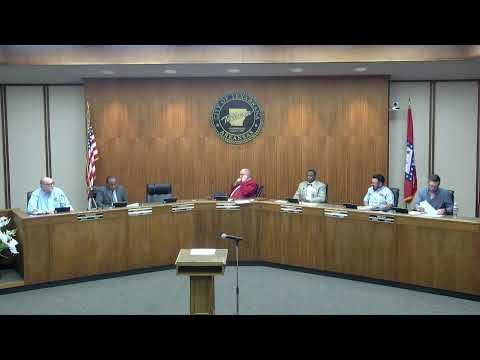
Board action and vote: after the city attorney read the resolution to adopt the TWU budget, Assistant Mayor Harris moved for adoption; the motion was seconded and the board conducted a roll-call vote. Directors Brewer, Jewell, Smith, Roberts, Assistant Mayor Harris and Mayor Brown voted yes and the resolution passed.
What's next: the presentation said staff expects to continue AMI installation (target completion in about 12 months), complete remaining bond-funded projects and proceed with procurement for grinding contracts as described in the budget. The board did not delay adoption and directed staff to continue implementation and follow up on questions raised during the presentation.