Get Full Government Meeting Transcripts, Videos, & Alerts Forever!
Get email alerts on the Airport Budget topic
No spam. Unsubscribe anytime.
Texarkana board approves FY2026 airport operating and capital budgets, citing subsidies and revenue pressures
Summary
The Texarkana Board of Directors approved the Texarkana Regional Airport’s FY2026 operating budget and a $4.43 million capital budget, with a unanimous 5–0 vote after questions about subsidies, landing fees, solar activation and increased law‑enforcement payroll costs.
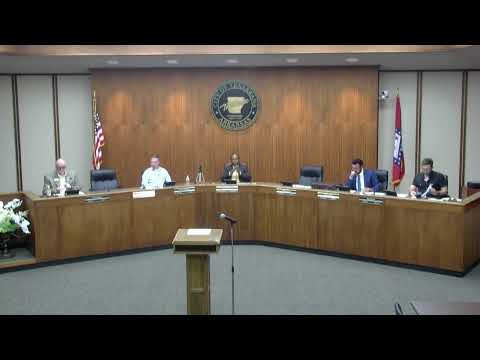
The Texarkana Board of Directors on Sept. 15 adopted the Texarkana Regional Airport’s FY2026 operating budget and a $4,433,362 capital budget after a presentation by airport staff and a period of board questions.
Airport presenter “Mister Paul” summarized the proposed operating numbers: expected revenues of $1,721,030 against projected expenses of $2,770,023, producing an estimated deficit of $1,048,993. He said the Arkansas side of the city’s subsidy would be about $181,345 and the Texas side about $223,352, for a combined city subsidy of roughly $404,697 for operations. Capital expenses were listed at $443,362 in the operating package.
The presenter attributed a portion of recent revenue gains to rental‑car activity linked to regional industrial development, and described plans to pursue a third daily flight and a low‑cost carrier in the coming years after runway extension. He also described an account and invoice process needed to activate recently installed solar arrays at the terminal: "we're going through the process now" to draw down payments so the system can be activated, he said.
Board members pressed on several line items. Questions included why terminal and non‑terminal electricity costs were separated (the presenter confirmed the terminal electricity line is distinct), whether increases in travel and training drove a rise in that line item (airport staff said higher attendance at airline and industry conferences had increased the travel budget), and why law‑enforcement payroll rose sharply. On that point the presenter said the proposed increase is to provide an additional shift to ensure airport coverage during overnight hours and to address past security breaches, while staff continue to discuss alternatives with the local police department.
The board discussed fees and revenue options. The presenter said landing fees for airlines have been largely unchanged for about a decade; the general aviation landing fee remains $2 per thousand pounds and the airline landing fee is approximately $0.92 per thousand pounds. He said the airport has begun tracking fuel‑flowage fees separately (jet traffic 20¢ per gallon; piston aircraft 10¢) and has seen increased parking and rental‑car revenues since the new terminal opened.
After discussion, Director Hallebush, Director Jewell, Director Smith, Director Roberts and Assistant Mayor Lainna Harris cast roll‑call votes to adopt the operating budget, which the chair announced passed 5–0. The board then considered and approved the FY2026 capital budget on a separate roll call. The capital budget vote followed staff remarks that some capital funds would be used as matching contributions for three Arkansas Aeronautics Division grants, for planned IT replacement and to begin setting aside funds for a future airport fire truck replacement (staff estimated the smaller truck’s replacement cost at about $500,000).
The airport presentation closed with the director noting plans to explore rate and fee adjustments, covered versus uncovered parking rates, and additional leasing opportunities for T‑hangars and other airport assets as ways to reduce future subsidy needs.
The board’s approval sends both budgets into effect for FY2026 and allocates the city’s portion of the subsidy as described in the resolution.