Get Full Government Meeting Transcripts, Videos, & Alerts Forever!
Get email alerts on the Parks Grants Trees topic
No spam. Unsubscribe anytime.
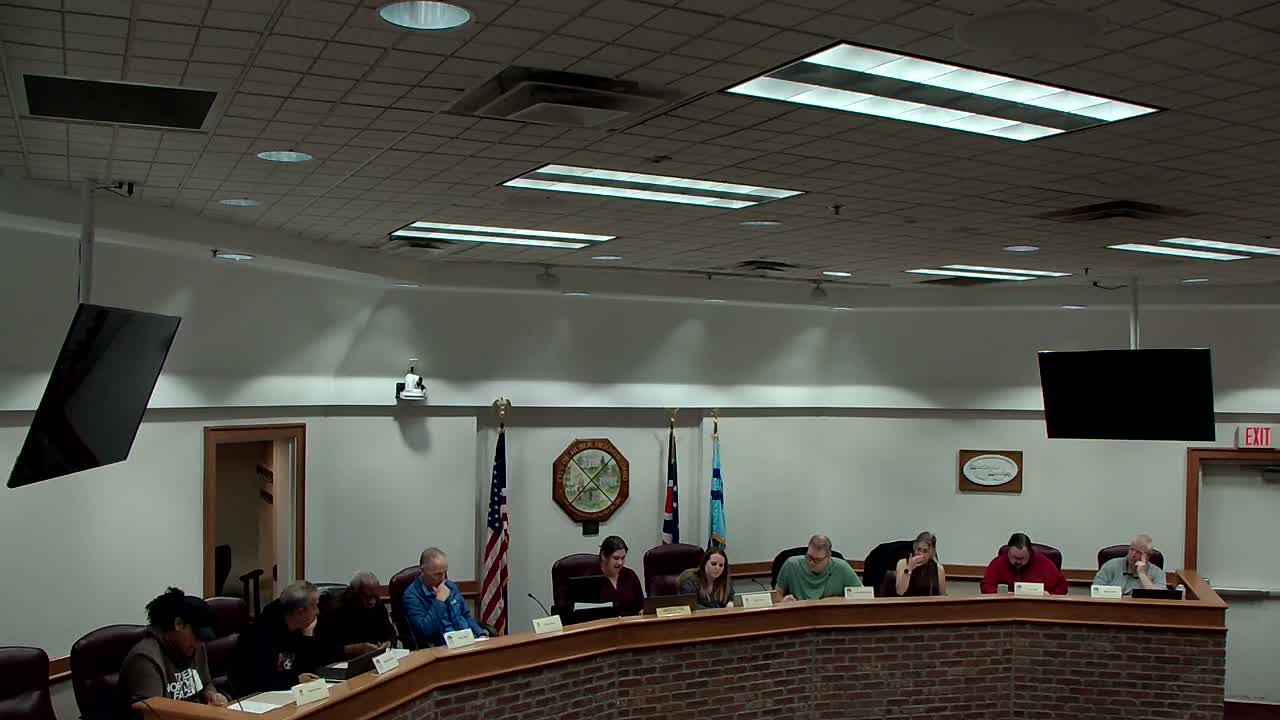
Huber Heights parks board announces $200,000 in grants, previews two-year tree master plan and tree ordinance
Summary
At a regular Parks Board meeting, staff announced two $100,000 grants — one for a 9-acre acquisition adjacent to Cloud Park and one for urban tree canopy work — previewed a two-year tree master plan tied to a pending tree ordinance, and outlined plans to remove Bradford pear trees and pursue Tree City USA status.
Huber Heights
The Huber Heights Parks Board heard announcements of two $100,000 grants and plans for a two-year tree master plan at its meeting. Staff said the Nature Works grant will help acquire 9 acres adjacent to Cloud Park for restoration to native grasses, an interpretive walking path and signage; a separate $100,000 urban tree canopy grant will fund removal of Bradford pear trees on city-owned properties south of Taobuch.
Why it matters: the grants are intended to expand parkland and improve urban canopy health. Staff also said the city intends to apply for Tree City USA recognition once a pending tree ordinance is passed. The ordinance, slated for a second council reading, would assign mutual responsibility for the city's tree canopy to the public works director and the parks manager and begin a two-year timeline to develop a tree master plan.
Details and next steps: staff described the Cloud Park parcel as roughly 9 acres and said the Nature Works funds will support restoration work including native-plantings and interpretive materials. The urban tree canopy grant was described as earmarked to help remove Bradford pear trees on public, city-owned properties; staff said they will hire or consult with a forester to ensure best practices for removal and replanting. A mini-grant application (about $5,000) was also discussed to fund additional interpretive signage and a pilot seed-collection program for pollinator beds.
What the board debated: members pressed on species choice and planting strategy during discussion. Several board members argued for a "native-first" approach because native species better support pollinators, birds and ecosystem functions; others urged some flexibility for adaptive, noninvasive species when ecological fit or aesthetics warrant it. Staff proposed stratifying choices by park type (neighborhood, community, regional) so larger regional sites could include specimens chosen for visual impact while neighborhood sites prioritize native species.
Limits and procedural notes: staff identified Chris Lindeman as the board's staff liaison and said implementation timing for tree removals and acquisitions will require coordination with public works and other departments. No formal council action on the ordinance was recorded at the meeting; the board's discussion focused on policy direction and grant implementation steps.
Closing: the board will continue work on the master plan over a two-year timeline as described in the pending ordinance and will pursue Tree City USA recognition once the ordinance and plan meet eligibility criteria.