
Leavenworth district lays out options to close or repurpose schools as officials seek roughly $3.3 million in savings
Get AI-powered insights, summaries, and transcripts
Subscribe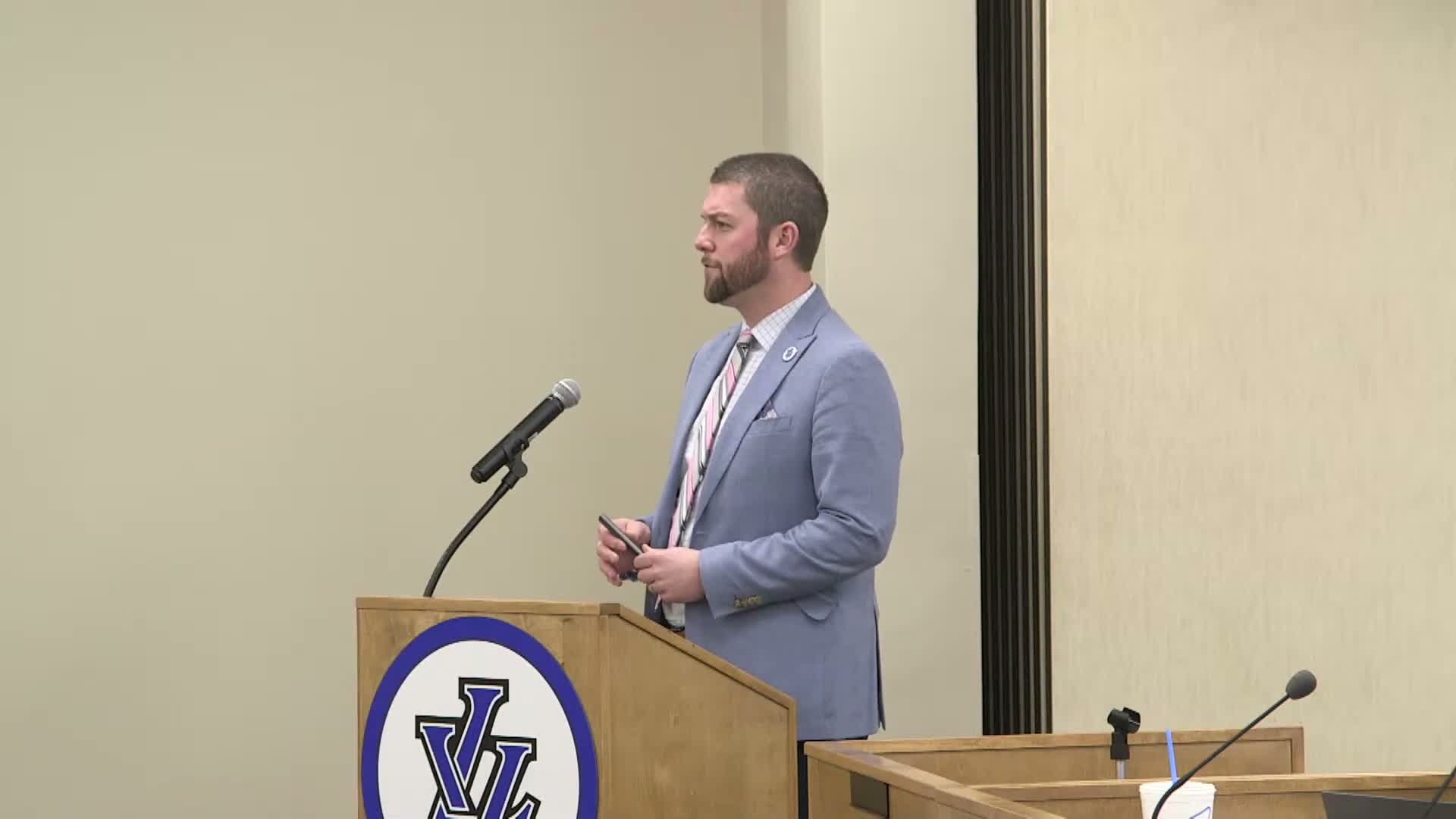
Summary
Superintendent Kellen Adams told the Jan. 12 board the district faces an enrollment-driven budget gap of about $3.3 million and presented options including closing an elementary, repatriating fifth graders, or consolidating central services; a formal recommendation is scheduled for the Feb. 9 meeting.
Leavenworth Unified School District Superintendent Kellen Adams told the board on Jan. 12 that the district faces a budget shortfall of “about $3,300,000” and outlined a set of options to close the gap that include consolidating elementary attendance centers, repurposing the intermediate center and moving central offices.
Adams, addressing the board during the superintendent report, said state funding is enrollment based and that USD 453 has lost several hundred students over five years — a decline he said has reduced the district's statutory spending cap and created limited fiscal flexibility. He said earlier cost-saving moves already removed administrative positions and teaching staff but that the district still needs further structural options to balance the budget.
Why it matters: Board members said any change to attendance centers would affect families, transportation and class sizes. Several trustees pressed for building-level cost data, transportation modeling and site plans before any vote. Adams said the district will provide a transportation analysis and building blueprints and that RSP, the enrollment-study vendor, will present updated projections ahead of the board's first decision point.
What Adams proposed and the trade-offs - Option 1: Close an elementary (presented as two suboptions: close Anthony Elementary or split David Brewer and reassign students). Adams said the closure is plausible but warned that it may not be best for students in every scenario. He noted transportation costs would increase but that some students would newly qualify for state transportation aid. - Option 2: Repatriate fifth graders to their home elementary schools (2a) and consider moving sixth grade to the middle school campus (2b). Adams and trustees said pairing 2a and 2b together produces the most significant operational savings while also raising questions about instructional models and playground/space suitability. - Other options: hiring freezes, moving central offices (board office and child nutrition) into existing buildings, or the alternative school concept (kept 'in the parking lot' pending space availability). Adams said a reduction-in-force (Option 9) is not recommended at this time.
Board requests and next steps Trustees requested: building-by-building maintenance and operating costs; site plans and room-by-room capacity; detailed transportation route and cost projections for proposed boundary scenarios; and class-size and behavior-impact data to assess student outcomes if consolidation occurs. Superintendent Adams committed to delivering those materials and said he would not make a final recommendation until after the enrollment-study data are available.
Timeline and process Adams said he will present a formal recommendation at the Feb. 9 regular board meeting and emphasized that the board will make the ultimate decision. He repeatedly stated that no decisions were finalized Jan. 12 and encouraged community input and staff feedback before the February decision.
Quotations 'In round numbers, we need about $3,300,000,' Adams told the board when describing the current gap. During public comment, Sandy Smith, a long-time volunteer, asked the board, 'How many children are you willing to leave behind?'
What to watch The board's Feb. 9 meeting, when the administration's recommendation and RSP's enrollment projections will be presented and the first formal decision point scheduled to coincide with budget development timelines.
Context District officials said earlier reductions included elimination or freezing of administrative and instructional positions and that some earlier cuts were intended as temporary 'frosts' rather than permanent eliminations. Adams warned that repeated freezes limit future options and that some building-level capital needs (HVAC, roofing) remain large and ongoing.