
House advances bill to create Farm and Forestry Operations Security Fund, adds forestry and payment rules
Get AI-powered insights, summaries, and transcripts
Subscribe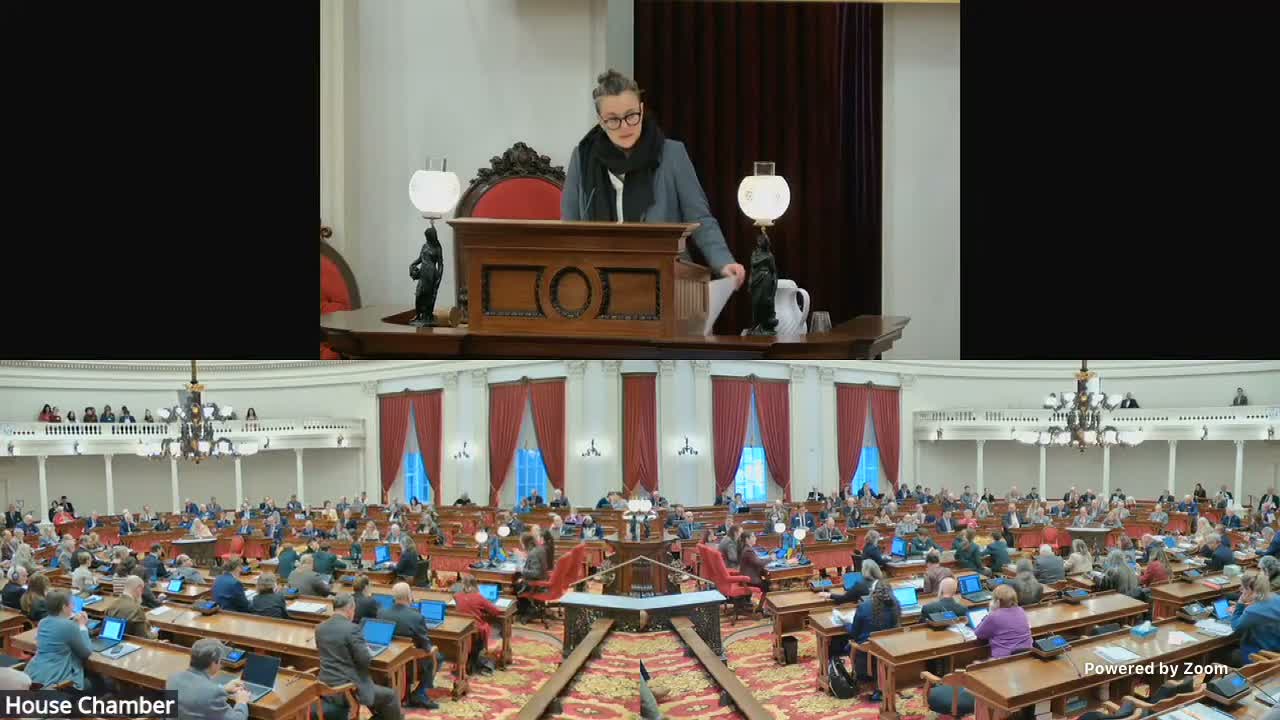
Summary
S.60 would establish a Farm and Forestry Operations Security Special Fund to provide payments of up to 50% of uninsured losses for farms and forestry operations, with awards capped at $150,000 per application and 5% of funds appropriated per year; the House accepted appropriations committee amendments and ordered third reading.
Representative Bosclyde, the member from Westminster, reported on Senate Bill 60, a measure to create a Farm and Forestry Operations Security Special Fund administered by the Vermont Agency of Agriculture, Food, and Markets. The bill as presented would provide payments to farms and forestry operations that suffer losses from eligible weather conditions, with payments of up to 50% of uninsured losses and a per-application cap of $150,000. The presenter said payments would be capped at 5% of funds appropriated in a given year and eligible awards would be processed promptly, with a review board recommending awards and the secretary issuing payments within 15 days of recommendation.
Representative Bosclyde told the House that estimated farm and forestry sector losses from February 2023 to 2025 total approximately $94,000,000, citing testimony and agency reports. The House Agriculture, Food Resiliency, and Forestry Committee added forestry to the program and changed grants to payments to make assistance less cumbersome for farmers.
Representative Stevens, the member from Waterbury speaking for the Appropriations Committee, outlined ten instances of amendment the committee recommended, including changing language in the bill's findings and program descriptions from "climate" to "weather based," renumbering sections to reflect prior legislation, adding application requirements (damage description, attestation of eligible weather condition, list of state grants/loans received in last five years), and making the program contingent on an appropriation in fiscal year 2027 or subsequent years. The appropriations committee reported votes of 10-0-1 in support of the amendment.
The House agreed to the appropriations committee amendments by voice vote and then proposed to the Senate to amend the bill as recommended. Third reading was ordered on the House floor.
Next steps: the bill requires a separate appropriation during budget review for the fund; the appropriations committee made the program contingent on that funding.