Citizen Portal

White Plains City School District outlines long-range plan and 2026–27 budget outlook

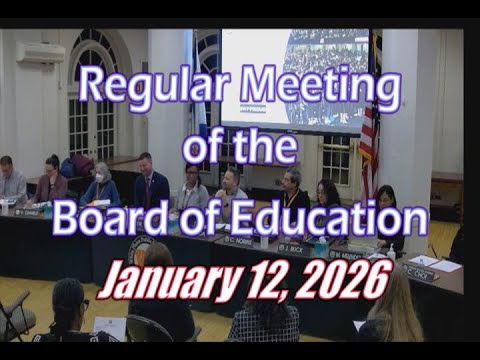
WHITE PLAINS CITY SCHOOL DISTRICT Board of Education · January 15, 2026

Get AI-powered insights, summaries, and transcripts

Subscribe
AI-Generated Content: All content on this page was generated by AI to highlight key points from the meeting. For complete details and context, we recommend watching the full video. so we can fix them.

Summary

Superintendent-led presenters told the Board the district is in a "strong position" as it unveils a long-range plan and a preliminary 2026–27 budget outlook, projecting a maximum allowable tax levy increase of 1.54% (about $3.2 million) while prioritizing capital projects and program preservation.

The White Plains City School District on Monday presented its long-range plan and an early look at the 2026–27 budget, emphasizing continuous planning to protect instructional programs while managing rising costs.

The district told the Board it expects a maximum allowable tax levy of $209,700,000 under current assumptions, representing an estimated 1.54% increase — about $3.2 million — for 2026–27. "We don't have a budget season in the White Plains City School District. We are always in budget season," said Unidentified Speaker 4 during the presentation, framing the district's multi-year approach.

Why it matters: the plan couples near-term capital work and operational stability with conservatism about future state and federal aid. Presenters warned of potential reductions in federal entitlement grants and described how Payment-In-Lieu-Of-Tax (PILOT) agreements reduce taxable assessments, which in turn can limit allowable levy growth.

Details from the presentation: presenters cited a capital portfolio of approximately $71.3 million used for projects such as HVAC and ventilation upgrades (a 2022 authorization) and said the district has purposely applied one-time revenues to capital work to avoid issuing long-term debt when possible. Staff explained prior authorization to borrow $60 million but noted favorable bids allowed them to reduce expected borrowing to $50 million, lowering projected interest costs.

The presentation outlined revenue and expenditure assumptions: a larger share of the budget is now supported by state aid compared with earlier years; the team described projected decreases in the teacher retirement contribution rate and increases in other pension and benefit costs. Health insurance and workers’ compensation were projected to rise near 10% in the near term, and utilities, property insurance and pupil-transportation costs were called out as upward pressures.

Staff highlighted operational priorities including school-safety camera upgrades, cybersecurity testing in partnership with BOCES, ongoing facilities work, kitchen modernization and the district’s in-house food program. The Board was told the instructional portion of the recommended budget will be presented Feb. 9 and non‑instructional details on Feb. 23, with the annual budget vote scheduled for May 19.

Quotations that capture the tone of the meeting included Unidentified Speaker 8's summary of the district’s position: "Because of the steps we've taken in the past ... we are in a strong position as we look toward the 2026–27 academic year." Board members applauded the conservative approach and repeatedly emphasized protecting programming and minimizing impacts to students.

Next steps: the Board will review the instructional budget at its February meeting, receive non‑instructional details later in the month, and continue developing the preliminary budget for Finance ahead of the May 19 vote.