Get Full Government Meeting Transcripts, Videos, & Alerts Forever!
Get email alerts on the Council Rules And Procedure topic
No spam. Unsubscribe anytime.
Findlay committee flags confusion in council rules on majorities, tie‑breaking and reconsideration
Summary
An ad hoc Findlay City committee reviewed council rules and identified ambiguity over whether majorities are of all council members or only those entitled to vote, how the president’s tie‑breaking authority applies with absentees or abstentions, and how motions to reconsider are handled.
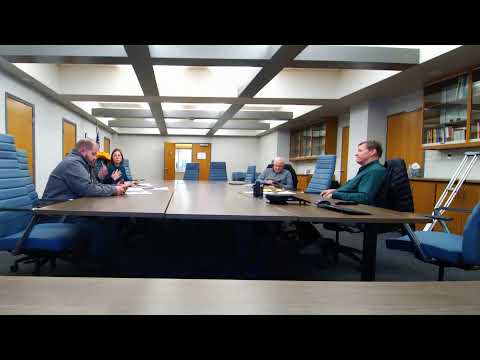
Speaker 1 opened the ad hoc committee meeting to review the Findlay City council rules of procedure and said the rules “stay in place indefinitely until changed by the majority of all the city council.”
The group spent most of the session parsing language about what constitutes a majority and when the council president may break a tie. Speaker 1 noted the rules say some actions require a “majority of all the city council,” and said that produced practical confusion: if one or more members are absent, or if members declare a conflict and do not vote, does a 5–4 result count as a majority? He asked whether abstentions or conflicts change the denominator for a majority vote.
Speaker 2 pointed to a clause stating a 4–4 tie “shall not be broken” and argued that the rule should be revised to allow clearer tie‑breaking when fewer than all council members are present. “A tie vote of less than all council members…if you have a 4 to 4, it shall not be broken,” Speaker 2 said while urging the committee to consider rewriting the language so it is consistent with intended practice.
The committee also discussed motions to reconsider. Speaker 1 summarized differences between the local rules and Robert’s Rules of Order: local rules appear to permit a member who missed a prior vote to call for reconsideration at the next meeting, whereas Robert’s Rules generally limits who may move to reconsider and when. Speaker 1 said that could create a scenario where multiple reconsideration motions are raised across meetings, generating uncertainty over procedure and outcomes.
No formal changes were adopted at the meeting. Members agreed to ask the law director (Rob) to advise on interpretation and to return with recommendations. The committee tentatively scheduled a follow‑up to accommodate legal review.
Speaker list (quotes): Speaker 1; Speaker 2; Speaker 3.
What happens next: the committee will seek counsel’s written guidance on whether the rules require editing to define majority thresholds, abstentions, and the president’s tie‑breaking authority and to reconcile local language with Robert’s Rules of Order.