
Agency of Natural Resources warns federal staffing and program shifts threaten state projects
Get AI-powered insights, summaries, and transcripts
Subscribe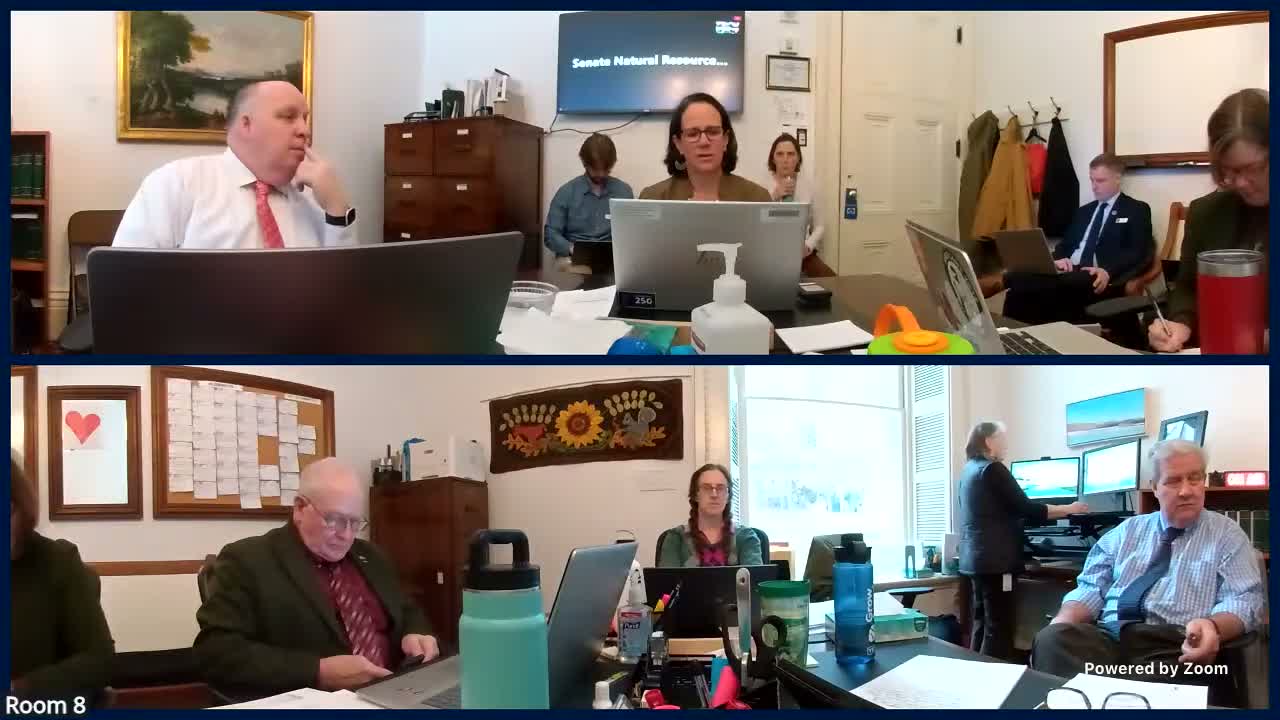
Summary
The Agency of Natural Resources told the Senate committee that federal staffing reductions and program terminations — including a $10.7M RCPP contract termination and the Eco AmeriCorps funding cut — have created uncertainty for water quality, resilience and workforce programs in Vermont.
Secretary Warren (for the record, secretary of the Agency of Natural Resources) told the Senate Natural Resources & Energy committee on Jan. 14 that while core federal appropriations affecting ANR appear relatively stable in a congressional minibus, administrative and staffing decisions at agencies including EPA, USDA and the Office of Management and Budget are producing significant uncertainty for competitive grants and program delivery.
Warren said some competitive streams administered by the U.S. Forest Service and NRCS have been hit by federal staffing cuts, which can delay or limit the federal agencies’ ability to issue awards. She described two prominent, near‑term problems for Vermont: the termination without notice on Sept. 30 of a $10.7 million Regional Conservation Partnership Program (RCPP) award that would have funded farm and forest water‑quality and resilience projects, and the termination of federal support for Eco AmeriCorps for the 2024–25 program year.
On RCPP, Warren said the state has filed an appeal and that a prehearing was scheduled for Jan. 29 to examine USDA’s grounds for termination. “We believe USDA lacks the basis for being able to terminate the grant and filed an appeal on October 30,” she said. ANR noted the termination paused further activity but did not require return of funds already expended and acknowledged lingering farmer concerns in past NRCS reimbursement cases.
ANR also said the Eco AmeriCorps federal termination forced the agency to use state match funds to keep current members in place long enough to finish their service; most members accepted temporary state employment. But ANR then decided to conclude the Eco AmeriCorps program at the end of the service year because of concerns about repeating disruptions to the program in future years.
Warren highlighted the Lake Champlain Basin Program (cited at ~$25 million for certain budgeting lines) and the state revolving funds for wastewater and drinking water as important, mostly stable federal streams but warned that congressional directed spending can reduce state SRF awards by elevating earmarked projects ahead of the state’s intended use plan.
She also flagged a recent EPA reorganization that reduced the Office of Research and Development’s staff and central applied research capacity — work that states rely on for applied methods (for example, remote sensing for cyanobacteria monitoring and PFAS research). “Most of those R and D staff have been pushed back into program offices, but it’s not clear how we will continue to access their expertise,” she said.
Warren and ANR staff encouraged municipalities and partners to continue projects where federal funds remain available but warned that some small community and watershed groups will face heightened risk in proceeding with large projects without clear reimbursement guarantees.
Next steps: ANR is pursuing the RCPP appeal process and is coordinating with the Attorney General’s office on legal actions related to Solar for All and other federal program terminations; ANR also plans follow‑up on how EPA reorganizations will affect state access to federal research support.