Temple council discusses ETJ petitions and limits on involuntary annexation
Loading...
Summary
Council and staff reviewed recent state changes affecting extraterritorial jurisdiction (ETJ) petitions and annexation, explaining that involuntary annexation is now largely prohibited and that properties withdrawing from the ETJ could complicate future annexation and services.
Temple — Councilmembers and planning staff spent part of the Jan. 15 workshop reviewing recent changes to state law and how those changes affect the city's extraterritorial jurisdiction and annexation authority.
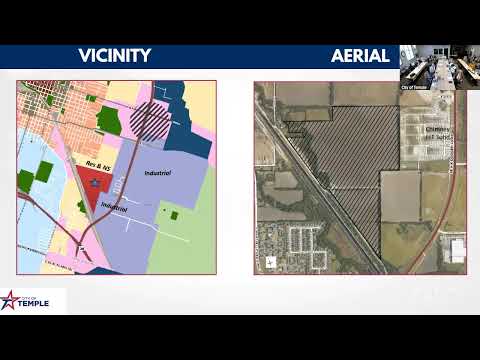
A councilmember asked about a consent-item on the regular agenda to release property from the ETJ. A staff member explained that "in the last legislative session, they passed a law that didn't allow, under most circumstances, someone in the ETJ had a request for their petition to be withdrawn" and that the city "really don't have any grounds to refuse unless it meets one of the exceptions." The staff identified one common exception as land located within five miles of an active military base.
Staff and council discussed practical effects: properties outside the ETJ are not subject to city building and zoning codes, and staff said that "there is very little impact" in many cases but warned that a patchwork of properties outside the ETJ could create contiguity issues if the city later needs to annex adjacent land. Staff explained a procedural option in some cases: a two-step petition that would both rejoin the ETJ and seek annexation in the same meeting.
No formal action or vote was recorded during the workshop on the ETJ matter; the discussion focused on clarifying how the statutory change limits involuntary annexation and what staff will need to watch for in future petitions or development requests.