Get Full Government Meeting Transcripts, Videos, & Alerts Forever!
Get email alerts on the K 2 Literacy topic
No spam. Unsubscribe anytime.
Chapel District Elementary tells board data-driven K–2 literacy goal: 80% to meet DIBELS benchmarks by May 2026
Summary
Chapel District Elementary presented school-improvement work focused on K–2 literacy, using DIBELS subtests (PSF and words re-coded), a 'data wall' for quarterly student tracking, and classroom interventions; staff reported MCAP and subgroup gains and piloted a 'digital detox' for families.
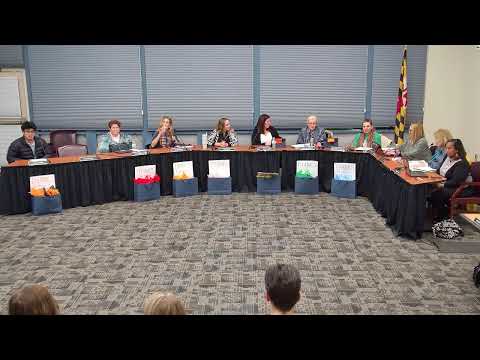
Carrie Clough, principal of Chapel District Elementary School, and her instructional team presented the school’s K–2 literacy work to the Talbot County Board of Education on Jan. 14.
Clough said Chapel’s school-improvement team uses multiple data sources, including DIBELS and MAP, to set measurable goals. "Our K through 2 literacy goal... 80 percent of K through 2 students will meet benchmark on DIBELS in PSF and words re-coded by May 2026," she told the board. Leslie Beveridge, reading interventionist and coach at Chapel, described a combined electronic and physical "data wall" that tracks students’ assessment results and intervention status and that teachers use quarterly to organize small-group instruction.
Classroom teachers outlined how formative assessments and targeted small groups drive daily instruction. One teacher said interventions focus on phoneme segmentation fluency (PSF), an early literacy subtest research identifies as predictive of later reading risk. Staff described hands-on, multimodal strategies (movement, manipulatives, kinetic sand) used in kindergarten small groups and noted a grant from the TCPS Education Foundation funded materials.
Clough and staff also described a pilot "digital detox" and parent workshop intended to reduce screen time and strengthen student-family connection. The team described early improvements in classroom engagement and announced planned family workshops and an optional staff and parent book study.
Why it matters: presenters tied classroom practices to district goals (literacy is typically the top school-improvement goal) and cited subgroup gains: presenters said the district saw large MCAP gains for special-education students (from under 5% to about 33% proficiency in one referenced subgroup) and improvements for multilingual learners.
What’s next: Board members requested school walkthroughs and signaled interest in replicating elements of Chapel’s data practices at larger campuses; the district said it will present additional school-improvement plans to the board in coming months.