Get Full Government Meeting Transcripts, Videos, & Alerts Forever!
Get email alerts on the Youth Spaces topic
No spam. Unsubscribe anytime.
Committee hears pitches for distributed STEM hubs and JA experiential learning center
Summary
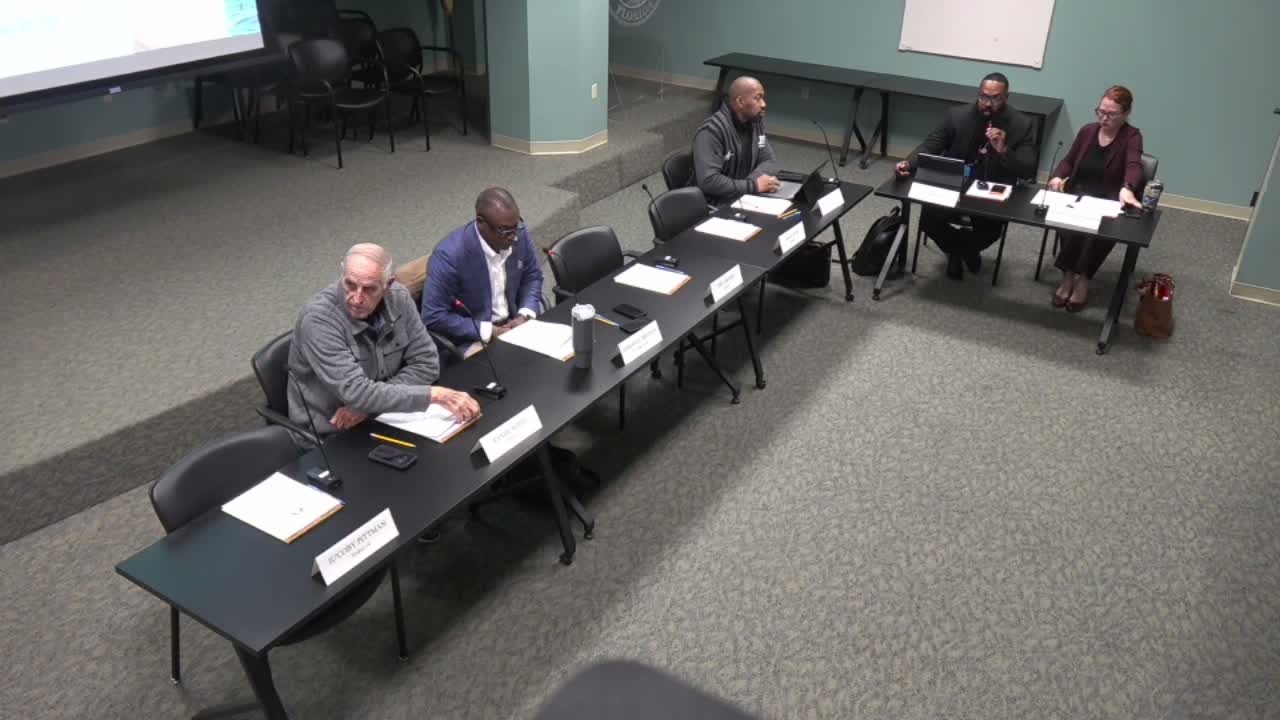
The Jacksonville Youth Empowerment Committee on Jan. 15 heard presentations on a ‘distributed campus’ STEM hub model and a Junior Achievement experiential learning center to expand youth access to career-connected community spaces; presenters emphasized partnerships, flexible use of city facilities and measurable usage tracking.
Ronnie King and Dr. Betty Birney told the Youth Empowerment Committee on Jan. 15 that the 100 Star STEM Center is being used as a model for a distributed campus that links multiple city and partner sites to give young people hands-on technology and entrepreneurship opportunities. The center, King said, serves middle- and high-school students and some college-age participants and has partnered with groups including 100 Black Men in Jacksonville and the I’m a Star Foundation. “These students are absolutely having businesses, growing businesses,” King said, adding that students in the program “have collectively earned over $1,000,000 on their own from their own businesses.”
King described a network of linked locations — including office space at the DuPont Center, a leased presence at the Jacksonville Downtown Public Library, and a Wells Fargo building off Edgewood — where students can train, collaborate and practice as entrepreneurs. He and Birney emphasized near-peer learning (older students mentoring younger ones), flexible room layouts to permit multiple uses, and a student-built data portal to track who uses the spaces and when. King said tracking use by hour and by partner organization would help demonstrate impact and inform future funding.
Junior Achievement’s Tiffany Guthrie outlined JA’s Experiential Learning Center model, which places students in simulated storefronts and civic roles to practice workforce skills and personal finance. Guthrie said the design is curriculum-connected and partner-driven, and that JA has aligned the center with local institutions including FSCJ and Duval County Public Schools to create a pipeline from classroom lessons to hands-on simulation. “Students actively operate within these systems as adults taking on jobs and roles and making life decisions,” Guthrie said, describing how the model reinforces repeated, applied learning rather than one-time exposure.
Presenters framed both models as complements rather than replacements for existing youth services: flexible, partner-run spaces that can be city-owned or leased and used across days and neighborhoods. Committee members asked about accessibility and transportation, and presenters acknowledged that siting, scheduling and partnerships would need to reflect neighborhood needs. No formal funding or procurement decisions were made at the meeting; speakers described these presentations as informational framing to help staff craft an RFP.
The committee’s next meeting will concentrate on job training, career pathways and apprenticeships, and staff will use the input from these presentations when drafting the Youth Empowerment RFP.