Get Full Government Meeting Transcripts, Videos, & Alerts Forever!
Get email alerts on the Municipal Law topic
No spam. Unsubscribe anytime.
City attorney briefs Nampa council on powers, executive sessions and conflict rules
Summary
City legal counsel walked Nampa council through the limits and duties of council and mayor under Idaho law, stressing preemption, mandatory recusal in land‑use cases, restrictions on ex parte contacts, and statutory limits on executive sessions (Idaho Code 74‑206).
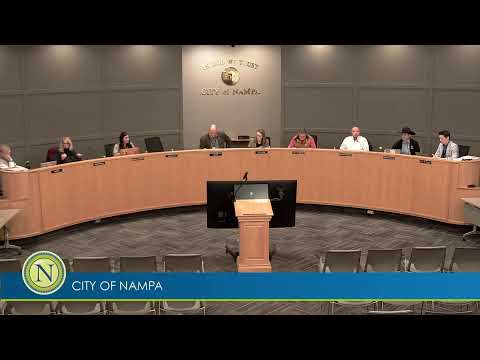
Preston, the city’s legal counsel, spent the workshop’s opening hour reviewing the legal framework that governs Nampa’s elected officials and staff, telling the council that many of its powers are “expressly granted” by state law and are therefore constrained by preemption.
“Title 50, chapter 7 is where… your constitution for being a legislator at the city level is,” Preston said, summarizing the scope of local legislative powers and the city’s authority to adopt ordinances, set fees, and regulate land use. He told the council that Idaho operates under Dillon’s Rule, meaning local authority is derivative of the state and can be preempted.
Why it matters: The session clarified how city decisions intersect with state law and what council members must do to avoid legal challenge. Preston emphasized quasi‑judicial limits on contacts and participation: council members must recuse themselves when they or certain relatives have an economic interest in an application, and ex parte communications that influence quasi‑judicial action must be disclosed on the record.
On executive sessions, Preston cited Idaho’s open‑meetings statutes and noted an important legal boundary: executive session cannot be used to take final action. “No executive session may be held for the purpose of taking any final action or making any final decision,” he said, summarizing the statute’s distinction between deliberation and decision.
Council members asked for citations and a concise handout; Preston identified Idaho Code 74‑206 (with related definitions) and offered to circulate his slide deck and a condensed summary to the council. He also recommended best practices—leave the room rather than staying on the dais when recusing in a land‑use proceeding, and disclose any off‑record contacts when they occur so the record remains complete.
The briefing concluded with a short question‑and‑answer period in which council members requested the handout and discussed the few likely areas of state preemption (for example, possession rules for firearms). The legal presentation framed the rest of the workshop’s conversation about bylaws, remote participation, and other procedural topics.