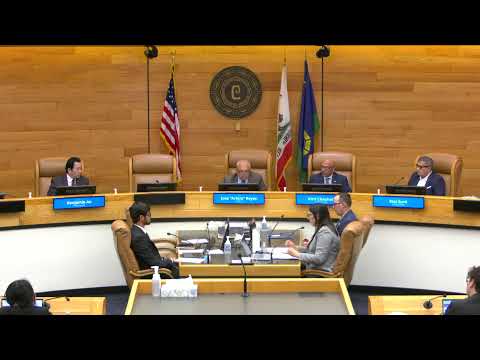
Cerritos staff outline $23M in water repairs after C4 well failure; resident calls proposed rate hike excessive
Loading...
Summary
City staff told the Planning Commission that much of Cerritos’s water and sewer system is more than 50 years old and identified roughly $23 million in immediate water projects; an emergency repair to Well C4 and roughly $196,000 in imported-water purchases to date were detailed while a resident objected to a proposed rate increase scheduled for a Jan. 26 hearing.
City of Cerritos officials told the Planning Commission on Jan. 16 that an aging water and sewer system requires immediate investment and that an emergency problem at a groundwater well has increased short-term costs.
Director Alvin Papa said the city’s system — built largely in the 1970s — includes four groundwater wells, three reservoirs, two booster stations and interconnections with neighboring cities. Staff identified critical water projects of about $23,000,000 (roughly $25,300,000 when adjusted for inflation) to cover well rehabilitation, valve replacements and treatment upgrades and said critical sewer needs total about $3,900,000 (about $4,300,000 inflated).
The presentation said Well C4 developed sand and gravel intrusion beginning in October, prompting camera inspections and an emergency repair item presented to council on Dec. 22, 2025. Staff estimated the emergency repair at approximately $643,000 and said the city has purchased about 176 acre-feet of imported water while the well is offline, creating an additional cost of about $196,000 so far. Staff said tentative repair work was scheduled to begin in late January and that the initial repair estimate is about 10 weeks but could extend if equipment damage is found.
"The reason that it's starting to break down really is age," Papa said, explaining that holes in the casing and corrosion of an inner liner have allowed sand and gravel to enter the well. He said C4 also requires more extensive treatment because of PFAS contamination, distinguishing an emergency repair from a full replacement and treatment project.
Commissioners asked about timing, contractor availability and potential cost impacts. Staff said specialized contractors are in high demand and that taking a well offline for a year could add an estimated $2.5 million to $3.0 million in imported-water costs, which is why staff proposes staggering well projects rather than replacing all wells at once.
The presentation was listed as information-only; no formal action was taken by the Planning Commission on the infrastructure report. Staff said the city is pursuing a water-and-sewer rate adjustment to fund the identified projects and that project sequencing is intended to reduce sharp impacts on rates.
At public comment, resident Carly Gilhise used her allotted five minutes to oppose the proposed rate increase scheduled for a Jan. 26 hearing. She said the adjustment would amount to a near‑300% increase and, based on her calculations from the city's rate tables, would impose about $1,100 more per household in the first year and roughly $6,000 per year on some small businesses. Gilhise urged the commission and council to postpone the hearing, provide a detailed accounting of past rate expenditures, evaluate bond financing and translate notices for non-English speakers.
"This increase is excessive, destabilizing, and fundamentally unreasonable," Gilhise said, asking the commission to slow the process and explore alternatives.
What happens next: staff will proceed with the public-notice process for the Jan. 26 rate hearing; the presentation materials remain available on the city website and staff said repair and replacement timelines will be refined as contractor inspections progress.