Get Full Government Meeting Transcripts, Videos, & Alerts Forever!
Get email alerts on the Tax Abatement topic
No spam. Unsubscribe anytime.
Polk County renews tax abatement guidelines for two years after required public hearing
Summary
After a required public hearing, Polk County Commissioner’s Court voted to reauthorize its tax abatement criteria for a two-year period (Jan. 14, 2026–Jan. 13, 2028), keeping eligibility thresholds and terms unchanged. The policy uses Texas Tax Code chapter 312 authority to encourage job-creating investments.
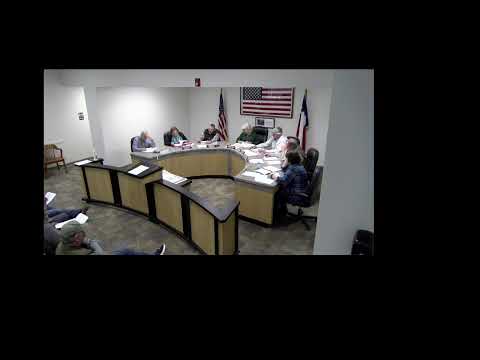
Polk County Commissioner’s Court voted Jan. 13 to renew its county tax abatement criteria and guidelines for a two-year term beginning Jan. 14, 2026 and ending Jan. 13, 2028, following a required public hearing.
An unnamed county presenter told the court the county’s authority for abatements is provided under Texas Tax Code chapter 312 and that the guidelines have not changed since the last approval. The presenter summarized the eligibility criteria: properties must lie in a designated reinvestment zone; eligible facilities include manufacturing, research, distribution and similar basic industries; projects must create or prevent the loss of at least 10 permanent full-time jobs and typically represent a minimum investment of $10,000,000; abatements apply only to new taxable value and may be granted for up to 100% of new eligible property value for no more than 10 years.
The presenter cited examples of previously approved abatements, including Corrigan OSB (an initial investment figure presented as $285,000,000 for a 2017–2026 abatement and a second portion listed with $165,757,000 for 2024–2033), and multiple solar projects with investment figures presented during the hearing. The presenter explained standard agreement terms such as base-year valuation, abatement schedule, inspection and recapture provisions, and a 60-day execution requirement following a complete application.
No members of the public spoke in opposition during the hearing portion, and the court subsequently moved and approved an order renewing the county’s guidelines for the two-year statutory period. Court staff said the renewal is procedural and that no substantive changes were proposed.
Next steps: Applications for tax abatements under the renewed guidelines will proceed through the county’s written application and review process, including a public hearing before approval and execution of an abatement agreement if granted.