Get Full Government Meeting Transcripts, Videos, & Alerts Forever!
Get email alerts on the Solar topic
No spam. Unsubscribe anytime.
Dinwiddie supervisors reject rezoning for 20-MW Flower Solar project after lengthy public hearing
Summary
After more than three hours of testimony from developers, Dominion-affiliated contractors and dozens of residents, the Dinwiddie County Board of Supervisors voted unanimously to deny rezoning of about 196 acres for a proposed 20-megawatt Flower Solar project, citing community concerns and land-use priorities.
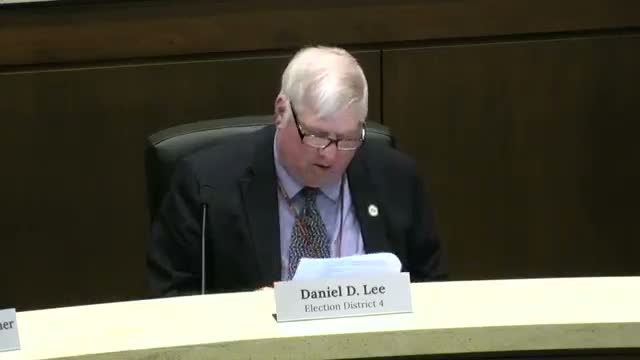
The Dinwiddie County Board of Supervisors on Aug. 19 rejected a request to rezone roughly 196 acres north of Route 460 for a 20-megawatt Flower Solar project, voting unanimously to disapprove the application after an extended public hearing.
The proposal, filed by Flower Solar LLC (an affiliate of Greenville Power/Actualize), would have moved land now zoned A-2 agricultural and an M-2 industrial pocket into the county's Solar Energy District to host roughly 75 acres of solar panels within a fenced area of about 121 acres. Project proponents said the facility was designed as a distributed resource intended to feed local distribution lines and help guard against localized brownouts and outages for nearby businesses and residents.
Proponents, including the applicant's attorney Will Schumack and development representatives, emphasized the project's ability to supply daytime electricity to local users and reduce reliance on remote transmission. The developer said Dominion Energy had awarded a long-term power-purchase arrangement and that the plant would tie into an existing Dominion distribution circuit. The applicant also proposed vegetative buffers, a decommissioning plan, groundwater testing and a community payment arrangement to nearby landowners.
Opponents raised a range of concerns: potential impacts to groundwater and wells from panel materials, the risk of fire and smoke, devaluation of nearby residential property, heavy construction traffic on unimproved dirt roads, loss of farmland and the permanence of industrial-scale land use in an area some neighbors described as rural. Multiple speakers said they had long-standing family ties and tax histories on the parcels in question and asked the board to preserve agricultural character.
Board members said the decision involved balancing private property rights and community impacts. Several supervisors noted the intensity of local opposition and the project's proximity to small residential clusters; others referenced long-term land-use plans and the county’s comprehensive plan when weighing whether the property’s highest and best use was industrial or renewable generation. After public comment and deliberation, a motion to disapprove the rezoning passed on a unanimous roll call.
Because approval of the rezoning was a prerequisite for the developer’s conditional-use permit and siting agreement, those related applications will not proceed as filed. The developer said it would continue to work with the county and interested parties but offered no immediate amendment to the application at the meeting.
The board did not set a new date for the applicant to re-file. The supervisory vote is a local land-use decision; no immediate state or utility regulatory approvals were decided at the meeting.