
Broad rewrite of domestic‑violence law draws fierce debate over victims’ access and due process
Get AI-powered insights, summaries, and transcripts
Sign Up Free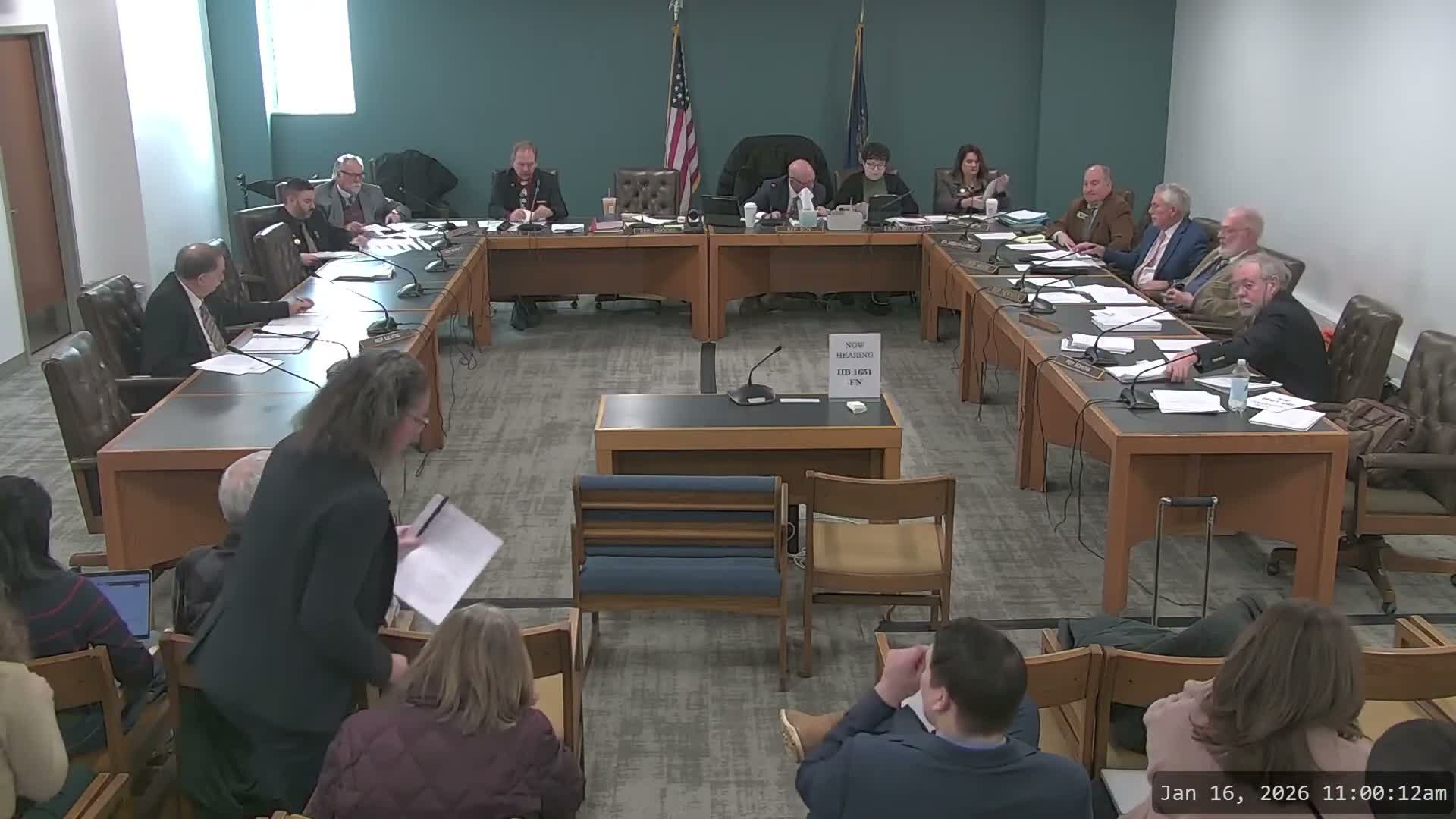
Summary
House Bill 17‑40 would repeal and replace RSA 173‑B, shifting many domestic‑violence protections into a criminal‑justice framework (mandatory investigations, arrest, and linking civil orders to criminal charges); supporters say it restores due process and stronger enforcement, while advocates and crisis centers say it would remove critical civil remedies and harm victim safety.
A proposal to repeal and replace New Hampshire’s domestic‑violence statute prompted sharply divided testimony before the Criminal Justice and Public Safety Committee on July 6. House Bill 17‑40, introduced by Representative Matt Sabourne, would move civil protective orders into a framework tied to criminal charges, require police to investigate domestic‑violence reports promptly, and make arrest mandatory where probable cause exists.
Representative Sabourne described the bill as fixing a “patchwork” statute that courts and litigants have struggled to interpret. “HB 17‑40 fixes this by treating domestic violence as what it is — a crime — and replacing a broken statute with one that is clear, enforceable, and fair,” he told the committee (Representative Matt Sabourne, SEG 1296–1339).
Supporters included prosecutors, victims, and some advocates who said the current system forces some victims into civil court where they must navigate procedures that can fail to protect them. Dana Albrecht, who presented case studies and filed materials with the committee, argued the Supreme Court has signaled statutory problems and that a criminal‑justice framework would ensure professional investigators and prosecutors evaluate evidence (Dana Albrecht, SEG 1342–1469).
Opposition was strong and detailed. Crisis centers, victim advocates, medical forensic nurses and many survivors warned that linking protective orders to filed criminal charges would remove the existing civil path that many victims use precisely because they are not ready, able, or willing to pursue a criminal prosecution. Testimony from the New Hampshire Coalition Against Domestic and Sexual Violence and other advocates stressed that civil protective orders are a preventive tool distinct from criminal punishment and that mandatory arrest policies can produce dual arrests and other harms (Lynn Chollet, SEG 2321–2339; Dr. Wendy Jensen, SEG 2063–2071).
Many witnesses said HB 17‑40 also risked cutting funding or access to crisis‑center services and emergency advocacy that survivors rely on. Survivors who testified described difficulty getting help and said collapsing civil remedies into criminal process would reduce options for those who are fearful or who face barriers to criminal reporting. Medical and legal experts asked for care to preserve immediate temporary relief procedures and firearm‑relinquishment authority now available under civil emergency orders (Mary Krueger, SEG 2410–2478; Janet Carroll, SEG 537–546).
Law enforcement witnesses noted operational issues: mandatory arrest and investigatory timelines would require training and resources; some suggested the bill’s “shall” language could create liability or unintended consequences for officers in the field (Sergeant Kevin O’Meara and Lieutenant Nicholas Georgioulis, SEG 2561–2575).
What happens next: The bill prompted requests for technical revisions and many called for compromise approaches that strengthen investigations without eliminating civil remedies. The committee will consider testimony, possible amendments, and fiscal or operational impacts before a committee recommendation.
Sources: Public hearing testimony, Criminal Justice and Public Safety Committee (Representative Matt Sabourne; Dana Albrecht; Lynn Chollet; Dr. Wendy Jensen; Mary Krueger; Kevin O’Meara).