
Committee hears bill to create sexual‑assault protective order and extend evidence‑kit protections
Get AI-powered insights, summaries, and transcripts
Sign Up Free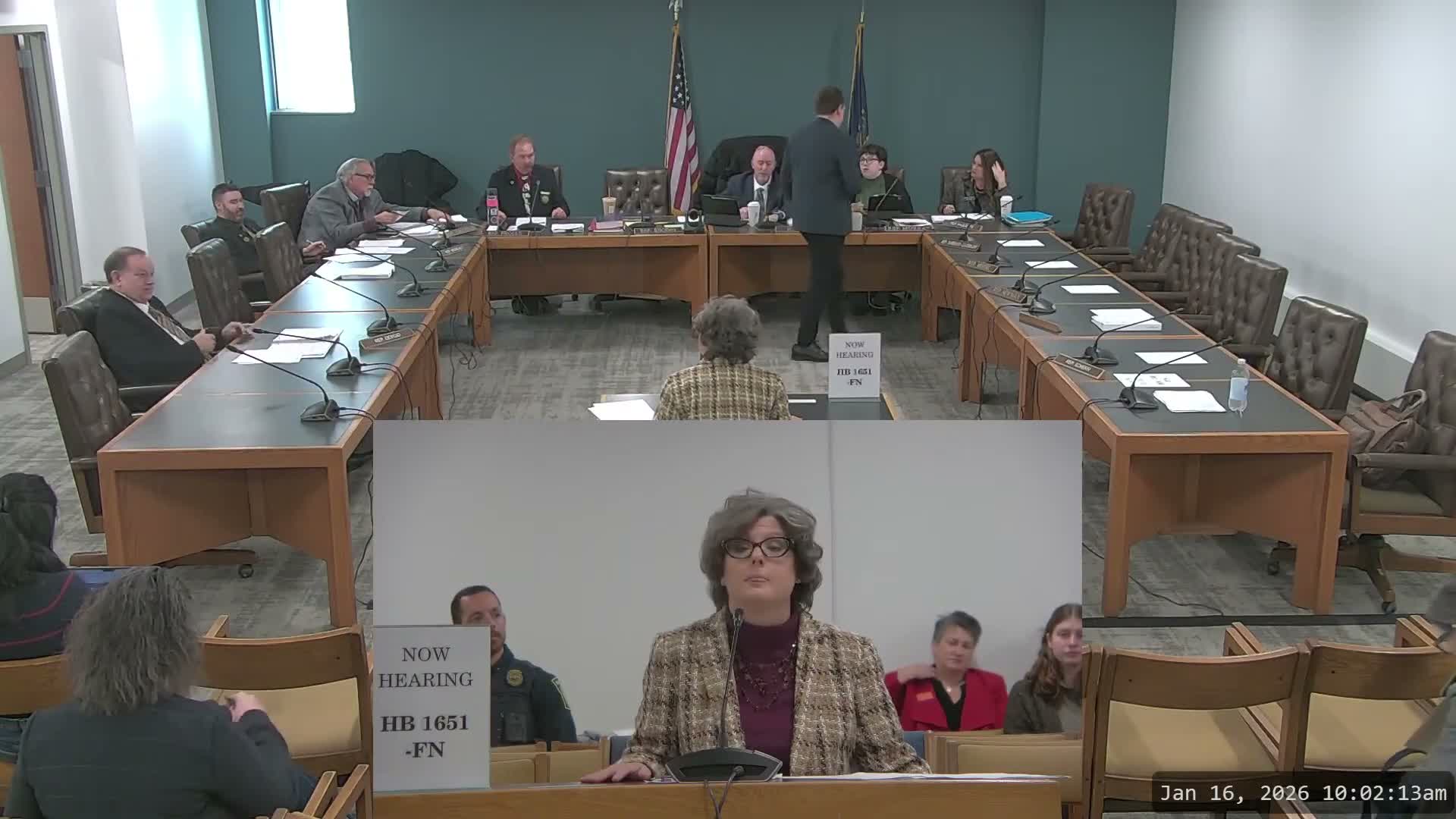
Summary
Lawmakers and witnesses told the Criminal Justice and Public Safety Committee that House Bill 16-51 would let sexual‑assault survivors seek civil protective orders like domestic‑violence victims and extend forensic kit retention and tracking; medical and advocacy witnesses praised the tracking system, while some questioned costs and implementation details.
A legislative committee on July 6 heard testimony on House Bill 16‑51, which would create a civil protective order for survivors of sexual assault and change how forensic evidence kits are preserved and tracked. Representative Jennifer Rhodes, the bill sponsor, told the Criminal Justice and Public Safety Committee the measure would let survivors who lack a qualifying domestic or stalking relationship seek a protective order and would align evidence‑preservation timeframes with survivors’ statute‑of‑limitations protections.
“[The bill] is going to ensure that if you do not know the person…you’re gonna be able to receive civil protections just as you would be in a criminal protective order,” Representative Rhodes said during her opening remarks (Representative Jennifer Rhodes, SEG 025–052). She also noted a small technical amendment to clarify statutory language.
Advocates, crisis‑center leaders and medical experts described why they support the change. Representative Eileen Kelly, a former board chair of the New Hampshire Coalition Against Domestic and Sexual Violence, said the bill fills an important gap for people assaulted by strangers or acquaintances who currently lack a civil remedy (Representative Eileen Kelly, SEG 100–123). Shauna Foster, executive director of New Beginnings (Belknap County), described client cases where survivors could not obtain a civil protective order under current law (Shauna Foster, SEG 412–456).
Janet Carroll, a forensic nurse and co‑chair of the state SANE advisory board, demonstrated the state’s evidence‑kit tracking system and described how it allows survivors to check the kit’s location and status. “The tracking system also gives the ability for the survivors more control over their kit, by being able to track its location,” she said, noting New Hampshire completes roughly 250–300 kits annually (Janet Carroll, SEG 516–546).
Supporters argued the bill draws on existing court processes under RSA 173‑B for domestic‑violence protective orders so courts and law enforcement will be able to enforce the new type of order using familiar procedures. Law‑enforcement witnesses from Manchester said they encounter cases that do not fit existing civil orders and endorsed the fix (Lieutenant Nicholas Georgioulis, SEG 1117–1139).
Opponents raised constitutional and procedural questions in later testimony—some speakers warned about potential civil‑versus‑criminal process tension or raised concerns about false accusations and due process protections for the accused—but prosecutors and legal advocates who testified said the change would make civil remedies more accessible while preserving due process (Mary Krueger, New Hampshire Legal Assistance, SEG 747–775; Attorney Steven Enders, SEG 941–988).
What happens next: The committee closed the public hearing on HB 16‑51 and moved on to other bills the same day. If the committee votes to recommend the measure, members will draft any technical amendments and a fiscal note for legislative consideration.
Sources: Sponsor and witness testimony at the Criminal Justice and Public Safety Committee hearing on July 6 (Representative Jennifer Rhodes; Representative Eileen Kelly; Janet Carroll; Shauna Foster; Nicholas Georgioulis).