
South Colonie outlines AI rollout for teachers and students, highlights Magic School pilot
Get AI-powered insights, summaries, and transcripts
Subscribe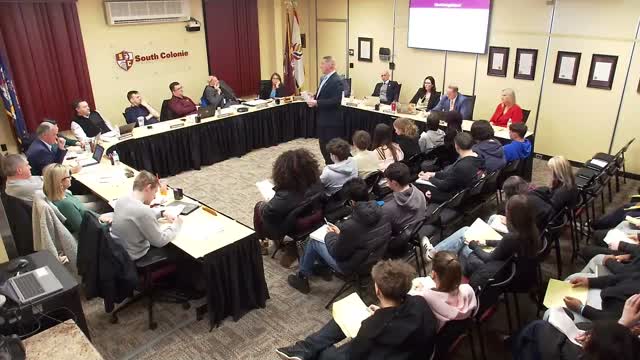
Summary
District technology staff described a year-long pilot of Magic School for teachers, plans to roll out student-facing Magic Student this spring, and a framework of seven principles intended to protect privacy and academic integrity while offering translation and lesson-generation tools.
South Colonie Central School District technology leaders on Tuesday described a phased rollout of artificial-intelligence tools for staff and students, stressing training, privacy safeguards and classroom uses.
Jim Lovett, identified in the meeting as the district's director of technology and data privacy officer, told the board the district ran a year-long pilot of Magic School with more than 110 teachers. He said the pilot produced a teacher-facing suite of roughly 80 tools — from lesson- and rubric-generators to text proofreaders and translation utilities — and that a student-facing environment called Magic Student will begin a spring rollout.
"It is a k‑12 specific AI platform," Lovett said. "We had 110 plus teachers run a pilot for us starting about a year ago. It went amazing." He said the platform integrates with Google Classroom and single sign-on and that the district is seeking compliance with COPPA, FERPA and CIPA for student-facing features.
The presentation emphasized guardrails. Lovett summarized the district's approach as a set of guiding principles: promote digital citizenship and AI literacy, protect student privacy, preserve academic integrity, check for bias and inaccuracies, and use professional judgment to review AI outputs. "The 80/20 approach" he said, meaning educators should use AI to do a portion of work and apply human review to ensure accuracy and fit for instruction.
Board members and attendees asked about ethics instruction, whether teachers will be required to use the tools and how the district will detect misuse. Lovett said use by teachers is voluntary and that the district plans an October AI summit and targeted professional development. He also described built-in plagiarism and provenance features in classroom platforms and said some integrations can show how a document was created to help teachers identify mechanical or AI-generated work.
Lovett and other staff said the district will continue community engagement and curriculum alignment. "We are trying to do this slowly and correctly," he said. "The goal is to make life easier for teachers while maintaining academic integrity." The board encouraged the district to present a community-facing overview in a future meeting.
What happens next: The district plans additional demonstrations and trainings, a spring rollout of student features, and an October AI summit for staff.