
House Energy and Commerce Tangles With FCC Over Alleged Weaponization and Free‑Speech Risks
Get AI-powered insights, summaries, and transcripts
Sign Up Free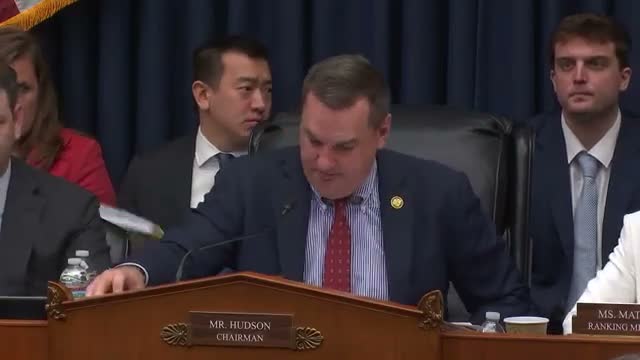
Summary
Lawmakers sharply debated whether the Federal Communications Commission under Chair Brendan Carr is policing content and weaponizing licensing rules, with Democrats urging statutory guardrails and Republicans defending enforcement of the public‑interest standard.
Members of the House Energy and Commerce subcommittee spent much of a contentious oversight hearing on Jan. 17 questioning whether the Federal Communications Commission has been used as a political tool.
Democrats on the panel accused Chairman Brendan Carr and the FCC of pressuring broadcasters and using the agency’s news‑distortion and public‑interest processes to target coverage the administration dislikes. "We can do this the easy way or the hard way to push them to take Jimmy Kimmel off the air," Ranking Member Matsui said, citing prior remarks and investigations as evidence of overreach. Representative Carolyn Maloney and others referenced investigations into KCBS in San Francisco and public notices relating to NPR and PBS.
Chairman Carr rejected the characterization that the FCC is acting as a censor. "The FCC has an obligation to enforce the public interest standard," he told the committee, arguing that enforcement is part of the agency’s responsibility for licensed broadcasters. Carr and other Republican supporters said the commission is applying longstanding standards evenhandedly and must ensure broadcasters meet local‑service obligations.
Commissioner Anna Gomez, the panel’s Democratic commissioner, urged clearer limits. "The FCC should stay out of content whether we like it or not," she said, arguing that the news‑distortion doctrine requires intentionality to prove deliberate falsehoods and cannot be used to punish mere disagreement.
Lawmakers pressed for concrete guardrails. Several Democrats said they will push legislation — including the Broadcast Freedom and Independence Act mentioned during opening statements — to forbid viewpoint‑based enforcement and to clarify the FCC’s bounds under the First Amendment.
The hearing ended without legislative action; members said follow‑up oversight and written questions would continue. The committee set a deadline for questions for the record and signaled further scrutiny of the agency’s investigations and license reviews.