Get Full Government Meeting Transcripts, Videos, & Alerts Forever!
Get email alerts on the Legislative Priorities topic
No spam. Unsubscribe anytime.
Fairfax adopts four top priorities for 2026 legislative agenda: federal impacts, schools, transit, housing
Summary
At a legislative work session, Fairfax County leaders outlined a streamlined 2026 legislative program with four top priorities: respond to federal workforce and funding changes, fund K 0through—2 education appropriately, ensure sustainable regional transit financing, and address the housing crisis.
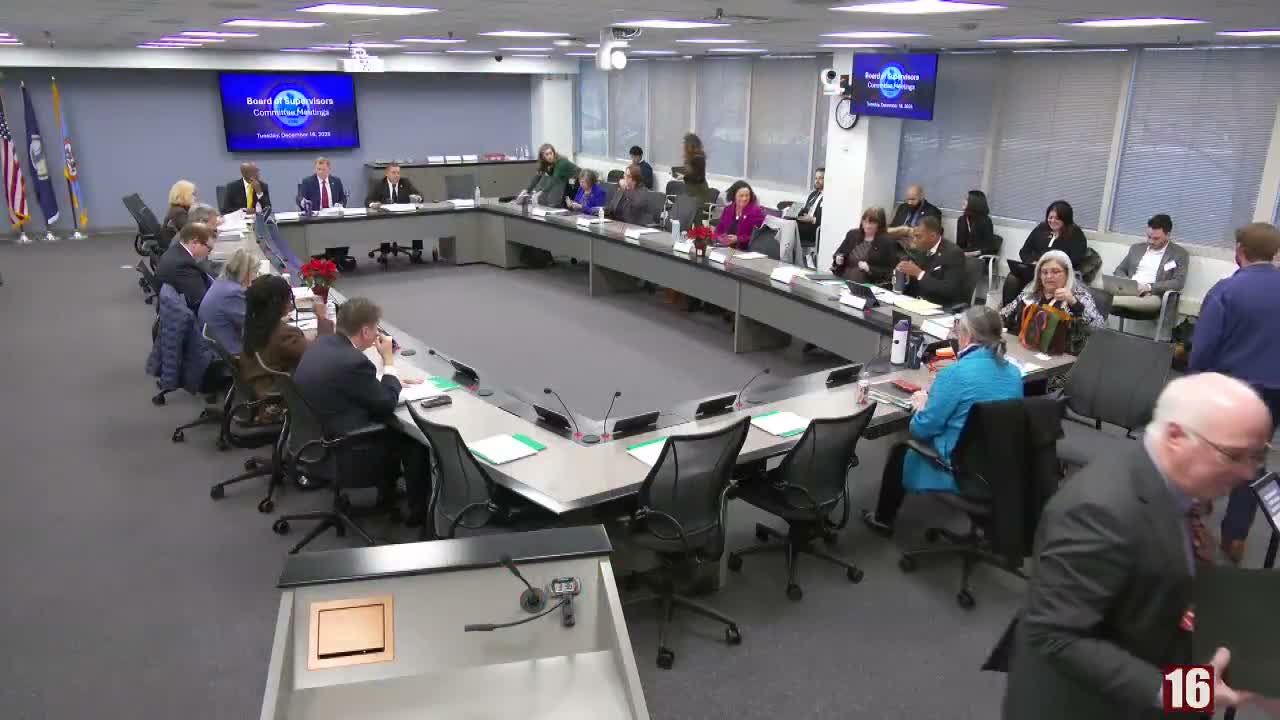
Fairfax County leaders used a Jan. 22 legislative work session to present a streamlined 2026 legislative program and to brief their General Assembly delegation on the county'019s top priorities: federal workforce and funding impacts, K 0through—2 education funding, regional transit stability (including WMATA and VRE), and housing affordability and production.
"If there's one word I think you'll find today that I keep underlining ... it's the word collaboration," said Andre Jimenez, chairman of the Board of Supervisors Legislative Committee, explaining the county'019s approach to coordinating with Richmond. Jeff McKay and Sandy Anderson, chair of the Fairfax County School Board, joined staff presentations and Q&A to align local and state priorities.
County staff provided data packets (including a Weldon Cooper refresh) and outlined three initiatives in the 2026 package: an Urban Public-Private Partnership Redevelopment Fund, expanded authority for the Park Authority on certain park exclusions, and an Acoustic Device Pilot Program. Deputy County Executive Jennifer Miller described a housing task force working on leverage of county land, public-private partnerships, and 30+ lines of effort to advance the county'019s 10,000-unit affordable housing goal by 2034.
The meeting closed with open discussion and staff commitments to follow up on several technical questions (including county exposure under SNAP payment error-rate scenarios) and with a reminder of upcoming Richmond coordination events.
Ending: The county asked its delegation to carry the priorities into the 2026 General Assembly and pledged to return with more concrete proposals for housing and other initiatives in the spring.