Get Full Government Meeting Transcripts, Videos, & Alerts Forever!
Get email alerts on the Education Funding topic
No spam. Unsubscribe anytime.
Delegate Watts and Fairfax officials press for K 0through—2 funding formula changes and tax options
Summary
Delegate Watts presented JLARC and Auditor-based findings that the Local Composite Index undercounts Fairfax needs and outlined tax alternatives (including a $2.3 billion consumer services tax estimate) to address state underfunding of K 0through—2 education.
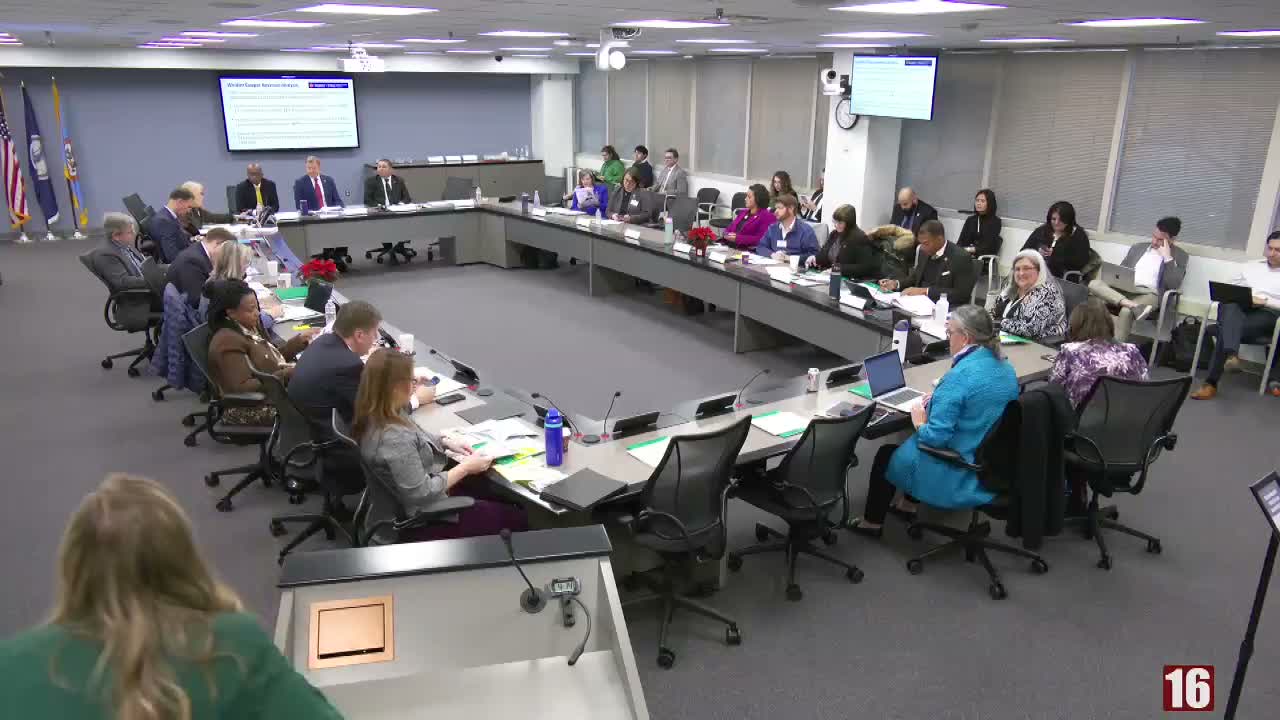
At a Fairfax County legislative work session on Jan. 22, Delegate Watts and other speakers pressed for reform to Virginia'019s K 0through—2 funding formula, arguing the Local Composite Index (LCI) fails to reflect median incomes and regional cost pressures in Northern Virginia.
"For Fairfax County Schools, salaries and benefits take up 85% of the budget," Delegate Watts said, citing JLARC and Auditor of Public Accounts material used to prepare the county packet. She argued that the LCI, which relies on average adjusted gross income, understates local need because 8 out of 10 Fairfax residents earn below the average AGI and the cost-to-compete adjustments do not flow through the current formula the county uses.
Watts outlined possible revenue options to address the shortfall: a consumer services tax that would include digital services, an increased local sales tax dedicated to school construction, local-option upper income brackets, and other sales-tax reallocations. She cited an estimate that a broad consumer services tax could raise about $2.3 billion annually and outlined how that revenue might be allocated: roughly 38% to the general fund, 23% back to localities in increased sales tax revenue, 16% directed to schools, and 14% to transportation.
Speakers agreed that any change involves negotiation and trade-offs: "No one gets everything they want in changing how funds are allocated," Watts said, urging collaboration across jurisdictions to leverage JLARC's findings to press for targeted reform.
What happens next: county leaders plan to use the Weldon Cooper refresh and JLARC findings to brief the delegation and press for a regional cost index or other reforms during the 2026 General Assembly session.
Reporting note: Quotes and figures reflect the Delegate 0Watts presentation and the county packet discussed at the Jan. 22 meeting.