Get Full Government Meeting Transcripts, Videos, & Alerts Forever!
Get email alerts on the Social Services topic
No spam. Unsubscribe anytime.
Fairfax officials warn federal HR1 changes will shift costs to state and local governments
Summary
Fairfax County staff told the Board of Supervisors' legislative committee that HR1 0will cut federal SNAP administrative funding, narrow eligibility and add Medicaid work requirements, raising local workloads and projecting millions in new local and state costs.
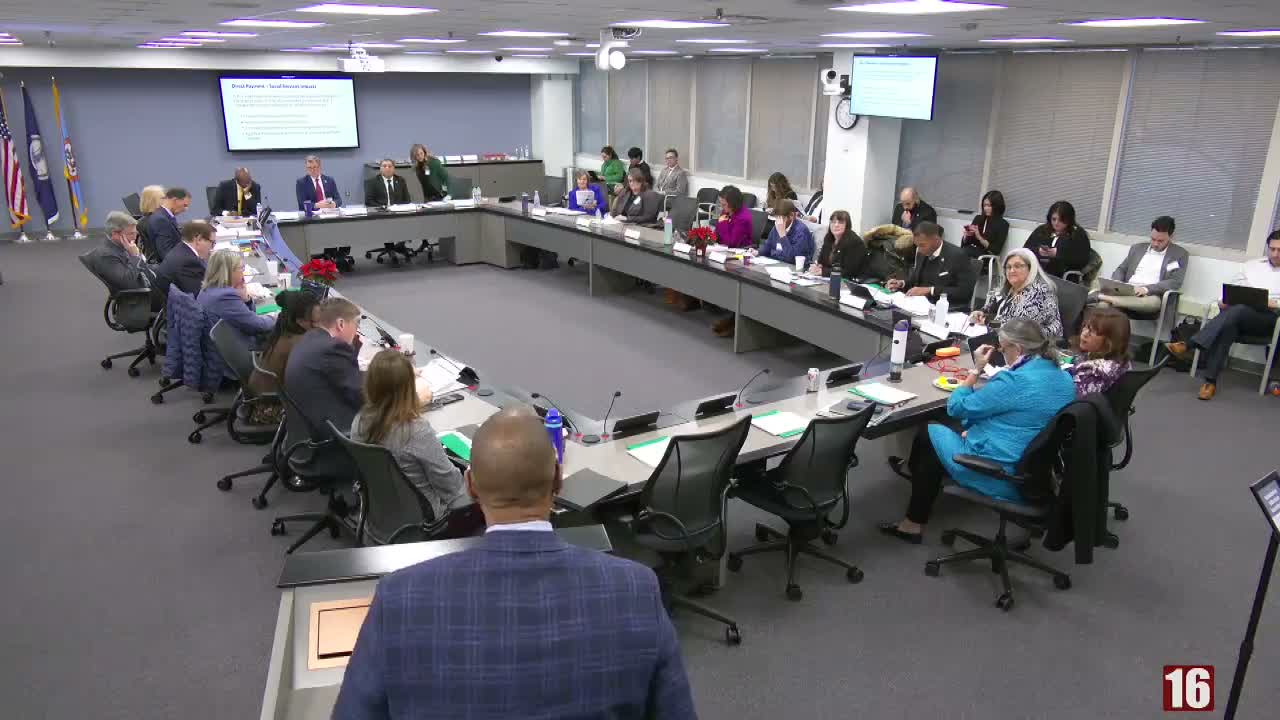
Fairfax County officials told members of the Board of Supervisors' Legislative Committee on Jan. 22 that a new federal package referred to in the meeting as HR1 will shift significant costs and administrative burdens for SNAP and Medicaid to states and localities.
"HR1 brings sweeping changes to federal policy concerning SNAP and Medicaid," said Michael Beckett, director of the Fairfax County Department of Family Services. He told the room the federal share of SNAP administrative costs has been cut "from 50% to just 25%," and that the Virginia Department of Social Services has already indicated the local match rate would move from about 15.5% to nearly 22%. "That is an increase of about $7 to $8,000,000 for the administration of the SNAP program alone," Beckett said.
Beckett and county staff warned the law also ties state liability to the SNAP payment error rate. "If Virginia's payment error rate for SNAP benefits is at or above 6%, the state pays a portion of the benefits," he said, noting Virginia's calculated payment error rate was 11.5% as of July 2025. Beckett said a legislative estimate put the cost to the Commonwealth at roughly $211 million in the first year of the next biennium and $270 million in the second.
The county highlighted several operational consequences: a likely surge in demand for local food assistance and health services, higher uncompensated care costs at local hospitals, and a substantial increase in workloads tied to eligibility recertifications that begin Jan. 1, 2027. "This massive surge in workload cannot be absorbed without critical and immediate state investments in modernizing the Virginia case management system," Beckett said.
County leaders asked the delegation to press for state investments and changes to administrative funding. Jeff McKay, chairman of the Board of Supervisors, described federal changes as "real" and urged collaboration with the General Assembly to find mitigations.
Delegate Kathy Cohen and other members sought more granular county-level fiscal exposure. "There's no way for us to know in Fairfax County what the error-rate contribution is," Cohen said; staff responded they would follow up after the meeting because county-level shares and the formula for local liability were not prepared for this session.
What happens next: county staff will provide follow-up information to the delegation on the county's potential share of state liabilities and the operational steps needed to prepare for eligibility recertification and other HR1-driven changes.
Reporting note: Direct quotes and specific dollar figures and percentages in this article come from statements in the Fairfax County staff presentation and the committee discussion on Jan. 22, 2026.