Get Full Government Meeting Transcripts, Videos, & Alerts Forever!
Get email alerts on the State Revenue Analysis topic
No spam. Unsubscribe anytime.
Weldon Cooper study finds Fairfax generates about $5.7B for state, gets roughly $2.93B back
Summary
A Weldon Cooper Center presentation to the Fairfax County committee found the county generated an estimated $5.77 billion in FY2024 state general fund tax revenues and received about $2.93 billion in state appropriations—about a 50¢ return per dollar—ranking Fairfax near the bottom of localities on return rate.
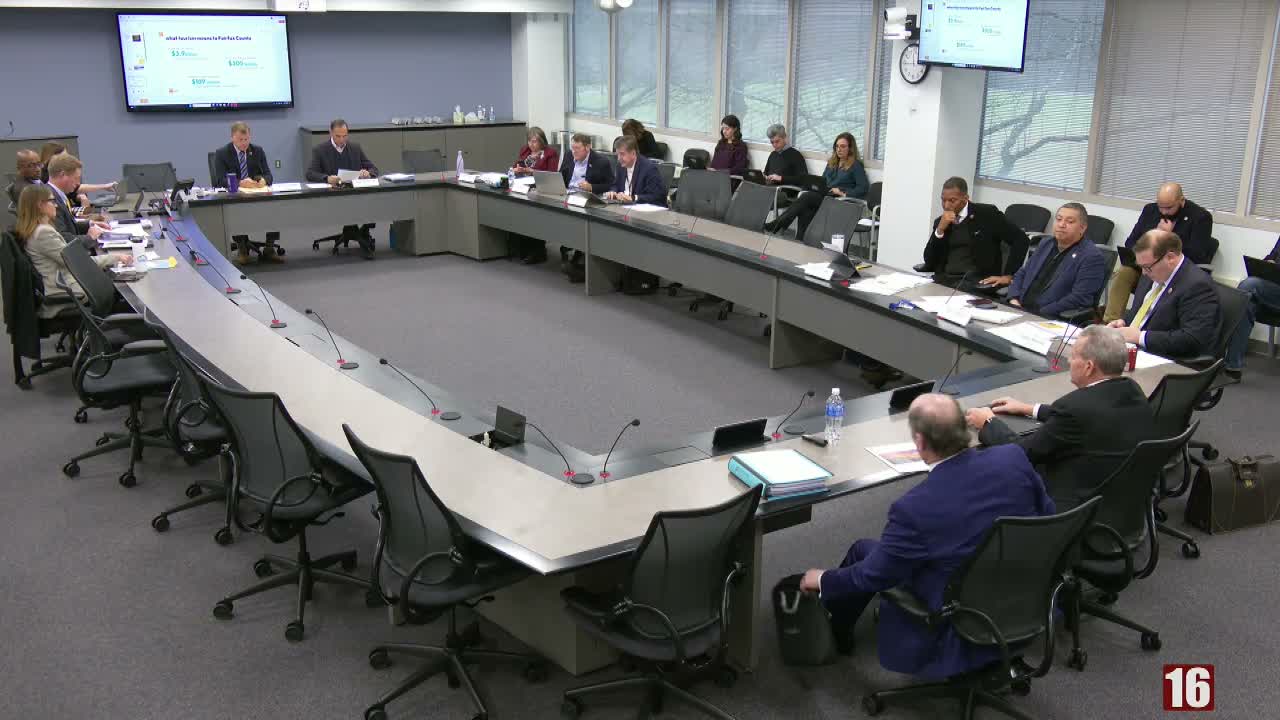
The Weldon Cooper Center for Public Service presented an analysis to the Fairfax County Economic Initiatives Committee on Nov. 25 showing Fairfax County is a major net contributor to Virginia’s state revenues. Matt Scheffel, an economist with the center, said the county generated about $5.77 billion in FY2024 general fund tax revenue for the Commonwealth and received about $2.93 billion in state appropriations—equaling roughly 50–51 cents returned per dollar.
Scheffel said the county’s revenue base is driven largely by individual income taxes (about 80% of the county’s contribution), with sales taxes (about $640 million) and corporate income taxes (about $433 million) making smaller shares. On the appropriation side, K–12 education and the personal property tax relief (car tax) accounted for the largest share of state aid to Fairfax (roughly $1.2 billion). Medicaid, higher education and other grants composed other significant portions.
Breaking the numbers down against other localities, Scheffel showed Fairfax ranks near the bottom—about 128th out of 133 localities—on the return-rate metric (appropriations divided by revenues). He contrasted Fairfax’s roughly 50¢ return with rural localities that receive several dollars back for each dollar they send, underscoring a structural funding imbalance for Northern Virginia.
Scheffel explained methodological choices in the report, including reliance on Virginia Tax FY2024 reports for revenue categories and estimation methods for categories where detailed state data are not publicly available (Medicaid and some health and human services components). He described the Local Composite Index (LCI) used to allocate K–12 funding to localities and said Fairfax’s LCI is approximately 0.6381, meaning the county locally funds roughly 63% of school costs under that formula.
Members of the committee reacted that the study provides a useful data point for upcoming General Assembly discussions and county advocacy. Supervisors requested more detailed breakout on non-general-fund transportation funding and how federal or state Medicaid changes could alter projected aid flows. Staff and Weldon Cooper agreed to follow up with further detail and conversation.
The committee did not take votes on the study but discussed packaging the findings for legislative outreach and use in the FY2027 budget process.