Get Full Government Meeting Transcripts, Videos, & Alerts Forever!
Get email alerts on the Tourism Funding topic
No spam. Unsubscribe anytime.
Visit Fairfax proposes $6.5 million-a-year plan for new hotel tax revenue
Summary
Visit Fairfax told the Fairfax County Economic Initiatives Committee it expects roughly $6.5 million annually from a FY2026 2% increase in the transient occupancy tax and proposed dividing the money among a $1.5 million infrastructure fund, a $1 million industry grant program, and $4 million for marketing and promotion.
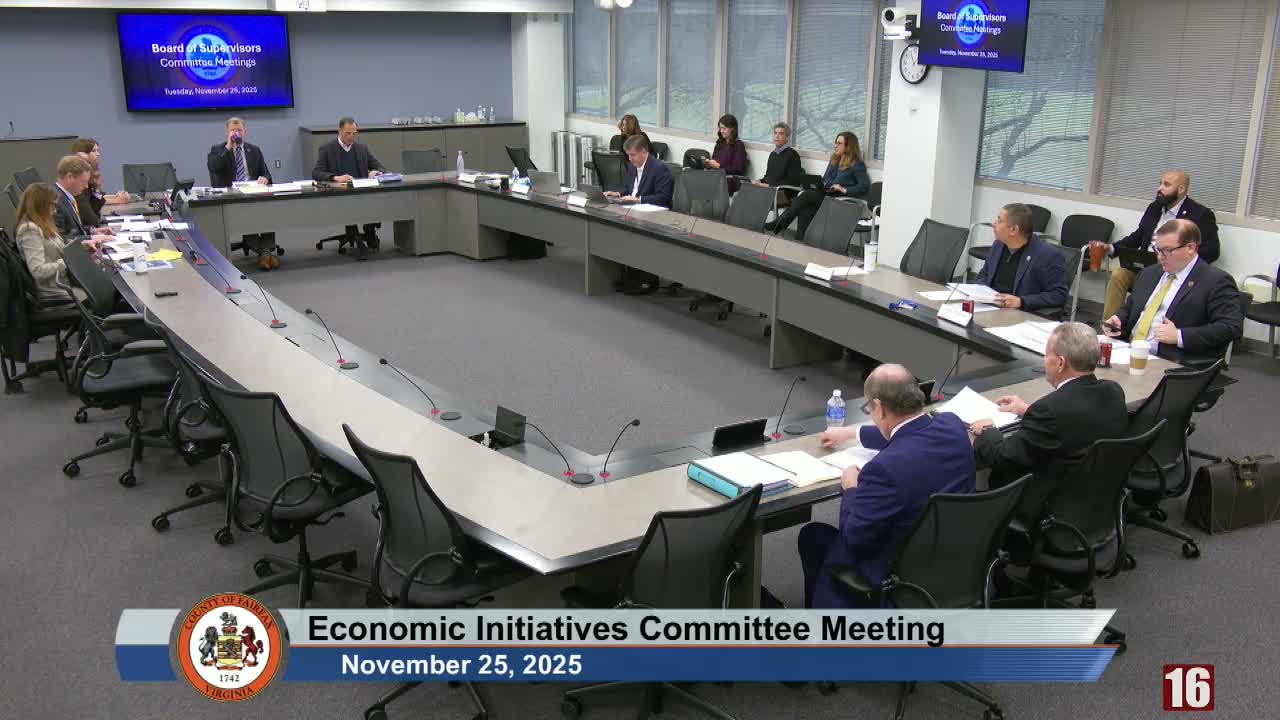
Visit Fairfax presented a plan to the Fairfax County Economic Initiatives Committee on Nov. 25 to spend forecasted revenue from a FY2026 2% increase in the transient occupancy tax (TOT). The organization estimated the increase would yield about $6,500,000 annually and outlined three priority areas for the funds: a tourism infrastructure fund, an industry grant program, and expanded marketing.
At the meeting, Barry Bigger of Visit Fairfax said the board directed the organization to develop recommendations for the county’s 2027 budget. Bigger described three "silos" for the money: a $1,500,000-per-year infrastructure fund to support development and renovation of tourism-related facilities; a $1,000,000 grant program open to hotels, restaurants, attractions and retail (with matching grants that could effectively double the program’s reach); and $4,000,000 dedicated to tourism sales, marketing and promotion.
Don Anderson, chairman of the Visit Fairfax board and general manager of the Washington Dulles Hilton, told supervisors the organization has overseen tourism investments "with accountable, measured, transparent, and responsibly reported ROI" and said the additional 1% of hotel tax (of the 2% increase) would be governed accordingly.
Bigger said Visit Fairfax estimates the county’s tourism economy generated about $3.9 billion in 2024 and that the added revenue, if invested in those three areas, could help grow that figure to $5 billion within three to five years. He cited past ARPA-funded marketing as evidence of return on investment and said the recommended marketing funds would also support efforts such as hiring an AI specialist to improve targeting and visitor itinerary services and pursuing larger events like the National Senior Games.
Supervisors praised the industry-led planning but pressed for details before any budget action. Supervisor Lusk requested source documentation for the $3.9 billion figure; Bigger cited the Virginia Tourism Corporation and Tourism Economics (Oxford Economics). Supervisors asked for clarity on how the infrastructure fund would allocate money, how grants would be monitored, and how county agencies such as the Park Authority and school scheduling would be integrated for sports tourism and other projects. County staff said allocation rules and oversight details would be developed during the budget process.
Bigger said that an early example of eligible projects could include visitor-centered work at historic sites and that the infrastructure fund could accumulate year-to-year rather than be spent in a single cycle. He also described the grant program as a mechanism to leverage local matching funds and expand the reach of county marketing dollars.
The committee took no formal votes on the proposal during the meeting and moved the discussion into the budget process, with staff and Visit Fairfax agreeing to return with implementation details and program rules for supervisor review.